Curt Harlow [00:00:00]:
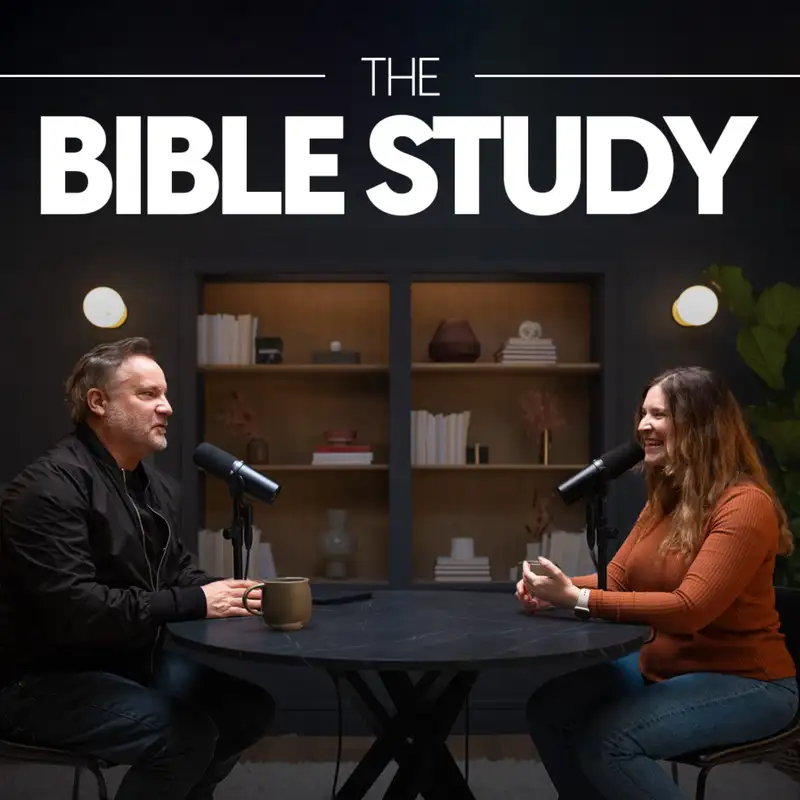
Hello, my friend, and welcome back to the Bible study podcast. We've got Brannon Short with us, the illustrious pastor of Bayside Folsom. How's it going in Folsom there B?
Brannon Shortt [00:00:11]:
Things are beautiful in Folsom. God's doing a lot of stuff. Bursting, it seems. It's really just an honor to get to be there and lead right now.
Curt Harlow [00:00:18]:
I know people all over the place watch this, but if you ever get a chance, go to Folsom, go to the Bayside of Folsom and things are beautiful in Folsom at Christmas time.
Brannon Shortt [00:00:26]:
Prior to premium outlets, prisons and beautiful.
Curt Harlow [00:00:29]:
People outlets, prisons, beautiful people.
Brannon Shortt [00:00:31]:
Basically the land of milk and honey.
Curt Harlow [00:00:33]:
And then if you're new to the podcast, and I hope you are, Dena Davidson, as I always say, the Frontal Lobe Thrive College, and our resident apologetics master degree holder of glory. You got a advanced degree or two, don't you? Right?
Brannon Shortt [00:00:47]:
Yeah, but not as good as Dena.
Curt Harlow [00:00:49]:
No one's as good as Dena.
Dena Davidson [00:00:50]:
Yeah, mine's too fancy.
Brannon Shortt [00:00:51]:
Mine's in molecular physics.
Curt Harlow [00:00:53]:
I'm, I'm the only one here just working on a B.A. okay, so we are starting a four week Christmas advent series. What is Advent? Well, it's a traditional thing that church has been doing for quite a long time, maybe 1500, 1600 years. And what they do is they take the Christmas story, the nativity story, and out of it they draw upon four great themes. Hope, peace, joy and love. And I know sometimes the order is different for your tradition, but hope, peace, joy and love. And we're going to talk today about hope. We're going to go peace next week, Joy.
Curt Harlow [00:01:27]:
And then we're going to finish with love. And we're doing this on all of our campuses and here on the podcast. Now. Why hope? Well, hope comes from understanding the promise of God in the Old Testament to bring a messiah. That's our hope. And so we, we, we, we dwell on that. We meditate on that. That's going to be the topic today.
Curt Harlow [00:01:47]:
Dean is going to read Isaiah 9 in a second. Peace is drawn from the announcement of the angels. Joy is, is drawn from the response of the shepherds. They had great joy, the Bible says. And love, of course, is it all together in the gift of Jesus Christ. His life, his death, how he taught us, healed us all of the good stuff. So hope, let's get a hold of some real hope. We're going to go to Isaiah 9.
Curt Harlow [00:02:12]:
We're just going to read this most popular Christmas prophecy from Isaiah. A little context here, Dena first, and then you guys can add any thought to the context here you want before Dena reads, but there's a looming threat over Israel. It's the Assyrian Empire. Dun, dun, dun. And so Isaiah's prophecy has a double prophetic application. It's God saying, I see the imminent threat to my promised people. And then also, as God is so good at doing, there's a greater promise here. God's saying, I see the threat of darkness in all mankind.
Curt Harlow [00:02:53]:
This situation with Israel echoes the situation of of all civilizations and all society and even all families and individuals. So think about that Assyrian looming. Like, let's say there's an army on the edge of your city in Folsom.
Brannon Shortt [00:03:10]:
Yeah.
Curt Harlow [00:03:11]:
A Roseville.
Brannon Shortt [00:03:12]:
Yeah.
Curt Harlow [00:03:12]:
And then also think about how good it is that God is able to address that particular situation and then do something. Well, that we have been Studying now for 3,000 years, this prophecy. So. All right, Dena, read the prophecy to us, then we'll jump right in. Or has anyone got a context? Thought.
Brannon Shortt [00:03:32]:
Great.
Curt Harlow [00:03:33]:
All right, here we go.
Brannon Shortt [00:03:34]:
Let's go.
Dena Davidson [00:03:35]:
Starting in verse two.
Dena Davidson [00:03:36]:
The people walking in darkness have seen a great light on those living in the land of deep darkness. A light has dawned. You have enlarged the nation and increased their joy. They rejoice before you as people rejoice at the harvest, as warriors rejoice when dividing the plunder. For as in the day of Midian's defeat, you have shattered the yoke that burdens them, the bar across their shoulders, the rod of their oppressor. Every warrior's boot used in battle and every garment rolled in blood will be destined for burning, will be fuel for the fire. For to us a child is born, to us a son is given. And the government will be on his shoulders.
Dena Davidson [00:04:18]:
And he will be called Wonderful Counselor, Mighty God, everlasting Father, Prince of peace, of the greatness of his government and peace, there will be no end. He will reign on David's throne and over his kingdom, establishing and upholding it with justice and righteousness from that time on and forever. The zeal of the Lord Almighty will accomplish this.
Curt Harlow [00:04:41]:
Well, hopefully you heard the handles Messiah in there be you're sitting at your desk at home, you're not getting ready for a sermon. You're just studying the Bible.
Brannon Shortt [00:04:51]:
Yeah.
Curt Harlow [00:04:51]:
And you come across Isaiah, chapter nine. How would you approach this verse? What should we draw out of this first?
Brannon Shortt [00:04:59]:
The first thing I would draw out of it is much of what you said, which is the desperate. I read that. And if I had no context, if I had no understanding of the text, if I had never studied in my life. I would already long for that to be true. I would already feel the longing that the yoke of the burdens, liberation, the oppression, all of those things. The bad would end, that good would reign, that there's a promise that light would enter into the story. It doesn't take anybody from any worldview longer than 30 seconds being alive on earth to understand that it's dark and that there's darkness here. So I would already feel the longing in that.
Brannon Shortt [00:05:36]:
But I can't help but be struck as somebody that does. If I'm sitting at home by myself, not studying for a sermon, I wouldn't be able to help but remembering the context. I love my favorite, this one included my favorite prophecies of the messianic coming are always in bad news. I love that they're always in contextual bad news. Because I think if we're just being honest, good news means more to us in bad times.
Curt Harlow [00:05:59]:
So part of the brilliance of today's sermon prep, and we had Jason Dixon, Jason Kane and Jason Jingleheimer Smith was there. Jason, gma. But this theme came out of all of their preparation as they were presenting to us that having hope at Christmas.
Brannon Shortt [00:06:19]:
Yes.
Curt Harlow [00:06:20]:
Does not deny the bad news. Totally. It's not, it's not a Pollyannish saying, I'm just going to be happy because tis the season. I'm going to go do some shopping therapy.
Brannon Shortt [00:06:30]:
Yeah.
Curt Harlow [00:06:30]:
It embraces the hardness of life, the stress of a life, the war of life.
Brannon Shortt [00:06:36]:
Yeah.
Curt Harlow [00:06:37]:
And it's exactly that. It's, it's, you know, the part that jumps out right at me from the beginning. I'm skipping down a little bit too much, but we like to read verse 6. For unto us a child is born, to us a son is given. And the NPR voice. Right. But. Yeah, but look at verse 5.
Curt Harlow [00:06:54]:
Every warrior's boot used in battle and every garment rolled in blood will be destined for burning.
Brannon Shortt [00:07:00]:
Yes.
Curt Harlow [00:07:01]:
We will fuel for the. They'll be fuel for the fire. For. To us.
Brannon Shortt [00:07:07]:
Yes.
Curt Harlow [00:07:07]:
A warrior child.
Brannon Shortt [00:07:08]:
Yes.
Curt Harlow [00:07:09]:
And. And I think, you know, the, the dramaticness of that language says this has been a long, dark, hard, violent battle.
Brannon Shortt [00:07:19]:
Yes.
Curt Harlow [00:07:20]:
And. And it's a serious thing.
Brannon Shortt [00:07:23]:
Yes.
Curt Harlow [00:07:24]:
And then God provided a messiah.
Brannon Shortt [00:07:26]:
Yeah. I said that earlier in, in that same prep meeting, that part of like the analogy of this, that for a Christian to wrestle with hope would mean having to look at disappointment. You have to. Otherwise you don't even know that it's hope. You have to have the light and the dark. You have to be able to hold both sides of that. And I even feel really encouraged when I read something like that. All of us have been through tough times, but when I read that, I feel honest, an overwhelming amount of gladness and delight to be like, nobody hates oppression more than God does.
Brannon Shortt [00:07:59]:
Nobody hates the stuff that's broken and terrible and disappointing. Nobody wanted the garden more than God who made us and put us in the garden and said, let's walk in it and who's redeeming it. So even in those, like, I love the strength of that. I'm like, we need to put that in a hip hop song. We need to bar that up. We need to put a DJ on it and we should just let that rip. And of course, as God does like, he hates this stuff, hates oppression. So victory and abundance and celebration being in that prophecy, of course I love it.
Dena Davidson [00:08:26]:
That's so good. I find in Christmas time the urge to look away from hard things is like almost irresistible. It's like I don't even want to play the carols that are set in the minor tunes. Right. It's like, I just want the joy. I just want the happiness. My daughter came out this morning and she'd had a really bad dream. So her day started with her just wanting, I know it's so sad.
Dena Davidson [00:08:48]:
Wanting to be snuggled and wanted to kind of like not talk about it, but to be held and to be comforted. It was a really bad dream.
Brannon Shortt [00:08:56]:
Yeah.
Dena Davidson [00:08:57]:
And I was like so good and present for her. And then I was like, oh, oh, guess what, there's an elf on the shelf. And I was like, oh, look, an elf came in. Then I. It worked for exactly 10 minutes and then she was right back in that place of. Yeah, but I had a really bad dream. And I think that's kind of what happens to us in Christmas time as we're constantly trying to be like, shiny, shiny, party, party, fun, fun, happy, happy. And then the brokenness still hits us.
Brannon Shortt [00:09:26]:
Yeah.
Dena Davidson [00:09:26]:
And if we aren't willing to see and process that brokenness, then I think that we're just going to keep really not being able to access the hope that God wants to give us the whole year.
Curt Harlow [00:09:38]:
Yep. So you know the verse here, they rejoice before you as people rejoice, as at the harvest. So we hear that and we think, yeah, there's going to make some money on this harvest. Or you know, they, they, they worked hard to grow that food all year long. Now it's finally come. But really you got to put your agricultural Old Testament 1st century ears on and go. What this has said is they rejoice like people that know they will now not starve to death.
Brannon Shortt [00:10:10]:
Yeah.
Dena Davidson [00:10:11]:
They get to live another year.
Curt Harlow [00:10:12]:
I mean, they get to live another year. Literally. If the rain comes too early, they lose a bunch of seed. If the rain comes too late, they lose a bunch of seed. There is irrigation. And so this, the. Whenever I see a passage like this and it has an agricultural thing, I try to stop and go. Not the tractors that you grew up with.
Brannon Shortt [00:10:34]:
Right.
Curt Harlow [00:10:34]:
Get your brain back.
Brannon Shortt [00:10:35]:
Totally.
Curt Harlow [00:10:36]:
And. And so this is a very intense rejoicing. This is a. My young and vulnerable children now have hope. Mm. My elderly parents.
Brannon Shortt [00:10:45]:
Yeah.
Curt Harlow [00:10:45]:
Who no longer can work and we have to provide food for them. They. That we might get another winter with mom, is what this is saying. And then for as in the day of Midian's defeat, you have shattered the yoke that burdens them. What, what this is saying is, by the way, this is not the first time that God has proven he is the number one warrior against oppression.
Brannon Shortt [00:11:11]:
Yeah, that's right.
Curt Harlow [00:11:12]:
It's always. Hope is always tied to the memory of God's faithfulness. So I was talking to Kelly about this. You know, our youngest daughter lives in New York. She came back for Thanksgiving, then she left. And I'm trying to be happy the whole day. She's going to put on this concert, we're going to have this fun gathering all of our friends. And I was just not happy.
Curt Harlow [00:11:35]:
I was like, I don't want you to go back there. I hate Manhattan.
Brannon Shortt [00:11:39]:
Please stay.
Curt Harlow [00:11:40]:
I hate everything about it. I hate how far it is and I don't want you to go. And I hate the fact she's not coming back for Christmas because of her work. And. And I'm just. I'm just in this mode of, you know, I'm grumpy about it. And a couple days later, Kelly and I are talking about. I'm like, everything.
Curt Harlow [00:11:58]:
I prayed that my daughter would become independent, responsible, you know, all of that stuff I prayed for and I really meant it. God, help her grow up to be an incredible person. That's happening right now. And I'm upset with God about it.
Brannon Shortt [00:12:15]:
Oh.
Curt Harlow [00:12:16]:
And so I gotta go back and.
Brannon Shortt [00:12:18]:
Remember I'm seeing my 19 month old in my head and I'm like, God, make him all these things, but don't.
Curt Harlow [00:12:23]:
Oh, it's tomorrow, guys.
Brannon Shortt [00:12:25]:
Tell him to stay.
Curt Harlow [00:12:26]:
It's tomorrow. My phone, my stupid phone keeps bringing up on the screen, like I have it rotating on the photos, all of these pictures of My kids at Christmas when they're small.
Brannon Shortt [00:12:35]:
Nope.
Curt Harlow [00:12:36]:
Horrible. So. But I have to go back.
Dena Davidson [00:12:39]:
What is this about hope again?
Brannon Shortt [00:12:41]:
There is none. Are you not hearing him? There's not. Our kids are gonna leave the prayers.
Curt Harlow [00:12:47]:
I prayed and then forgot. God did not forget.
Brannon Shortt [00:12:51]:
Yes.
Dena Davidson [00:12:51]:
Yeah.
Dena Davidson [00:12:52]:
Okay.
Curt Harlow [00:12:52]:
That is prayers. I prayed for all my kids, not just this one. I'm depressed about right now. Like, we think sometimes a certain amount of time has gone on and therefore this prayer now is expired. Like, it's grocery food. And God's like, no, no, no, I. I remember, I remember. You don't remember it.
Curt Harlow [00:13:11]:
That's how much that prayer meant to you. Yeah, but I remember it. So I'm answering those prayers. Even if it makes you depressed on a Monday morning when she has to take a 4:20am flight back to Manhattan.
Brannon Shortt [00:13:23]:
Yeah.
Dena Davidson [00:13:24]:
You know, something that strikes me about this passage is how it talks about David's throne. And I think sometimes, you know, the Old Testament is so long to read through. And so this idea of David is like, large in our minds. Like.
Curt Harlow [00:13:37]:
Oh.
Dena Davidson [00:13:37]:
And it was, I think for the Israelites, that was the time that they were always trying to get back to. Right. Was when David was on the throne. The two, the 12 tribes were united. There was no two kingdoms. It was one kingdom under David's reign and rule. And that's like, that's the climax for them. Like, this is Israel to us.
Brannon Shortt [00:13:57]:
Yeah.
Dena Davidson [00:13:57]:
And. But if you read the Old Testament, it was so short. Right. Like the time that David actually sat.
Dena Davidson [00:14:05]:
On the throne and ruled over with no division.
Dena Davidson [00:14:08]:
Division came from his own house. And it like, even this small human story was so hope filled. And what this passage is prophesying is, is the way that you rooted your hope in getting back to something that for you felt so safe, so secure, like the apex of what God's goodness could be. I'm going to do something that's going to last forever. He's going to reign on David's throne forever and ever. I think that's hopeful to us because sometimes we can look back to those moments in our life where we felt that peace, that comfort. I've been thinking a lot about my childhood home, being very nostalgic, trying to recreate those experiences for my kids. And I realized like, that hunger in my heart for what I used to experience is just a foretaste of what God is building for me in heaven.
Dena Davidson [00:14:57]:
That's the ultimate hope. This is a kingdom that will have no end.
Brannon Shortt [00:15:01]:
Yes. I love that. I love that you said that. And I obviously didn't know you were going to say that. And I just popped my head when you did that. So many of the things we look to for hope in the text are moments like the garden that lasts forever. David's throne's really short. We never actually get to the jubilee stuff.
Brannon Shortt [00:15:20]:
Like Jesus lives 33 years. Like there's N.T. wright.
Curt Harlow [00:15:26]:
But the idolatry and false prophets. That goes on and on, on and on.
Brannon Shortt [00:15:30]:
It never ends.
Curt Harlow [00:15:31]:
That's a stay power man.
Brannon Shortt [00:15:32]:
It was nt Wright though. I had that beautiful line that God allowed us to see in the brokenness of the world. God allowed us to see the kingdom and glimpses that there were these just moments in time where we could hearken back and liken things to like. I love that he uses the names he uses here. That the names are both character and mission. That it's wonderful counselor who starts so intimate and goes from wonderful counselor, so intimate to mighty God, this cosmological force to back down to everlasting Father, Prince of Peace. But all those right. Like wisdom and guidance and then divine and authoritative protector and your source, wholeness and reconciliation.
Brannon Shortt [00:16:13]:
I just love that he then starts saying every way he can possibly think and inspired to say, to sum this up, like to sum up all of the birth of this child. That all that this child unto us and the son that's given is going to be.
Curt Harlow [00:16:29]:
So what both of you are saying is that hope is not a circumstance. Hope is not even an understanding.
Brannon Shortt [00:16:38]:
Yeah.
Curt Harlow [00:16:38]:
Hope is a person.
Brannon Shortt [00:16:39]:
Yes.
Curt Harlow [00:16:40]:
So the hope of the passage, the reason that the warriors are being put down and the oppression is being lifted and we no longer are like oxen with a yoke and.
Brannon Shortt [00:16:48]:
Yes.
Curt Harlow [00:16:48]:
And some farmers prodding us and. Which is a perfect imagery for slavery.
Brannon Shortt [00:16:53]:
Right.
Curt Harlow [00:16:54]:
The reason is a person has done it. So this is the mistake we make around Christmas in terms of hope is I think we go, I just got to change my mentality.
Brannon Shortt [00:17:03]:
Right.
Curt Harlow [00:17:03]:
I got to get in the Christmas spirit. I gotta cheer myself up. And it's kind of like we get into this positive thinkism and there's not. There's some good in that. It's not all bad. Because you know, the Bible, let's say think about what is good and right and noble and true.
Brannon Shortt [00:17:16]:
Right.
Curt Harlow [00:17:17]:
But without the person doing the work of deliverance.
Brannon Shortt [00:17:21]:
Yes.
Curt Harlow [00:17:22]:
None of the attitude.
Brannon Shortt [00:17:23]:
Right.
Curt Harlow [00:17:24]:
Lasts. It has no staying power.
Brannon Shortt [00:17:26]:
Yes.
Curt Harlow [00:17:27]:
So hope is a child.
Curt Harlow [00:17:31]:
Come to earth.
Brannon Shortt [00:17:31]:
Yeah.
Curt Harlow [00:17:32]:
Then the thing that's funny is we get child in verse six at the beginning. And you remember this is Jewish poetry. So it's parallel. It's repeating. And we get El Gibber, which is God the mighty. So here we have this monotheistic hero Israel. Yeah. The Lord your God is one.
Brannon Shortt [00:17:53]:
Yes.
Curt Harlow [00:17:53]:
The most important concept.
Curt Harlow [00:17:57]:
To this day in devout Judaism. Hero Israel, the Lord your God is one. If you have a Jewish friend like I do. Yep. And you say, what's your problem with Christianity? The first thing they'll say is the Trinity. Right, right. It's the first thing.
Brannon Shortt [00:18:07]:
Of course.
Curt Harlow [00:18:08]:
And yet here we have for us a child is born, and the child is. Got the wisest counsel. And this is war council. He's not a psychological counselor here.
Brannon Shortt [00:18:20]:
Right.
Curt Harlow [00:18:20]:
He's the wisest counsel. He is a father to us, which is provider. He's a prince of peace. This is not inner peace. This is. I'm making treaties with your enemies. I'm stopping the enemies from attacking.
Brannon Shortt [00:18:32]:
Yeah.
Curt Harlow [00:18:33]:
And he's the El Gabbar.
Brannon Shortt [00:18:35]:
Yeah.
Curt Harlow [00:18:35]:
The God of might.
Dena Davidson [00:18:37]:
That's crazy. I have never seen that trinitarian reference in that passage before. But it's right there. This child, this son, which. There's the whole trinity right there. Will be called God.
Dena Davidson [00:18:49]:
Crazy.
Brannon Shortt [00:18:49]:
Yeah.
Dena Davidson [00:18:50]:
Yes.
Curt Harlow [00:18:50]:
100 great point of the greatness of his government and peace it will be. No. So there's like three mentions of government here, including the throne, but literally government is used twice. What is he talking about? Which political party the Messiah will be in. Is it a policy questionnaire?
Dena Davidson [00:19:08]:
That's you, right, Brannon?
Brannon Shortt [00:19:10]:
Oh, yeah. I definitely think that's not what it's about. Yeah, of course it's not what it's about.
Curt Harlow [00:19:15]:
You know, you gotta think. The concept of politics is hard to study in ancient texts.
Brannon Shortt [00:19:20]:
Yes.
Curt Harlow [00:19:21]:
Because the city state and the kingdom are such new concepts in humanity. The idea of the struggle for political power.
Brannon Shortt [00:19:32]:
Yeah.
Curt Harlow [00:19:33]:
In those city states. The. The. This is a Greek word, and what it originally meant is how you run a city.
Brannon Shortt [00:19:39]:
Yeah.
Curt Harlow [00:19:40]:
Then it bec. It evolved through Latin, then French, then to us, and it evolved into this one we have now, which is the competing for power. How we compete for power. And then it goes beyond government. Just they were political at work, which means you're competing for power at work.
Brannon Shortt [00:19:55]:
Yeah.
Curt Harlow [00:19:56]:
So governance here. What is. Okay, that's the. That's the context of it. It doesn't mean, you know, a federal government or a legislative branch. The Messiah is going to have a legislation. Does it mean.
Brannon Shortt [00:20:11]:
Well, so I. Dena, will sum all of this up and make my argument sound great.
Curt Harlow [00:20:18]:
Gives us the right.
Brannon Shortt [00:20:19]:
Yeah. Dana, you give the right answer. I. What it means when I look at it both, again hermeneutically, but also just in line with the rest of the text is everything he said is technically impossible if it's not true. Like light entering in, piercing the darkness, liberation, a child being mighty, God. And then the fact that he says like that the kingdom would be everlasting is nuts because again, we sometimes take that for granted when we're used to or familiar with the text. He's saying that there would be a kingdom where none of the stuff that we just talked about is involved in it. It's not broken.
Brannon Shortt [00:20:57]:
And guess what? It won't be defeated, it won't be overthrown. It's not going to be the temporary moment where David had. He says again, something that I think we take too often for granted, that this is impossible. That there's an ever increasing, never ending justice and righteousness filled zeal of the Lord Almighty God reigning kingdom that'll never end. So I just again, when you first said that, Kurt, the first thing that just struck me is the fact that like sometimes I think I'm too comfortable with the fact that that's a ridiculous claim and impossible if it's not true.
Dena Davidson [00:21:32]:
I also think this is, this is one of those passages where you show up to the New Testament and you're like, well, darned if I don't see where the Pharisees and you know where they got this whole idea that the Messiah was going to bring a political.
Brannon Shortt [00:21:44]:
Political overthrow of the Roman Empire.
Curt Harlow [00:21:47]:
Very arrogant of us to go. Those Pharisees got to.
Dena Davidson [00:21:51]:
It's like hard hearted right here, right? It's a governmental overthrow, right? And I do think ultimately there will be a day, the Bible is clear, where every government will be toppled and there will be no king on the throne, and there will be no Lord except the King of Kings and Lord of Lords. So we are marching towards that end of human history. But right now the government that he is toppling is the government of sin in our heart, right? That there are these evil structures. Like when we say in Ephesians, our fight is not against flesh and blood. We're talking about the spiritual forces within us and outside of us. And ultimately that is the battle that Jesus first came to win. He came to put Satan in his place and to put himself back on the throne of our own heart. So I think eventually we're going to get to the total political subservience of every human authority under the authority of God.
Dena Davidson [00:22:49]:
But right now what's primarily being talked about is that that spiritual governance, governance of Specifically my own Dena Davidson heart. When I read this verse of the greatness of his government and peace, there will be no end. I think we do well to not first think about that externally, but to first say, increasingly this Christmas do I have I yielded more governance of my life and my heart and my will and my affections and my thoughts and my behaviors to the king of kings and the Lord of Lords, the one who will be called wonderful counselor, mighty God, everlasting father, Prince of peace. Has there been an increase in his governance in my own heart, before I look at the external world and ask that question?
Curt Harlow [00:23:36]:
Absolutely. I think there's slightly two different meanings. The first use of government and the second use of government. But they're in the same family. And the government will be on his shoulders. He will be in charge.
Curt Harlow [00:23:47]:
Who's in charge now? So you think the amount of tyrant kings, the amount of tyrant tribal leaders that were the common and they were in charge, or when you are not attached to a tribe or a city state and no one was in charge, you were. You are in the world full of. There are no state patrolmen, there is no social services. And so no one's in charge. Or a tyrant is in charge, but this child will be in charge. So it's a promise of order. It's a promise of just treatment. And then I think the similar meaning of the greatness of his government and peace.
Curt Harlow [00:24:28]:
Government and peace. So he's in control and government here, I think it just means how the king treats the people. How the king treats the people. So the piece is how he negotiates with enemies and government is how he treats the citizens of the kingdom. And so we all are disillusioned politically. But the in political party, I don't care what political party you are, you're disillusioned. You're like, I don't like that wing of my party. And it is because how we're treated.
Curt Harlow [00:24:59]:
Californians are great at this. We always do. Taxes, gas prices, the things we were just. No one is happy. Even the people that voted for everyone, they're not happy. And this is saying a different type of king. Who is he? He's wise. He's so wise.
Curt Harlow [00:25:17]:
He's wonderful. He's so mighty. He's God, he's such a great father. And this father never stops providing he's everlasting. And he sues for peace with all of our enemies and he gets the peace. So I look at this, I see it as a promise for a God who will treat us different than we treat ourselves as earthly rules. Yeah, we have a good God here. It's the benevolent king.
Curt Harlow [00:25:45]:
So.
Curt Harlow [00:25:48]:
We have a little problem here in that Bri is out with a cold. If you're a fan of the podcast obr, you know that Bri is really the lifeblood of every podcast in the THR podcast.
Brannon Shortt [00:26:00]:
She's the one.
Curt Harlow [00:26:00]:
And she told me too, you guys, that this is her favorite THR podcast.
Brannon Shortt [00:26:04]:
And she said that, yeah, sure, have it signed and.
Curt Harlow [00:26:07]:
But she usually turns on the timer. I don't even know how long we've been talking.
Brannon Shortt [00:26:10]:
It's a great question when we started, but I think we got, I think we got another point or two in us.
Curt Harlow [00:26:16]:
If you ever, if you. Okay, let's go another two, 10 minutes. Then an application thought, what are we missing here? We're all the way down to governance, government.
Curt Harlow [00:26:25]:
Dean has already made a great comment about David's throne. What else are we going to.
Brannon Shortt [00:26:28]:
I think it's worth saying the prophetic text are always layered like that. There's near term and long term. So it's just always worth acknowledging that people hearing this like in its day, the hope would have been for Israel amid Assyrian threat. And then the long term of Jesus kingdom, everything's fulfilled, made right, restoration of all things. So I just think it's always worth saying that there's a layer. Prophecy is layered. Prophetic texts tend to have immediate, personal, short term, actual hope and long term, ultimate when everything's made new fulfillment.
Curt Harlow [00:27:06]:
My first pastor used to say it's like looking at a mountain range. You could see the mountains that are closest to you.
Brannon Shortt [00:27:12]:
Yes.
Curt Harlow [00:27:12]:
And then as the atmosphere, atmospheric perspective gets in and they get grayer and duller. Yeah, but those, those mountains back there are still part of that mountain range.
Brannon Shortt [00:27:22]:
Yeah.
Curt Harlow [00:27:23]:
So we have these mountains and those mountains. Here's my question to you, Dana. Dena. From apologetic point of view, you're talking to someone who says, yeah, you know, this doesn't talk about Jesus. It's not about Jesus. It's about a Jewish king, a warlord king. And so the Christians have got this and misused it. How would you answer that apologetic query?
Dena Davidson [00:27:47]:
I would say, I mean, what makes your interpretation better than the interpretation of the first century Christians who knew this text by heart, had it memorized, and clearly saw that in their day it had been fulfilled. So I just say like, hey, give me your credentials for telling me why you have a better take on this. And if their credentials are, they're a Jewish rabbi and they've deeply studied it. I Would absolutely listen and say, okay, well then the central question really is, who is this man named Jesus and what did he do or not do and what did he accomplish and what did he claim about himself, and what do we do with those claims? I think it just comes back to the question of who was the man of man, Jesus in history. I think there's apologetically really great arguments that we know what happened in the first century and that there was this man named Jesus who lived, predicted that he would die and rise from the dead, and he did just that. And so I'm going to take what Jesus said and I'm going to put that above what any other person says.
Curt Harlow [00:28:49]:
That's my apologetic too. We'll. We'll talk about the suffering Messiah and then the conquering Messiah. So the second coming is the. Is this Jesus who, you know, does the war and gets rid of all the evil. But I actually think there's not going to be as much different. Like, the conquering Jesus will have as much grace and.
Curt Harlow [00:29:11]:
The suffering Messiah had as much judgment in him, and they're the same person. So you say, well, then did Jesus conquer any kingdoms? Yes, he did. So there's the thing where Jesus says, if you have this faith of a mustard seed, you can move this mountain and it will go into the ocean.
Dena Davidson [00:29:30]:
Yeah.
Curt Harlow [00:29:31]:
Okay, so if you're being a good Bible study person, you say, which mountain? And why would Jesus want us to have mountain moving power? Like, when does that come in handy? We want to plant a church over there, but there's a mountain there. So we use metaphors like, oh, there's a lot of obstacles. I had this incredible guide in Israel. We're standing on the Temple Mount. He points over to Herod's artificial mountain that Herod the Great built. And he built it so it would be the same height as the temple. And then on top of that, he built incredible palace that they didn't un. They didn't find it for about 40 years ago.
Curt Harlow [00:30:11]:
They found it. And the reason they didn't find it for 40 years is because it had been disassembled by every looter for, you know, 2,000 years.
Brannon Shortt [00:30:19]:
Yeah.
Curt Harlow [00:30:20]:
And so his idea was Jesus was standing there and said, if you have the faith of a mustard seed, that mountain will move and fall into the ocean. And what he's saying is our little movement of fishermen from Galilee is going to take on Herod the Great, his whole governance, and the Roman Empire and their whole governance, and it's going to eventually end the European, the Pacific Atlantic slave trade. It. Following Jesus brings down injustice.
Dena Davidson [00:30:56]:
Yes.
Curt Harlow [00:30:57]:
And evil. And he's right. A little bit of it even.
Brannon Shortt [00:30:59]:
Yeah.
Curt Harlow [00:31:00]:
So these fishermen, think about them sitting there going, yeah, we're going to take. And we're going to take over from Herod the Great.
Brannon Shortt [00:31:08]:
Right.
Curt Harlow [00:31:08]:
Never, Never going to happen.
Brannon Shortt [00:31:10]:
That palace is not going to fall. Yeah.
Dena Davidson [00:31:12]:
I think we need to do a better job of immersing ourselves in the current Christian story. Because in, you know, the Western, United Western, in the Western world, it can just feel like, ah, Christianity's crumbling.
Curt Harlow [00:31:24]:
Right.
Dena Davidson [00:31:25]:
Like there's not an increase of his government. We're under attack. But that is such a small part of what God is up to right now in this chapter of the Christian story. So even just exposing ourselves to the ways that God is continuing to increase his government right upon the earth today, in the lives of countless people, more people alive today claim Jesus as Lord. You know, in part because of booming population, but they claim Jesus as Lord than ever have before. The increase of his government is still happening. I have a. Because you guys really wanted to talk about the Gospels, I have a Gospel tie in.
Brannon Shortt [00:32:02]:
Do it.
Dena Davidson [00:32:02]:
Okay. All right. Kurt's like, wait, we're jumping passages. We are. To Luke 2. So it's Christmas. It's allowed.
Curt Harlow [00:32:09]:
All right, so we're As a record of not using proof text. So we're gonna allow this.
Dena Davidson [00:32:14]:
We're gonna allow this. Okay, thank you. That's high pressure.
Brannon Shortt [00:32:17]:
Could you read it in the Greek, please?
Dena Davidson [00:32:19]:
I'm not Wesley, so. Absolutely not. Okay. So, okay, we have all of this prophecy in Isaiah. And then we fast forward to Luke 2. Jesus has indeed been born. And then Luke zooms into this beautiful story where he's being brought to the temple to be circumcised. And so what ends up happening is he's presented in the temple.
Dena Davidson [00:32:42]:
And there was a man in Jerusalem, pick up 2:25 called Simeon, who was righteous and devout. He was waiting for the consolation of Israel. You hear that? He was waiting Advent waiting. We are looking forward to this. We are hoping for this picking back up. And the Holy Spirit was on him. It had been revealed to him by the Holy Spirit that he would not.
Dena Davidson [00:33:04]:
Die before he had seen.
Dena Davidson [00:33:05]:
Seen the Lord's Messiah. Moved by the Spirit, he went into the temple courts. When the parents brought in the child Jesus to do for him what the custom of the law required, Simeon took him in his arms and praised God, saying, sovereign Lord, as you have promised, you may now dismiss your servant in peace. For my eyes have seen your Salvation, which you prepared in the sight of all nations. And what has always struck me about that is all that it took for Simeon to die in peace was to see the Messiah. He, in fact, did not see Jesus die on the cross and accomplish that salvation. He probably interpreted it very politically like the people of his day, and he thought there would be a toppling of the Roman Empire. He didn't see that.
Dena Davidson [00:33:51]:
He saw the baby Jesus, and he said, you can take me. I've seen it.
Dena Davidson [00:33:58]:
My.
Dena Davidson [00:33:58]:
My hope has been fulfilled. I just think what a great word about hope, that we don't have to see even the full fulfillment or understand it even. Or even understand it, but just to taste it, to see that God is, in fact, doing what he said he would do. That's crazy to me.
Curt Harlow [00:34:16]:
All right, let's apply this. Because I. It feels like we've gone 15 minutes, but I think it was probably 45. So let's go ahead and apply this. Speak to how we use this ancient prophecy to cultivate hope in our life in a practical sense. Brannon, you want to try to go first?
Brannon Shortt [00:34:35]:
Yeah, yeah. Again, on the near. Like, we know contextually, we've talked about that, where it sits. But my encouragement to anybody listening would be to trust God in the midst of your own personal, societal, and situational darkness. The fact that God can bring light into that, that he's with you, that he's near, that he wants to bring about peace through you, he said, blessed are the peacemakers. So he's adopted us into the mission that he himself is the Prince of. And then I told that in sermon prep, the story of the lady who swam from California to Catalina, and it's 26 miles, and she gets 24.2 and then quits on a foggy day. And when she's interviewed and they said, why? Why did you quit like you'd done 24 plus miles? She goes, I couldn't see the shore, but I think if I could have seen it, I would have finished.
Brannon Shortt [00:35:27]:
So my encouragement is, as you're navigating, the discouragement, the disappointment, I call discouragement, the closest cousin to hope. So you have to wrestle with it, to hold, to hold it. But as you're navigating that, as you're believing, as you're trusting, and as you're going about aiming to make peace, also keeping that ultimate fulfillment in mind, that as you're going, don't bail out on wherever you're at in your story, don't bail wherever God's got you, and don't do it because, oh, I didn't know how the end was. Don't say, oh, I didn't see. The shore. The shore of eternity is this kingdom that is talked about in Isaiah. The shore of this is Jesus makes all things new as the king over all of this. Hold on to that as you're continuing to swim.
Dena Davidson [00:36:10]:
So good.
Dena Davidson [00:36:12]:
Mine to go along with that is pick a time where you will process the brokenness this Christmas. So I came up with this idea a few days ago. I was doing my laundry and I'm like, I hate doing laundry and. But usually I put on an episode and like, I watch and make it fun, right? But this. There was some hard stuff going on in my family. And so I was like, I'm not gonna do that. Like, I'm just kind of. I'm gonna lament with laundry.
Dena Davidson [00:36:38]:
And so I'm gonna do my time that I'm picking. I am doing lamenting laundry. Like, right? So I'm gonna start by lamenting how it sucks to have to every single day. Like dirty up clothes and then that just makes more work for yourself. But then let that lead me into all of the ways that I see brokenness in my world. So it doesn't have to be laundry. But pick a moment. This Christmas season, I would say weekly, maybe even daily would be healthiest.
Dena Davidson [00:37:06]:
Where you will intentionally say, this is where I'm going to process the hard with God.
Curt Harlow [00:37:11]:
Really good love. Mine is two things, and you have to do them both. If you just do one of them, that this doesn't work.
Dena Davidson [00:37:19]:
This is two application points. Then I don't know if we can allow it. Bri's not here, though.
Brannon Shortt [00:37:24]:
And you already told us that our kids are going to leave us and move across the country and never come back.
Curt Harlow [00:37:28]:
They will.
Brannon Shortt [00:37:28]:
Yeah.
Dena Davidson [00:37:29]:
Start my lament with that.
Curt Harlow [00:37:30]:
Here they are. And I'm doing it right now with you too. I'm doing this exercise right now.
Brannon Shortt [00:37:33]:
Let's do it. It's a safe place.
Curt Harlow [00:37:35]:
So what you need to do is you need to think about all the people you work with, all the people you live with. If you're married, your spouse, if you got kids, your kids. If you got mom and dad still in your life, think about them for sure. Your siblings, who's going to be at that family gathering that you want to avoid, and you consciously go, I'm deciding to lower my expectations on those people. So. So this happens to us all the time. But this year more than ever, we go. My hope is in that we'll go to the family gathering and everyone will laugh and all have fun and no one will bring up all the past hurts and wounds and no one will show up exactly the way I know they'll show up.
Curt Harlow [00:38:22]:
And then we end up showing up exactly the way other people because we have high expectations. Now, if you just lower your expectations on everyone around you, that's nothing but giving up. So you got to do the second one. You have to have higher expectations on the promise keeping God. So this is a 500 year promise keeping God passage. So if you go, God, I'm going to have grace for others more and I'm going to have expectation on you more. And I won't have a timeline on my expectation of you, but.
Curt Harlow [00:38:58]:
I'm going to know that every Bible promise will come true. And everything you've whispered to me. Yeah, I got one particular thing about our Auburn campus that I feel like God spoke to me before we began. And it's not even come close to happening. And I'm not even telling anyone about it because I don't want it to happen because I told a bunch of people. But I'm just going like, probably once a week, I go, God, you better. You got to do. I'm.
Curt Harlow [00:39:25]:
I think you're going to do it. Help me think you're going to do it and try to heighten my expectation on God. If you do those, all of a sudden, it's okay that people are flawed because God is so not flawed. And then you're. Then you can. Then you have hope and you will walk through the whole season.
Dena Davidson [00:39:42]:
That's good.
Brannon Shortt [00:39:43]:
I love it.
Curt Harlow [00:39:43]:
Yeah. All right. We are going to talk about joy, love and peace in the next three weeks. Hopefully Brie will be here and not sick. Pray for Brie because we need her.
Brannon Shortt [00:39:53]:
Well, it says we got 30 minutes left.
Curt Harlow [00:39:55]:
It does say the clock has started over one. Okay. Anyway. Inside baseball. I want to say this. I want to say this. Everyone that tunes into this podcast and takes studying the Bible correctly, whether you agree with this or not, but you take that idea of studying the Bible correctly seriously. Well, you give me hope.
Curt Harlow [00:40:13]:
And I really do mean that. I can't teach everyone how to solve all the problems. I can't solve all mine, but I could teach them where to go to get solutions to problems. And it's right here in the word of God. So do me a favor though, would you? Spread the word. Of course I'm going to say that. Invite someone else to listen to this podcast. If you know someone who needs some hope, send them this podcast, and together we'll just get the Bible study going.
Curt Harlow [00:40:39]:
Amen.
Brannon Shortt [00:40:40]:
Amen.
Curt Harlow [00:40:41]:
All right, we'll see you next week.