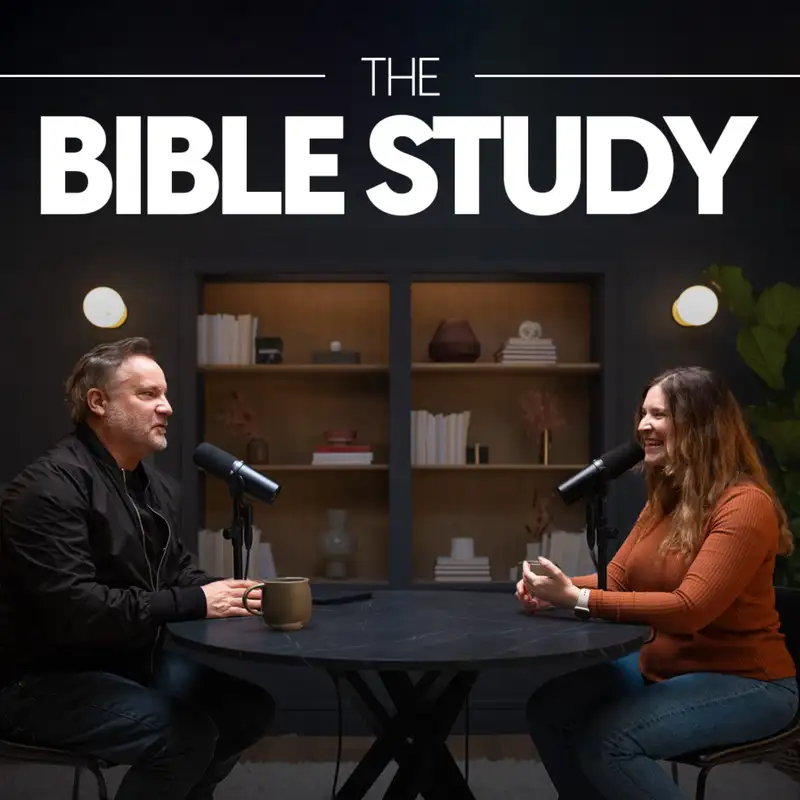
Dena Davidson [00:00:00]:
Hey, this is Dena from the Bible study Pod. It's Thanksgiving week, and we thought we would do something special. Instead of a normal Bible study episode, we are actually doing a crossover episode. So the Bible study pod is part of the Thrive Podcast network, and another show hosted there is the Am I Doing this Right Podcast with Morgan Treuill and Leslie Johnston. These girls are incredible believers, killing it in ministry and life, and their podcast is really just a fun way to explore everything related to life and faith and honor. Honestly, nothing is off the table in that podcast. We started talking about the Bachelor and Fall Leaves, and we ended up talking about hell. And what about those who have never heard the gospel? So as you're listening in with family who may not know Jesus, we thought this would be the perfect crossover episode for the Thanksgiving season.
Dena Davidson [00:00:51]:
So hope you enjoy it. This is the crossover episode between the Bible study pod and Am I Doing this Right?
Morgan May Treuil [00:00:58]:
Hey, everybody.
Leslie Johnston [00:00:59]:
Welcome back to Am I Doing this Right Collaboration.
Morgan May Treuil [00:01:03]:
A collab.
Leslie Johnston [00:01:03]:
This is our first collab.
Morgan May Treuil [00:01:04]:
This is our very first collab crossover episode.
Dena Davidson [00:01:07]:
I love that.
Leslie Johnston [00:01:07]:
With the Bible study.
Morgan May Treuil [00:01:08]:
Yeah. Yes.
Dena Davidson [00:01:10]:
I'm Dena from the Bible study.
Morgan May Treuil [00:01:12]:
Sorry. Probably knows who you are already.
Dena Davidson [00:01:15]:
Oh, wow. I. I don't know about that, but if you do, I'm Dena from the Bible study.
Morgan May Treuil [00:01:20]:
I have to tell you that when I first moved to California, started working at Bayside, the Bible study was one of the first projects that I was working on. Yes. Yeah. And you were like a household name for my family. My family was like, Dena Davidson. She's really smart. Like, when they would watch from afar, and so I feel like that's wild. Morgan, you are a.
Morgan May Treuil [00:01:38]:
You are such a gem and a treasure, and you know so much, but you're one of those people that knows a lot, and yet you don't come across, like, you know a lot. It's just the best kind of person.
Leslie Johnston [00:01:49]:
We were just. We were literally just saying minutes before we started, we were joking. You know, people say that phrase. They're like, they're playing I'm playing chess, and they're playing checkers. We're like, Dena's playing chess, and we're playing checkers. Like, you are the expert on so much, but you are so awesome, so.
Dena Davidson [00:02:05]:
We're glad to have you.
Morgan May Treuil [00:02:06]:
Also, did y' all watch any of the Disney Channel crossover shows growing up?
Leslie Johnston [00:02:10]:
Like, what?
Morgan May Treuil [00:02:11]:
Like when the Suite Life of Zack and Cody would cross over with That's So Raven.
Leslie Johnston [00:02:14]:
Oh, yeah.
Morgan May Treuil [00:02:15]:
This is like that. Everyone's been anticipating this crossover.
Dena Davidson [00:02:18]:
Mine is like, Brooklyn Nine-Nine. Nine And New Girl.
Morgan May Treuil [00:02:21]:
Yes.
Dena Davidson [00:02:21]:
If you ever watch either of those shows.
Morgan May Treuil [00:02:23]:
Yes.
Dena Davidson [00:02:23]:
There's a classic crossover episode, and it just makes me so happy. It's like this show that I love.
Morgan May Treuil [00:02:28]:
Brooklyn 9 9.
Leslie Johnston [00:02:29]:
Yes.
Dena Davidson [00:02:29]:
Yeah.
Morgan May Treuil [00:02:30]:
With New Girl.
Dena Davidson [00:02:31]:
Yes.
Morgan May Treuil [00:02:31]:
I didn't know.
Dena Davidson [00:02:33]:
Okay, so Brooklyn 99 happens in New York, and then Jess, obviously from L. A, but she visits Smit and his mom in New York, and there's a crossover episode.
Morgan May Treuil [00:02:41]:
Is it. Is it in the Brooklyn 99 season? Yeah.
Leslie Johnston [00:02:44]:
And her name is, like, Jess in the Jess character.
Dena Davidson [00:02:47]:
The character, yes. And then when you go watch it in New Girl, you know, the crossover episode, because what happens to Jess? Like, she references. Oh, my gosh, I am helping you out so much here. This is such a wonderful crossover episode.
Morgan May Treuil [00:02:59]:
I've never watched Brooklyn Nine Nine, but I love New Girl, so I will watch it. That's so good, Dena.
Leslie Johnston [00:03:04]:
Give us, like, the quick. I mean, we'll dive more into stuff, but give us, like, the quick 30 second. Who are you?
Morgan May Treuil [00:03:10]:
Who is Dena?
Leslie Johnston [00:03:11]:
Who's your family?
Dena Davidson [00:03:12]:
Who's Dena?
Morgan May Treuil [00:03:12]:
Okay.
Dena Davidson [00:03:14]:
The way I like to explain myself is that I was a homeschooled pastor's kid that decided to major in philosophy at a secular university. So basically, like, I deconstructed my faith before, it was cool. I never lost my faith. But being, you know, being this person who went into this environment where I was pounded by all of these questions and all of these realities that I'd never even thought about my faith, and I emerged from that with just a fat list of questions. Like, I remember talking to God and saying, okay, God, I've seen too many people walk away from you because of a question. If I walk away from you, it's not going to be because of a question. It's going to be because there's no good answer to these questions. So I dedicated the rest of my time as a philosophy student just to accumulating questions.
Dena Davidson [00:04:05]:
And I knew I wanted to go study, like, the other side. I'd have been steeped in the secular side, and I wanted to find great answers. So I ended up going on to earn my master's in Christian apologetics. Not so that I could host the Bible study pod with Curt, not so I could, you know, be helpful to anyone but myself. And at. At the end of that journey, I. I was so amazed by the rich intellectual legacy of the Christian faith that I just had not been exposed to prior towards to that journey. So now it's my lifelong mission just to be the bridge between people that have questions and those that have the answers.
Dena Davidson [00:04:41]:
I love that.
Morgan May Treuil [00:04:42]:
And also you just. I just feel like everyone's like her voice is so much more relaxing. Like we get. We're gonna switch over to the Bible. So you listen to her talk because she has the best voice.
Leslie Johnston [00:04:53]:
I know.
Morgan May Treuil [00:04:54]:
Amazing. Have you ever an audiobook?
Dena Davidson [00:04:56]:
No.
Morgan May Treuil [00:04:56]:
No.
Leslie Johnston [00:04:56]:
You should.
Dena Davidson [00:04:57]:
Is that a dream?
Morgan May Treuil [00:04:58]:
A desire of yours to narrate audiobooks?
Dena Davidson [00:04:59]:
You know, I first want to write a book and then I will narrate.
Morgan May Treuil [00:05:02]:
You should narrate.
Dena Davidson [00:05:03]:
But hey, if you send me your book to narrate, that's fine.
Morgan May Treuil [00:05:05]:
I'll do that too.
Leslie Johnston [00:05:06]:
Wait, are you working on a book?
Dena Davidson [00:05:08]:
I am. I've been working on it for forever and working on it is such a loose term. Leslie. It's like I wrote a little maybe like a year ago.
Morgan May Treuil [00:05:16]:
Okay, great.
Dena Davidson [00:05:17]:
But I finished it. I've actually finished the book. It's fully finished and now I just have to edit it.
Morgan May Treuil [00:05:21]:
What's it about?
Dena Davidson [00:05:22]:
It is called the True story of a Good God. And so basically I think that people, like, people look at the world that we live in and they first think, okay, there's no way the Christian story can be true. And then when they really dive into the Christian story and they get confronted by the brokenness of the world, they think, okay, this story might be true. There may be some truthiness here, but God is not good. Like experientially, I cannot say that God is good. So my heart would be that through this book that one day I will eventually write and publish. People would know that this is indeed the true story of a very good God. That is.
Leslie Johnston [00:05:56]:
I was literally just talking with someone about that last night.
Dena Davidson [00:05:59]:
That was. That's.
Leslie Johnston [00:06:00]:
You should put that book out. Cause you should. I think people do this.
Morgan May Treuil [00:06:03]:
People need this.
Leslie Johnston [00:06:03]:
That's awesome. But yeah, you're also a little busy. Cause you're like a mom. Tell us about your family.
Dena Davidson [00:06:08]:
That's my full time gig. Yeah, I guess I didn't mention any of that.
Morgan May Treuil [00:06:11]:
You're like, you have a spouse who cares about any of that?
Dena Davidson [00:06:14]:
The origin story, that was what I shared. Yes. Which I love that. Okay, so I am married to the incredible Shane Davidson. Best friend in life, favorite person to talk to, favorite person to hang out with. And that's good because we have three kids. So we just literally spend our life chasing these three people around. From the second I wake up and go greet my kids, until I lay them down to rest, we are in the middle of one big imagination game.
Dena Davidson [00:06:38]:
Right? So like at all times, I have to be trading with Shane. Like, what character you are, what world we're in. Like, what's happening in the plot. We are an imagination family.
Morgan May Treuil [00:06:46]:
Yes. I love watching you and Riley, specifically on church campus, because Riley is always in a storyline of her own creation. And yes, literally, it's like we're just. We are supporting characters in her main character journey.
Dena Davidson [00:07:01]:
Perfect way to say it.
Morgan May Treuil [00:07:02]:
Yes. Yes. She is main character energy. And you guys are like, we are here.
Dena Davidson [00:07:06]:
We are the side.
Morgan May Treuil [00:07:08]:
Cast. But it's her main quest.
Dena Davidson [00:07:11]:
I've never heard it said so accurately.
Morgan May Treuil [00:07:13]:
That is what I love. I love her.
Dena Davidson [00:07:16]:
She's wonderful.
Morgan May Treuil [00:07:17]:
That's awesome.
Leslie Johnston [00:07:18]:
I love that you have such a cute family. We love all of them. Okay, before we jump into, like, all the deep stuff.
Morgan May Treuil [00:07:23]:
Yeah.
Leslie Johnston [00:07:24]:
We have a question we ask everybody on this podcast, and it is, what is your unpopular opinion?
Dena Davidson [00:07:29]:
Okay. Okay. My unpopular opinion. I will say that it's my unpopular opinion because I think no one I've ever talked to agrees with me on this, but I feel pretty fierce about it. I love watching the Bachelor and the Bachelorette.
Morgan May Treuil [00:07:44]:
Yes.
Dena Davidson [00:07:44]:
But I strongly feel you should stop watching the episode before homecoming.
Morgan May Treuil [00:07:51]:
Wait, sorry. With the hometown dates.
Dena Davidson [00:07:53]:
Yes, the hometown dates. Strongly believe.
Morgan May Treuil [00:07:56]:
Stop watching.
Dena Davidson [00:07:57]:
Stop watching. Stop before it gets real. Before people's emotions get involved, before it becomes like a true love triangle, like, situation. You have to stop watching because.
Morgan May Treuil [00:08:07]:
Because.
Dena Davidson [00:08:09]:
Because people's hearts are getting broken.
Morgan May Treuil [00:08:11]:
Like, I'm like, this is where.
Dena Davidson [00:08:13]:
I'm like, oh, no. This is where it gets terrible. Like, it's so fun to watch those episodes and the world they create and the drama.
Morgan May Treuil [00:08:22]:
Yeah.
Dena Davidson [00:08:23]:
But then it's like, oh, my gosh. They actually. They think that they're falling in love.
Leslie Johnston [00:08:28]:
Right.
Dena Davidson [00:08:29]:
Like, it's where it gets real and we should just stop it before.
Morgan May Treuil [00:08:32]:
And you're like, he just met her. Her grandma. And it's like families are so entangled. There's producers probably still have a pick at that point. Yes. 100 origin stories and people. There's the family cat. It's like, this is all too serious.
Morgan May Treuil [00:08:46]:
And it's go.
Dena Davidson [00:08:46]:
They go from being characters to real people. You're like, oh, yes, it ruins it.
Morgan May Treuil [00:08:52]:
That's actually very true. You're like this. You're fun.
Leslie Johnston [00:08:54]:
I wish that it ruined it for me, but I really love.
Morgan May Treuil [00:09:00]:
I have, like, a person.
Dena Davidson [00:09:01]:
I root.
Leslie Johnston [00:09:02]:
Actually, I didn't watch this last.
Dena Davidson [00:09:03]:
Has your person ever won?
Leslie Johnston [00:09:06]:
Like, oh, you know what's funny? My dad. We've said on the podcast before, he. He loves watching, and I don't know if he loves it because we watch it, but he will watch it. So I think he has something to talk to about with us. But he will pick the person who will win night one, and he has gotten it right, like, four or five times.
Dena Davidson [00:09:25]:
That is a scary, crazy.
Leslie Johnston [00:09:26]:
There was, like, an amount of years that he would pick the winning person.
Dena Davidson [00:09:30]:
I feel like he could have a podcast just based on that. Right?
Morgan May Treuil [00:09:33]:
I know.
Dena Davidson [00:09:34]:
The Ray Johnston podcast now becomes that.
Morgan May Treuil [00:09:36]:
I'm the only senior leader, senior pastor in the world with a bachelor podcast on the side. This is my side gig. I weigh in.
Leslie Johnston [00:09:43]:
Do you remember when he showed a clip of the Bachelor in a service one?
Dena Davidson [00:09:46]:
I really do.
Morgan May Treuil [00:09:47]:
Moment.
Dena Davidson [00:09:49]:
The room was not with him.
Leslie Johnston [00:09:51]:
They weren't with him.
Dena Davidson [00:09:52]:
But you know what?
Leslie Johnston [00:09:52]:
He won us over, and that is what mattered to him.
Morgan May Treuil [00:09:55]:
All the other people you won over. That's amazing.
Leslie Johnston [00:09:58]:
That's a great. That's a good one. I don't know.
Dena Davidson [00:10:00]:
You can't follow it.
Leslie Johnston [00:10:01]:
It's one of those advices where I'm like, that's such good advice that I'm not gonna take.
Morgan May Treuil [00:10:05]:
Yeah, no, that's good. I understand exactly why you think that. It's like, this has become sad.
Dena Davidson [00:10:10]:
Yes.
Morgan May Treuil [00:10:10]:
Yeah. Wait, what's your fall one?
Leslie Johnston [00:10:12]:
Oh, I was telling them before. I have a unpopular opinion about fall today. I was driving to work, all the leaves are falling. I don't know when this episode's gonna air, but all the leaves were falling. It was beautiful. And I love. I think that gardeners and people who are cleaning up should not take the leaves off the ground. They're blowing them and putting them in trash bags and taking them away.
Leslie Johnston [00:10:32]:
And I'm like, fall is like leaves crunching under your feet and, like, on the leaves.
Morgan May Treuil [00:10:37]:
I want.
Leslie Johnston [00:10:37]:
I want the leaves to stay.
Morgan May Treuil [00:10:39]:
Yeah. Because they're beautiful.
Leslie Johnston [00:10:40]:
They're beautiful.
Morgan May Treuil [00:10:41]:
What happens when they turn?
Leslie Johnston [00:10:41]:
Does anybody agree with me? Leaves should stay?
Morgan May Treuil [00:10:44]:
Yeah.
Leslie Johnston [00:10:44]:
I get some thumbs up from our live studio audience.
Morgan May Treuil [00:10:47]:
What happens when they're crunchy and brown, though, and then they're just dead leaves?
Dena Davidson [00:10:50]:
They're so pretty, though.
Morgan May Treuil [00:10:52]:
No, it's like they're not orange or red anymore. They're, like, brown and, like, they're. They're like, chaff.
Leslie Johnston [00:10:56]:
It's fine. Just leave them on the ground.
Morgan May Treuil [00:10:58]:
Like, we gotta wait till it's kind of, like, hurting.
Leslie Johnston [00:11:01]:
How about this? When we start putting up Christmas decorations, you can clean up the leaves.
Dena Davidson [00:11:05]:
So, like, right now, like, no, no, no.
Morgan May Treuil [00:11:07]:
Like, like, put up mine today.
Leslie Johnston [00:11:08]:
Maybe, like, December 1st, once Thanksgiving is over. That's when you should pick up the leaves.
Morgan May Treuil [00:11:13]:
I think you should run for mayor, and I think you should tell them, hey, this is what I think about the street cleaning.
Leslie Johnston [00:11:18]:
And then, yeah, like, I have leaves. They're all in my backyard, and I do all my own yard work. And I'm like, I'm not picking these up. No chance. So that's my fall.
Dena Davidson [00:11:26]:
Unpopular.
Morgan May Treuil [00:11:27]:
That's great.
Dena Davidson [00:11:27]:
Okay. I feel like we can get some people on board with that.
Leslie Johnston [00:11:30]:
Yeah.
Morgan May Treuil [00:11:30]:
Is this the most small talk you've ever done on a podcast before? You guys, I mean, so the Bible.
Dena Davidson [00:11:36]:
Study potty's like, hey, this is Dena. This is Curt. Genesis 4. Yes. And then we start reading.
Morgan May Treuil [00:11:41]:
It's not giving that. You know what?
Dena Davidson [00:11:42]:
It's great energy, though.
Morgan May Treuil [00:11:44]:
I do love.
Leslie Johnston [00:11:44]:
She's like, we are not posting this on the Bible study.
Morgan May Treuil [00:11:46]:
Curt would not survive in this environment is what you're telling us.
Leslie Johnston [00:11:49]:
We should bring Curt on. That would be fun.
Dena Davidson [00:11:51]:
I feel like Curt would probably have some unpopular opinions he would love to share. That's true. Yeah, he'd love that part. He would like it.
Morgan May Treuil [00:11:57]:
Okay, so this is what we're doing for this episode. Okay. Predominantly, our audience is in the younger demographic. I won't just say Gen Z, because.
Leslie Johnston [00:12:04]:
There'S many generations, by the way, for.
Dena Davidson [00:12:07]:
All the Bible study pod listeners who've never listened to Am I Doing this right? But are definitely gonna start listening now. Cause you guys are so awesome. Tell us. See how the episode goes. Tell us a little bit about who you are and the hope and vision of the podcast.
Morgan May Treuil [00:12:21]:
Yeah. Well, I'm Morgan and this is Leslie. I'll let you introduce yourself too, but we both. We work in ministry at Bayside Church. I am the young adults pastor, and we get to do this podcast together. Tell them what you do.
Leslie Johnston [00:12:37]:
Yeah, I run, like, our conferences and I'm on that team, so I get to do a lot of. I say I have the most fun job at Bayside. I could do all the fun events and all that stuff.
Morgan May Treuil [00:12:45]:
Yeah. And I think it's fun too, because, yeah, our jobs mix well together, especially for who. Who. It feels like our predominant audiences. But we, We. We started this podcast almost two years ago.
Dena Davidson [00:12:58]:
Yeah.
Morgan May Treuil [00:12:59]:
And it was kind of a side hustle, side dream of how can we create really authentic, safe spaces for people to ask the question, am I doing this right? But in, like, long form discussion where we can really ask good questions, be vulnerable, and ultimately steer everybody back to the focus of Jesus.
Dena Davidson [00:13:21]:
Yes.
Morgan May Treuil [00:13:22]:
But doing so through having different guests on and talking about different areas of life and faith and struggle, relationships. So we kind of center on these kind of four pillars where we ask ourselves the question, am I doing this right in my relationship with God, my relationship with myself, my relationship with my relationships, and my relationship with my purpose, which can be work or, you know, calling, whatever those things are. And so that's the vision of this podcast. And yeah, so it kind of revolves around a lot of different topics underneath that sub, that big topic, but that's kind of the vision for where it came from. So we've been doing it for almost two years now.
Leslie Johnston [00:13:56]:
Yeah, we want people to walk away being like, oh, I'm not the only one who feels this way. Or I feel like this has. I've been thinking a certain way, and now I listen to this, and it's helped me think a better way. So I think. And we just want people to feel like this is an accessible space to come and listen and feel like, oh, wow, this whole, like, faith conversation is really accessible and it's for real people. Like, it's not for. Just buttoned up, you know?
Morgan May Treuil [00:14:23]:
Yeah.
Dena Davidson [00:14:24]:
What's your classic, like, church?
Leslie Johnston [00:14:26]:
If someone has a. An idea in their mind of what a church person would be like, it's like we're trying to make it more accessible.
Morgan May Treuil [00:14:32]:
Which. One of the things I'm. I was telling you this yesterday when we were talking about this episode. One of the things I'm most excited for about this crossover because the Bible study majors in the Bible, and we. We tend to, like, we want to take the Bible on this podcast and allow people legit space to ask the hard questions. And that is something in the Christian church that feels like it's a lost art. Because, yes, we're in this movement right now where everyone's like, no doubt is good. Bring your doubts, bring your questions, bring your fears.
Morgan May Treuil [00:15:03]:
Like, it's good to wrestle with God. But then when you actually bring, like, your real wrestlings to God in the church, you feel like you're being judged, labeled, or it's not actually a safe space to ask some of your hardest questions. And so what we were talking about is, like, this is the perfect collaboration episode, because what we want to. What we set out to do and aim to do is like, there's nothing off limits. Actually, like, all of these questions, all of this wrestling is. Is good. Right? And so some of the questions that came in today, I'm like, this will be good to have Dena on to talk about some of these things, because these are things that we've we've wanted to wade into for our audience, but haven't had the right voice to come in and and help us form our thinking around some of these things. So it's kind of a no off limits Bible episode, basically, which I think will be good for the Bible study too, because you guys go book by book.
Dena Davidson [00:15:55]:
We do.
Morgan May Treuil [00:15:55]:
And this will be a more jump around topical, but with what we see within the text, I think will be really cool.
Dena Davidson [00:16:00]:
That's so helpful.
Leslie Johnston [00:16:01]:
Give us a quick for people who maybe listen to Am I doing this right? But not the Bible study. What is the Bible study?
Dena Davidson [00:16:06]:
Sure. So the Bible study pod, we take the section of scripture that we're unpacking at Bayside, the church that we're all part of on the weekend, and we just go like a thousand times deeper. Because when you're talking to 10,000 people and you only have a certain amount of minutes, you can go so deep. But when you have more of a long form podcast and you're sitting around the table trading ideas, you get to go really, really deep. And so that's our heart, is that we want to go super deep into the text. We spend about 90% of the episode just asking the question, what is the Bible saying first? What is it saying to the original hearers of this? Let's make sure we rightly understand it. We can't make the Bible say things that it never intended to say. So let's make sure we're actually hearing what God has always intended us to hear.
Dena Davidson [00:16:54]:
And then we spend the last 10 minute. Or it really, it worked out to be like more like four minutes of the episode asking the question, okay, what should we do about this? You know, it's one thing to hear what the Bible says, but what's one simple application point we can grab?
Morgan May Treuil [00:17:08]:
This is great.
Dena Davidson [00:17:09]:
That's great.
Morgan May Treuil [00:17:09]:
Can we dive into some hard questions about the Bible? Some of these, some of these have been submitted and some of these are just questions that were submitted previous to today. But first question kind of right off the bat, and I think this would be helpful for all listeners, is why do Christians consider the word of God, the Bible, to be the ultimate authority that we follow? Why is it not just a list of guidelines? Why is it not just a good book that inspires? Why is it the ultimate yes. Resource?
Dena Davidson [00:17:37]:
Okay, this is the perfect question. I love this question. I love that someone's asking it. And the reason why is that there are different ways that we can know things are true. Primarily, we know things through reason, experience, culture, and evolution, it's a reason you think about it. There are things that you just know through thinking them through experience. You go out into the world and you encounter facts and then you learn about them through the exploration of your senses. That's experience.
Dena Davidson [00:18:06]:
There's also internal experience, like I know myself, like I have decided myself that something is true. That's inward experience. We hear it. When we hear people say, I feel that something is true. Like what does that mean? People used to say, I think something is true, I believe. But now we say I feel that. Well, we're talking about that inward experience, third way culture. Like this is just your mama told you so, right? Like I know that I have to say please and thank you because my mama told me so.
Dena Davidson [00:18:35]:
Then there's evolution. There's things that have been pre programmed into us through the process of evolution. So those are four ways of knowing. Those four ways get us so far in knowledge. They can teach us about gravity, they can teach us about what you, Leslie, value. What those four things cannot get us is truth when it comes to meaning, beauty, the ultimate purpose of life and morality and the existence of God and whether or not we are free. So you think about that list like freedom, what we value, what is beautiful, what is the ultimate purpose of life, whether or not God exists. These are things that reason, experience, inward or external culture and evolution, they can't give us knowledge of.
Dena Davidson [00:19:25]:
So do we think it's possible to actually know the truth about these things? Do we think it's possible to actually know the truth about whether God exists, whether I'm free, and whether there's an ultimate purpose to my life? Into that question, Christianity says, yes, it is possible to know the truth about these things. And we know it through a fifth way of knowing, which is called revelation. And the big idea of revelation is that there is a God. And he has spoken, to quote Francis Schaeffer, which is a Christian philosopher. It's a beautiful idea. So there's this idea that there's a God and he actually wants to communicate. And he's taken great pains to actually put down into a format that is not controlled by Leslie, is not controlled by Morgan, but is accessible to everyone that has the ability to hear as it is being read or to read for themselves. He's taken great pains to communicate to us in a way that we can all access.
Dena Davidson [00:20:27]:
And that is why Christians revere the Bible as the ultimate authority for our life. Because when you, when you think of it that way, like there is a God and he has spoken well, obviously what the omniscient, like all knowing God of the universe thinks about things should count a great more like a great deal more than what I dena think about things. And that's why it makes more sense to me to take any issue and my first question is not what do I internally believe about this or even externally what do I experience in the world about this, but to first ask the question what does the all knowing God of the universe say about this? That's the big picture idea behind why Christians believe that the Bible is the ultimate authority for our lives.
Morgan May Treuil [00:21:14]:
That's great.
Dena Davidson [00:21:15]:
That's really good.
Leslie Johnston [00:21:16]:
Okay. Oh, do you have a thought on that? Okay, I have another question for you.
Dena Davidson [00:21:20]:
Yeah.
Leslie Johnston [00:21:21]:
Why do we pray when God knows what's gonna happen?
Dena Davidson [00:21:24]:
Yeah, it's a great question. That's so good.
Morgan May Treuil [00:21:29]:
Like why do we pray when it doesn't feel like it actually changes anything either? Like if God, if God knows what's gonna happen and he's sovereign, it's my prayer, do anything, does it change any affect anything?
Dena Davidson [00:21:39]:
Yes. Okay. I had to clear my throat for this one. Well, I mean to give you like a really, really great answer would be for us to like talk about what actually time is, you know, and the A theory of time and the B theory of time and things that we're actually not going to go into, like thank God, thank you Jesus.
Morgan May Treuil [00:22:01]:
Not getting A and B theory.
Dena Davidson [00:22:03]:
The Bible study people are like, please.
Leslie Johnston [00:22:05]:
I don't even know. There was multiple.
Dena Davidson [00:22:07]:
Yeah, few human beings would appreciate us diving into the A and B theory of time and it put everyone else to sleep and make them feel really confused and dumb. And even as I'm talking about it, it would make me feel confused and dumb. All right, so let me just put it this way. We have to think of prayer as conversation with God. Conversations are conversations. They're relational in nature. And that means that when I'm conversing with someone, like that is the point. Yes.
Dena Davidson [00:22:40]:
When I'm talking with Shane, I do hope to influence his opinion. Right. There are oftentimes problems, like in our marriage or in our life, practical problems that we have to solve. But even if I can't convince Shane to come over to my side, even if it feels like my conversation is doing nothing, the simple act of talking to him, there is power in that because I'm connecting my heart to his heart. So I'd say to the person who just feels like, man, I'm praying, but what is the purpose of this? Because God already knows everything. I'm going to say, well, first I would say yes, but he knows that you're going to say it because that's based on his foreknowledge of seeing the moment in which you said it. So if you choose in that moment to not have that conversation, then know that you have taken your human freedom and decided to limit your interaction with the God of the universe who extends this invitation to connect with him. So that'd be my first thought.
Dena Davidson [00:23:39]:
The second thought is, if you feel like your prayers are not making an impact, just know this. You are talking to a very powerful, very loving God who has literally given you an opportunity to influence the trajectory of all of human history. He's given us that authority and put it in our hands to explain exactly how our freedom works with his omniscience. That'd be a whole different podcast. That wouldn't be fun. But the language of scripture is so clear. God makes decisions, in part in a response to how we human beings are. So why not try to first connect with the God of universe and then to influence.
Dena Davidson [00:24:24]:
I think about the image that Jesus gives us where he says, like, hey, there's this. There's this family who's all gone to bed, right? And in that time, like, if you put your kids to bed, there's like six people laying on the floor, and it'd be very hard to get up and go answer the front door. He says, like, I want you to think about someone who comes and knocks on the door and says, like, give me some bread. Give me some bread. He said, not because of the relationship, but because of the persistence of knocking. He will get himself out of bed and cross. Cross over that great group of people on the floor and go give his friends some bread. So too, Jesus is saying, that is the type of persistence I want you to have in asking me for things.
Dena Davidson [00:25:05]:
Like, that's the image that God, when he was walking on this earth, said, I know they're going to have this question, right, about omniscience, and it's going to feel to them like it's not actually working. So this is the image I want in their head, one of constant persistence. It's not working. I'm going to keep knocking. He hasn't heard, I'm going to keep knocking. Nothing is changing. I'm going to keep knocking.
Morgan May Treuil [00:25:27]:
Wow.
Dena Davidson [00:25:27]:
Wow.
Morgan May Treuil [00:25:28]:
I've never thought about it in that. In that, obviously I've prayer is about relationship, because prayer is conversation. But I've never thought about it in such a way where the sovereignty of God may be designed our relationship and his actions to be intertwined with our involvement. Like, I think I, I, I view them very separately, like God's doing what he's going to do and then my prayers are doing what they're going to do. But it's, it's probably part of the design of how God would, you know, all the way back to Abraham and Moses and all of the characters that were, you know, that we rehearsed their stories and we watch how their prayers did change things. It's like, well, maybe the sovereignty of God creates, creates such a world experience where he and your prayers and the conversation work together to make things happen. Exactly. Part of his sovereignty is that he would have created the relationship in that way.
Dena Davidson [00:26:28]:
That is 100.
Morgan May Treuil [00:26:29]:
I've never thought about that. That's actually really interesting.
Dena Davidson [00:26:32]:
Yeah.
Morgan May Treuil [00:26:32]:
Okay. So we're in a time where at least, you know, our generation, the generation underneath us and probably the generation above us, everyone wants truth, but people don't want truth to be so rigid that it can't be flexible to their things. Right. So you see a lot of, I think, I think you could, you could break this question down into two parts, which we won't be able to do because of time's sake, but feel free to answer it however you want to. Everybody wants to define what's true for them. Whether that be all religions can be true or only this one is true. So how do we come to an understanding? I guess the real question I'm asking is like, why can it only be Christianity? Why can't it also be my crystals? Why can't it also be Buddhism? Doesn't it all lead to the same place? Isn't all the gods kind of just like the same God? Why does truth have to be so rigidly one thing? And why does it have to be Christianity?
Dena Davidson [00:27:32]:
First, I'll say the impetus behind that question is often a response against, like a hatred in Christianity towards other religions and towards other ideas. So I, First I would say, like, if you are, if you're anti the hatred that has existed in, in different times and places and even in current times in places against people like hating other religions and hating other people and just saying no to other people's ideas because they're not what they've been raised in, then that's a decent impetus. Like we should, as Christians agree with that. The reason. Well, first I will say, I guess this is second, second I'll say if you want it to be that way, then what you're saying is that I am the ultimate authority for my beliefs, whether I regard something as true or false, is going to be on the basis of one of those five things that I just named reason, experience, internal or external culture, evolution, or revelation. So someone who's saying, like, I want it to be crystals, and I want it to be this part of that religion and kind of all paths, what you're saying is that I want to decide what is good, and I want to decide that everything, you know, has equal access to the opportunity to be true. The key word there is I, I, I, I. Because I can promise you that if I were to dig into the person saying that there are things that they don't want to be true, there are religions that they don't want to accept because they're very intolerant and hateful and bad for humanity.
Dena Davidson [00:29:10]:
And they don't want to see child sacrifice, and they don't want to see violence and injustice. And so what they're basically doing is then you're elevating yourself to the position of being the ultimate decider. You're the authority.
Morgan May Treuil [00:29:24]:
Yeah.
Dena Davidson [00:29:25]:
So that's one idea. And if you want it that way, you can have it that way. But with that comes the fact that as your own authority, you also have to be your own savior. You have to now be responsible to save yourself from the mess of the world and the brokenness that exists in it. Christianity, classic historical Christianity, just has a very different idea. And lovingly, I would say it is a better idea, and that is that there is a God who looks at a broken world full of human beings incapable of saving themselves from the mess that we've created and says, I love you. I want to save you. And the reason that Christianity is the only way is because there is a God and he has spoken the truth to us.
Dena Davidson [00:30:14]:
And so these are just different ideas. And I think it's helpful not to just ask the question, what do I want to be true? But to also ask the question, well, do I believe that there is a God, and do I believe that he's actually communicated? Because those are the central questions. Because if he has, then we should lay down our authority to decide what is good and true and turn that over to him to make those decisions. Great answer.
Leslie Johnston [00:30:41]:
I was reading a book a couple days ago, and it had talked about how we approach the enemy and how a lot of times people in the world live with either an overinflated view of, like, the power of Satan, or they underestimate and kind of go, ah, there's not really, like there's not really an enemy, like they kind of live with either. Like, they don't acknowledge him at all or they're over acknowledging, in a sense how as Christians should our, like, thinking be towards the enemy? And kind of, where. Where do we. Where should someone lie on? Like, should we be absolutely terrified? Should we be like, oh, no, he has no power anymore. And because Jesus obviously did what he did on the cross. How would you, how do you, like, reconcile that in your mind, even on like a daily basis?
Dena Davidson [00:31:34]:
Yeah. Well, for first, I would say we should not be in a place of fear. It is so natural to fear the enemy, but fear is really just stepping into the enemy's territory. Fear is not an emotion that we human beings are supposed to feel except in that, like, holy reverence of God. And the best way I can describe, like a proper holy fear of God is like, what happens when you go out into a lightning storm, right? Like, if you ever been in a thunder, you've ever been caught in a storm, there's a part of you that just, like, steps forward in wonder and then draws back in, like, holy reverence. And that impetus to, like, step back in fear is like, if I don't handle myself correctly, this could harm me. Right? That is a holy reverence. Thank you, towards God, towards the enemy.
Dena Davidson [00:32:25]:
Anything short of that fear. That holy reverence of God is in the enemy's territory and he wants to make us afraid. So I think the way to keep ourselves from his territory is to be aware of his existence, but submitted to the higher power. So aware that there is an enemy, but not to think of him often, because when we're thinking about him, we're thinking about Him. And the scripture asks us to think and to dwell on what is good, what is lovely, what is true, what is honorable. And those are none of the things that the enemy is. So I've done a lot of. I've walked with a lot of people who've encountered dark spiritual warfare in their lives.
Dena Davidson [00:33:10]:
And always what starts to break through for them is when they're able to pray a prayer of surrender to God and say, God, if there's anything inside of me that's not surrendered to you, please take it like I surrender to you. Especially in the realm of unforgiveness. Like, there's this person in my life that wounded me that I don't want to forgive. And then we forgive that person, and then we come under God's protection, and then we get to obsess about God and think about him always and let him take care of our enemy, because he really is the one that fights our battles. On the Bible study, we're just now unpacking Ephesians 6, and it's all about, you know, putting on the full armor of God. And yesterday's episode, I was like, yeah, so we're gonna go do battle. And then Cameron's like, well, actually, the whole passage, Dena, is about us just standing. It's not about us going out and doing battle, but it's like we're supposed to stand and protect what Christ has already won.
Dena Davidson [00:34:12]:
It's like the battle has already been fought. The battle has already been won, and we're just supposed to stand. Stand and protect that which has already been claimed for us.
Morgan May Treuil [00:34:21]:
That is a really. That's great.
Dena Davidson [00:34:23]:
Good job, Cameron.
Morgan May Treuil [00:34:24]:
That's a great. Standing versus armoring up to run into battle, but armoring up to be armored up, but to stand in victory, that's already been won. Yeah, sounds really good. I think this is so funny because I think everyone will understand this question, even though it wasn't submitted like a question. And it's very vague that someone literally just said eternity.
Dena Davidson [00:34:46]:
Yeah, eternity.
Leslie Johnston [00:34:48]:
And no punctuation even.
Morgan May Treuil [00:34:49]:
Nothing literally. Just the. Not sure if it's eternity, but I get it, because I think this is something that, like, that people struggle with. It's. It's like the. It's the. The unknowable scariness of eternity on both ends.
Dena Davidson [00:35:04]:
Yeah.
Morgan May Treuil [00:35:04]:
But I know people who are scared of heaven because it's like, the concept of eternity. And if I think about heaven too much, it also makes me want to throw up a little bit.
Leslie Johnston [00:35:12]:
I feel like I'm about to have a minty bee.
Morgan May Treuil [00:35:14]:
A minty be, because you're like, how can I be somewhere forever since they did it? Vague. It's. Whatever direction you want to go. General thoughts about eternity.
Dena Davidson [00:35:26]:
Yes. All right. Well, eternity does have two flavors in the Bible. There is a bad one and a good one. So the bad news first. Like, I would say the concept in the Bible that I have struggled with the most. My darkest, hardest question has certainly been the concept of hell. And just thinking about eternal conscious suffering, is that biblical? Is that what the.
Dena Davidson [00:35:52]:
You know, is that what the Bible is really trying to say? I deeply wrestle with that question.
Morgan May Treuil [00:35:57]:
And does that seem like God is. Is probably a question that people are asking, too?
Dena Davidson [00:36:00]:
Yes. And best I can say, I hate the doctrine of hell. And I think that's okay, because I think God hates hell as well.
Morgan May Treuil [00:36:11]:
Right.
Dena Davidson [00:36:11]:
Like, I like what I've Done about hell. I remember one time I was just literally, like, God, why? Like, why hell? Why would you create people and then send them to hell? And I was just having this whole really hard conversation with him. I was crying, and I remember so clearly. I don't hear God audibly very often, but this was one of the times I remember he audibly, like. And I say audibly, like, in my mind, clear words, said, dina, what have you ever done about hell?
Morgan May Treuil [00:36:39]:
Huh?
Dena Davidson [00:36:41]:
He shed some tears, like, thought, like, read some books, like, chased this really hard question, had some hard conversations with your agnostic professor, like, what have you done about hell? And like, all good questions do, like, that question arrested me. And I. I realized, like, for all that, I misunderstood about hell, like, God sent his own son to earth, watched him die, separated himself from himself on the cross, gave his full wrath towards his son to save people from hell. And he basically was saying, like, your tears are wonderful. They are well placed. But you need to know the rage in my heart against hell is beyond what you can comprehend. And so these questions are good, but the attack in your heart over them is misplaced.
Morgan May Treuil [00:37:32]:
Wow.
Dena Davidson [00:37:33]:
So I think, like, if we're gonna grapple with the idea of any type of eternity separated from God, which I think is a real concept that the Bible teaches, that the Bible teaches that God is the foundation of all good. And that there are those at the end of days who, when given the option of being united to God or separated from God, they will choose forever to be separated from him. And we think of that as, like, cool, I can have my life and be happy. And, you know, we don't realize all goodness is grounded in God. And the choice to be separated from God is the choice to be separated from all goodness. And that fundamentally is what hell is. It is the eternal separation from God who is the foundation of all goodness. So that is real and that must be grappled with.
Dena Davidson [00:38:20]:
By the way, I think there are so many ways to. Biblically, we can answer the question, what about those who have never heard about Jesus? So many easy biblical answers. Basically, God is good at saving people, and he's done everything in his power to save people.
Morgan May Treuil [00:38:36]:
And it's his desire to do that.
Dena Davidson [00:38:37]:
It is his desire.
Morgan May Treuil [00:38:38]:
I think that God's, like, not desiring for people to be saved. Read the Bible, but he's just waiting to see what you'll do.
Dena Davidson [00:38:45]:
Yes.
Morgan May Treuil [00:38:46]:
That is not right. That's not the heart of God.
Dena Davidson [00:38:48]:
Exactly. If there is any possibility that someone would choose to be united instead of separated, I Think every page of Scripture tells the same story, that God will choose to make a way for them to be united.
Morgan May Treuil [00:38:59]:
Yeah.
Dena Davidson [00:39:00]:
But now that other question.
Morgan May Treuil [00:39:01]:
Yeah.
Dena Davidson [00:39:02]:
How do we anticipate heaven and actually look forward to it? This is gonna sound like contrary advice, but I think the best way to look forward to heaven is to lean into the ache you feel on earth every moment. It doesn't matter if it's the most beautiful. Like, you feel so enraptured and caught up in, like, that newfound love. There's a part of your soul that aches because, you know, it's transient. You know, it's passing. You know something is going to come along and snatch it from you.
Morgan May Treuil [00:39:36]:
Yeah.
Dena Davidson [00:39:37]:
Like, you can go out into the world and see the most beautiful of sunsets. Or if you're standing by the ocean, you can see, feel the immensity. And part of your soul will ache at the beauty, because, you know, that's your soul knowing there's something even more than this beauty that I am made for. And C.S. lewis famously wrote the argument from desire and said, if there's this desire and hunger inside of us, that's one of the best indicators that we are created for something more. And so I don't think we should, like, think about eating all the time in heaven and feasting and singing and being in robes and, like, all of these images that are like, that sounds awful.
Morgan May Treuil [00:40:17]:
Yeah.
Dena Davidson [00:40:18]:
Yeah.
Morgan May Treuil [00:40:18]:
Right?
Dena Davidson [00:40:18]:
But apparently there's not gonna be sex and I won't be married, and it's just like, what are we even talking about here? That's probably not the best way to think of heaven.
Morgan May Treuil [00:40:27]:
Yeah.
Dena Davidson [00:40:28]:
The best way to think about heaven is every most beautiful moment of your life that you also felt that ache. And think of all the beauty without the ache. That is what heaven, I believe the scriptures say, is gonna feel like. Yeah.
Leslie Johnston [00:40:44]:
I had someone say when I was younger, they were like, when you think about heaven, he's like, I would imagine if someone were actually. Now, I know there's stories of people who are, like, you know, kind of on the edge of death and they have an experience, but if you were genuinely able to go to heaven and then come back down on earth, that you couldn't even stand, like, one moment on earth because of the difference of how it feels to be in heaven.
Dena Davidson [00:41:09]:
Versus earth, that was cool.
Leslie Johnston [00:41:10]:
And I was like, that was a.
Dena Davidson [00:41:11]:
Really cool way to look at that.
Morgan May Treuil [00:41:13]:
That's great.
Leslie Johnston [00:41:14]:
I have a question about heaven. Do you. We talk about this as our friends because I think we're all like, man, it is such a hard question to wrestle with with heaven and hell and that some people are not going to be saved, all that type of thing. Do you think there's even, like, a shred of a possibility? Talk about this all the time. Do you think there's a shred of possibility that maybe everybody gets saved? Like, at the very final end? Like, someone. They're dead, they died, and they're standing in front and there's an option, like, do we just not know? Like, I just.
Morgan May Treuil [00:41:47]:
Last call.
Leslie Johnston [00:41:48]:
Everybody gets up to heaven. And how do you come to terms with. In, like, revelation, how doesn't God, like, get rid of hell? Isn't there something in there? How it talks about, like, he finally defeats the enemy, then what happens to hell and all the people that are in hell? Yeah, that's my. That's my personal question.
Morgan May Treuil [00:42:07]:
That's not.
Dena Davidson [00:42:09]:
I love that you asked the question that can get me, like, kicked out of a lot of theological camps and just canceled. Right.
Morgan May Treuil [00:42:15]:
Answer it, however you.
Dena Davidson [00:42:16]:
No one on our podcast side is gonna cancel you. Okay, Bible study pod, dip out now. Deject, eject. No, no. It's a great question. Here's what I'll say. In my study, I would count myself. And this is not what the Bible says.
Dena Davidson [00:42:33]:
This is where I count myself. I would count myself in, like, the Hopeful Lewis type, which says basically, like, doesn't believe that all people will be saved, but believes that hell is locked from the inside, that only those are in hell that actually desire to be there. So CS Lewis famously said in the Great Divorce, he said, in the end, there will only be two kinds of people. Those who look at God and say, thy will be done, and those to whom God looks and says, thy will be done. So his concept there is that hell is locked from the inside. But at the end of the Great Divorce, he kind of leaves it possibly open that this one person who went from hell on a field trip to heaven, that he actually found a way to stay in heaven. So I would count myself as a biblical hopeful person that if there's any possible way for a person to be saved, even if in their human life they did not hear the name of Jesus, that they would still be saved. Here's where I wouldn't count myself.
Dena Davidson [00:43:36]:
I don't think that hell will ultimately be abolished. I can hope for that. I can hope that maybe that's a story of the Bible that just hasn't been written. But I do think there is a sense in Scripture that the big story is that there are those who choose to be separated from God, and that God honors that free choice. So I believe pretty clearly in freedom as a concept in scripture. Some biblical scholars would disagree with that, but I think you have to ignore a lot of the biblical texts to come to that conclusion. And I ultimately see the existence of hell as God honoring human choice and saying, this choice to be separated from me is the choice I'm allowing you. And it is the cost of what a real relationship is, because real relationships are not forced.
Dena Davidson [00:44:27]:
And I think about what it would take for God to compel belief in him. I think the hope, Leslie, that everyone says is like, enough time in hell will eventually make people choose God.
Morgan May Treuil [00:44:40]:
Right, Right.
Dena Davidson [00:44:41]:
But I think the story of scripture is different. We are in our own hell right now. Like, the broken world we live in actually is hell, but we find ways to make it heaven. And so I would more say that the people in hell would probably find ways to make it their own heaven before some of them would choose to enter heaven.
Morgan May Treuil [00:45:02]:
So. Interesting.
Leslie Johnston [00:45:02]:
Yeah, that's a really good way to think about it. I like that you're like, no, God is giving you the choice. Because in my mind, sometimes you think of the people who maybe, like, the way they grew up was so different. Like, they were in a different religion and they couldn't get out, like, in a sense. Or people who had such a hard upbringing that they actually can't even emotionally connect with God in that way that I just feel for those people where I'm like, wait, but then they're gonna go to hell. Like, all these things have happened to them. So it's just this hard wrestle. But I like your thought of people will choose hell if they're choosing hell over God.
Leslie Johnston [00:45:42]:
That is ultimately God loving them enough to go, this isn't love if you don't have a choice. Yeah. And that is true. But I'm biblically hopeful like you are.
Morgan May Treuil [00:45:52]:
Yeah. Yeah.
Dena Davidson [00:45:54]:
I don't think any of those people, by the way, will be in hell. I think God is just way too good at saving people.
Leslie Johnston [00:45:59]:
Yeah.
Dena Davidson [00:45:59]:
For someone who just. If they had met the right Christian and if that Christian had been more faithful. I'm like, I'm part Arminian, but I'm like a good Calvinist in that way. It's like, hey, God is too good to let someone perish and go to hell on the basis of my sin. Like, he sent his only son to die. He is not therefore going to let me mess it up. If someone's going to choose to know him, then they will choose to know him.
Morgan May Treuil [00:46:25]:
Yeah. What do you say to the people that are, they have, like, salvation, fear, insecurity. Insecurity, Yeah. I was just reading in Matthew, and it's the not everybody who says, lord, Lord will enter. It's the, like, depart from me. You didn't actually know me. But it's funny because they, they would. He's.
Morgan May Treuil [00:46:45]:
I think it's, I think I'm paraphrasing it. Cause I don't have it pulled up. But they use his name. They perform miracles in his name. But then when they get there, it's like, I didn't actually know you. And Mark. Mark has this thing. Mark Clark has this thing that he says that is, is inspiring and cool, but also, I think, like, it has tended to even sometimes inspire some salvation and security in me of the whole.
Morgan May Treuil [00:47:11]:
Like, it's not enough just to know. It's, it's to treasure and to like, revere above all else. But then you look at the times in your life where you're like, okay, but I, I, I know Jesus, and I'm a Christian, and yet I'm not treasuring Jesus above all things. Like, am I saved? Right. And I think that there's probably a fair bit of people listening to this that are wondering, like, how can I be 100 sure that I'm one of the people that God is really good at saving? Because people, people, people make it a little bit, I think, complicated in how they teach it. What, what's your, what's your advice to salvation insecure people?
Dena Davidson [00:47:46]:
That's funny that you brought up Mark. I don't know what episode it is, but Mark and I asked and answered that question, and he kind of was more gracious, and I was more like the hard line.
Morgan May Treuil [00:47:55]:
He goes back and forth.
Leslie Johnston [00:47:56]:
He was like, he was like, God.
Dena Davidson [00:47:58]:
Is really good at saving people. Your salvation is not based on your works at any point. So that insecurity, you probably shouldn't be insecure. I'm like, I don't know, maybe you should be insecure. I think ultimately there are certain tensions that the Bible wants us to have in our life. The tension between God's sovereignty and our freedom is one of the tensions we're meant to wrestle with and not know where God's sovereignty respects our freedom and where our freedom is limited by our sovereignty. I think that our eternal security is one of those things that we are supposed to live in tension about. On the one hand, I believe that we are supposed to know that we are saved, and then we are also to Work out that salvation with fear and trembling.
Dena Davidson [00:48:52]:
And so I think if you do not have. If you do not have some type of sin in your life, that the Lord is saying, get rid of this, Morgan. Like, if you are earnestly trying to follow the Lord, then no matter how imperfectly you are doing it, you're probably in a good spot. And you should be less fear and trembling. If you at any point are literally just giving the middle finger to God and saying, I'll obey you in nine areas. But this one area, you don't get me. You should be in fear and trembling. Because the Bible says, like, when you love someone, think about it this way.
Dena Davidson [00:49:33]:
I'm married to Shane. If I was like, yeah, I'm this amazing wife, but, like, I go out and sleep with whoever I want. Well, doesn't matter. All those ways in which I'm an incredible loving wife, that one betrayal, that one act of not loving him, like, that really wrecks the relationship. And so I think we're meant to live with that fear and trembling, but only we're in that. When we're in that heart space of giving the middle finger to God on purpose.
Morgan May Treuil [00:50:03]:
Yeah, that's good. It's a good way of thinking about it. So.
Leslie Johnston [00:50:05]:
So for an example of that, like, if somebody is going, hey, I, you know, I think of some, like, let's take a sin, for example. Like, oh, you are somebody who really. Why am I just thinking murder?
Morgan May Treuil [00:50:22]:
But it's like, like sex before marriage.
Dena Davidson [00:50:25]:
Sure.
Leslie Johnston [00:50:25]:
Struggles with sex for marriage. It's a good one, not a good one.
Morgan May Treuil [00:50:28]:
But a good example is like, hey.
Leslie Johnston [00:50:31]:
I want to follow after God. I'm doing all of these things, but I can't stop sleeping with my boyfriend.
Dena Davidson [00:50:38]:
Yeah.
Leslie Johnston [00:50:38]:
Should I be afraid that I'm not saved?
Dena Davidson [00:50:41]:
I would say no. If in your heart, your heart is. I want to follow God in this area of my life. Like, if you sense in your heart I want, or even I want to want to do the right thing, then I think you're in the camp of, like, you have holy conviction, right? You can sense the spirit talking to you and convicting you of sin. When you should be afraid for your salvation. This is the scariest part is when you're beyond the fear of your salvation. It's when you have a sin in your life that you're like, I literally could care less. Like, no matter what God says, I'm not going to change.
Dena Davidson [00:51:19]:
That's when you really should be trembling because that means that you have decided you are the authority in your life. And that you don't care if you're hurting the heart of God or harming yourself. You've made yourself the own authority.
Morgan May Treuil [00:51:33]:
I think one of the most encouraging passages on that is actually the internal dialogue that Paul records in. Is it Romans, right.
Dena Davidson [00:51:42]:
Or seven.
Morgan May Treuil [00:51:43]:
Yeah, Romans seven. Where he's like, he literally says the same thing basically over and over again. And it's like going. It's. It's like, I don't want to do the things that I know I should do, and the things I should do I don't do, but I want to do them. And I'm struggling. And it's, it's literally, it's. It's a.
Morgan May Treuil [00:51:58]:
It's a full on recorded Minty Bee in the greatest. In the greatest, like, Romans. Exposition of the gospel. Right. And I think that's the best sign. It's like, it's not the absence of sin or the absence of struggle. It's the. It's actually the struggle that encourages you, that you.
Morgan May Treuil [00:52:16]:
That you're fighting for something. Right. And like you said, I love, I love the point about, like, people who are in hell are people that want to be in hell that encourages me because I don't want to be in hell.
Leslie Johnston [00:52:28]:
Yeah.
Morgan May Treuil [00:52:28]:
I want to be with God in heaven.
Dena Davidson [00:52:30]:
Yeah.
Morgan May Treuil [00:52:31]:
But that's not, that's not to say that you won't have, have struggle or have sin, temptation, or tendencies. Like, that's actually the whole Christian story is, is the fact that that's been dealt with on the cross and that as you're on the wilderness journey, you're still dealing with all of that and looking backwards. But there's. There, there's meant to be a fight and a struggle. The scary part is when there's no feeling towards it at all.
Dena Davidson [00:52:53]:
And I, I mean, I had like, the best Christian upbringing. I literally have zero excuse to have sin in my life. Like, I've always known what it. I've always been taught correctly. I don't have a lot of wounds from my family or my life. I've lived a really wonderful life and I am so sinful. I'm not saying that as, like, this is the right thing to say on a podcast. No.
Dena Davidson [00:53:17]:
There are days where I end my parenting days and I just crawl on my couch and I cry and I say, like, God, I messed that up for that little kid today. And I can't believe that I am 37 years old and I'm still doing stuff that I struggled with when I was 7 years old. Like, and I've Known you for so long. And, like, if you're in that place and the enemy is coming in and saying, well, it must be because you're not actually a Christian. Like, no Christian would walk with the Lord for this many years and still struggle with this sin. That is the voice of your accuser. The voice of God sounds like this. Dena, I know that you will do better tomorrow.
Dena Davidson [00:54:01]:
Like, I have put my spirit inside of you. Tomorrow is a fresh day. I forgive you. Tomorrow you will do better. Like, that's the voice of your father as opposed to the voice of your accuser. So be careful which one you're listening to. That's really good.
Morgan May Treuil [00:54:19]:
Kay. I love your take on this, which is why I'm setting you up for it. I'm asking you about it. I love the role that you plan our organization because we. One of the cool things about Bayside is it even though we have one senior pastor, he's a senior pastor who loves to bring in other very gifted leaders and lift people up around him. So it's a really cool model. And one of the things we do that is awesome is we do a group sermon prep. So every weekend that we teach at any of our Bayside campuses is.
Morgan May Treuil [00:54:49]:
Has been studied and sometimes, like, fought over and discussed at length with a group of people that all come from different positions and different backgrounds, and some even, like, not. Not different primary theological standpoints, but some different secondary theological standpoints, too. So it's really cool. And I love getting to watch Dena in these rooms because Dena is one of the most respected voices in the room. It's like, if Dena hasn't talked by the end of the meeting, everyone's like. Like, Dena, the meeting can't be over because her take is always. And it's always so humble and so subtle, but then it comes in at the end, and it's like, the whole message should have been about that. Why weren't you talking earlier? But here's why.
Morgan May Treuil [00:55:31]:
I love that. And when I first came to Bayside, I had never seen someone like you, not just in how smart and humble and how great of a leader you were and how gifted of a communicator and a preacher, a teacher you were. But I came from a place where there weren't really a lot of female leaders in general, as. As, like, a belief of what we see in God's word.
Dena Davidson [00:55:53]:
Right?
Morgan May Treuil [00:55:53]:
We don't believe that females should be in this space of leadership, especially using the kinds of gifts that I saw you use. So when I met you, I was like, oh, she's a unicorn. I've never seen someone like her before and I started to watch you and then the longer you're here, the more that you still realize, oh, even on the west coast in California, she's still a unicorn here. Because it's predominantly like we are in an industry. The industry also being the church of God that he loves and is also very much not an industry, but a living body that is, long story short, male dominated and mostly males get to exercise in the spaces that you're also very gifted in exercising. Very long winded way of saying, I love watching you be a female leader. And I'm curious in your own experiences how you've wrestled with your female leadership. When it's.
Morgan May Treuil [00:56:43]:
It's classically something that the world or the, the church tries to say is not for female leadership. And also one of your gifts is expositing the text and teaching the text. And I don't know if you guys know this, but people have a lot of strong opinions about women teaching the Bible too. And so I'm just curious how you've come to your own understanding of this, being someone that clearly has a gift. Clearly you can't suppress your gift because it's disobedience, but a lot of what people say that you do is disobedience by using your gift. Anyways, I wanted to set up that premise for anybody who is listening to this. And you never even thought of the. Because before I came here, I didn't even think about the controversy of that.
Morgan May Treuil [00:57:23]:
I didn't know there was a controversy. I just thought it wasn't something that women did until I came, moved to the west coast and saw a different way.
Dena Davidson [00:57:30]:
Yeah.
Morgan May Treuil [00:57:30]:
So for those of you who listen, who are like, I didn't even know there was a thing. There's the thing. Now what do you think about it?
Dena Davidson [00:57:36]:
Just little easy softball questions.
Morgan May Treuil [00:57:37]:
Yes, sorry.
Dena Davidson [00:57:38]:
No, that's good.
Morgan May Treuil [00:57:39]:
And not one that makes you a lot of friends online. So we won't like individually clip this. Yeah, we won't.
Leslie Johnston [00:57:43]:
We'll just love this. For the real listeners who watch, listen.
Morgan May Treuil [00:57:45]:
To the whole time. For the ones that listen.
Dena Davidson [00:57:47]:
There you go. I love that. Yeah. There's the theological and then there's the cultural, and then there's the practical parts of this. And it, it's. For me, it's helpful to separate. So first, first time I ever really had to deal with this issue was the first time I taught at Bayside. So I was an intern in the college ministry, prepped my booty off, right? To, like, do this really great message on why does God allow evil? I had the educational background for it.
Dena Davidson [00:58:16]:
I gave the message. A couple guys come up to me and said, we thought that was an incredible talk. So biblical, so accurate. We just think it would have been better coming from a man. And that was like.
Leslie Johnston [00:58:27]:
I was like, thank you so much.
Dena Davidson [00:58:30]:
Thanks for sharing my anatomy. I was like, thank you.
Morgan May Treuil [00:58:35]:
Yeah. Honestly, a great compliment. The only thing that you should have changed, you actually can't change. So you're like that. Out of my control, Right?
Dena Davidson [00:58:43]:
So at one point, it was like handcuffs. And then the other part, it was freeing because it was like, well, they literally said, I could have done nothing better. Yes, this is not God for giving this gift. But that was the first time I had to wrestle. And it doesn't just come from then. I remember coming into an office. Coming into my office, I'd agreed to meet with one of our Bayside women staff members, and she was so scared to ask me, but basically was like, I think what you do is very wrong. Like, the whole way.
Dena Davidson [00:59:15]:
Your whole ministry, I think, is very wrong. That you teach men and that you teach from on the weekend pulpit. Help me. Like, I don't want to be anti the church that I work at, but I did not know that Bayside was okay with this. So I think I might have. I think I'm one of the only early women communicators. So up until that point, this had only been my experience. My male pastors kept inviting me to these platforms.
Dena Davidson [00:59:44]:
And so I'm like, all right, great. My dad's good with it. My pastors are inviting me to it. It was just always green lights until I came to Bayside and had to really grapple with these opposing viewpoints that planted some deep theological uncertainty in me for a few years. And every time I would go to preach, in the back of my mind, I would hear the question, is this right? Like, are you. Are you defying God by taking this platform? Are you defying God by doing this? And it got to a head point where I had actually. I had actually not done the homework. And so I remember very clearly God saying, like, do the homework.
Dena Davidson [01:00:25]:
And so then I actually took a whole summer and I studied complementarianism and egalitarianism. I land on the soft egalitarian side. You can look those up chatgpt to.
Morgan May Treuil [01:00:35]:
Know what it means, the two different stances on how you think women should be able to lead in the church.
Dena Davidson [01:00:40]:
Yeah, some soft egalitarian. I think it's A little easier case to make for complementarian roles in marriage. But I believe ministry roles are open to women as well as men. So I, like, landed where I believe the Bible, what the Bible teaches. And then I heard God say to me, like, you do not have the energy to defend your call while you're living your call, so you're gonna need to live, and you're gonna need to let some other voices defend your call. And so Bayside was very strategic. I mean, they put me on stage with Curt. They put me on stage with Pastor Ray.
Dena Davidson [01:01:15]:
Like, they put me on stage with my dad, basically. They did everything to say, she has our blessing.
Morgan May Treuil [01:01:20]:
Wow.
Dena Davidson [01:01:21]:
And this platform she's been welcome onto, she didn't, like, try to grab it. So they were very strategic with me, and I'm very grateful for that. So theologically, I am landed. To anyone that has the question, please just read some people. Read, like, five views of women in ministry. Just get some exposure to people who are saying anything except this is a clear cut case from scripture. Because the truth is it's not a clear cut case from scripture. And those that are on the egalitarian side of this and the complementarian side truly are trying to honor God's word.
Dena Davidson [01:02:01]:
I would say, like, my best argument, egalitarian wise, is I just very much believe that the voice of the mom is missing in the church and that the church should not lag where the gospel leads. The gospel leads to the elevation of women, and the gospel leads to freedom and equality. And right now we have a church that is lagging, I believe, because of cultural factors, not biblical ones. So just do do some homework, and wherever you land complementarian, egalitarian, gain respect for the other side. So that we are not conducting this conversation in a way that is shameful in front of people that do not believe. Because the way this conversation looks to people that don't believe is crazy, insane. So it's like, let's talk about this. It's like, okay, front.
Dena Davidson [01:02:50]:
Like, this is what they see on their social media. Social media X church has to be, you know, the pastor has to be outed because of some crazy scandal, sexual inappropriateness with this woman. That's like five times. Five times. Five times. Very next story. Church votes that women cannot be pastors.
Morgan May Treuil [01:03:09]:
It's like the world is like, what is this?
Dena Davidson [01:03:12]:
And guess which one the church is more outraged by.
Morgan May Treuil [01:03:14]:
The second.
Leslie Johnston [01:03:15]:
Yes. The second. Yes. Yeah, yeah.
Dena Davidson [01:03:19]:
Like, think about how that looks to people that don't yet know that Jesus loves women.
Morgan May Treuil [01:03:24]:
Oh, my gosh.
Dena Davidson [01:03:25]:
This is a real problem. We are conducting this conversation in a very ugly way.
Morgan May Treuil [01:03:30]:
Yes.
Dena Davidson [01:03:30]:
And the church needs to learn how to have a better conversation about this.
Morgan May Treuil [01:03:34]:
100% agree.
Dena Davidson [01:03:35]:
That's the first thing I would say.
Morgan May Treuil [01:03:37]:
Yeah, yeah.
Dena Davidson [01:03:37]:
There's a cultural thing here. I believe that much of what Paul was saying in those challenging passages, such as I do not permit a woman to teach and preach is he was addressing the fact that we live in a post, post Genesis 3 fallen world in which the curse was delivered to women. We all know about the childbearing one. Sorry, Morgan, about to go through that. Thanks, Eve.
Morgan May Treuil [01:03:59]:
Think about that.
Dena Davidson [01:04:01]:
What we don't know is the second part. Your desire will be for your husband and he will rule over you. Meaning we now live in a world since Genesis 3 that for Millennium has subjugated women under the rulership like an improper broken authority from man to woman. So we live in that world. And I think to minister in that broken world means that we have to really realize that we don't live in a world where things are always just equal. Like right now at Bayside, I don't know if it's a wise idea to have a senior campus pastor who's a woman. Right. Not because I think theologically there's a problem, but culturally, I don't know if that's the battle to fight right now.
Dena Davidson [01:04:47]:
Just to be honest with you. I don't want church people attacking us over this weird church thing.
Morgan May Treuil [01:04:52]:
Right.
Dena Davidson [01:04:53]:
And I don't know if some men are ready to receive female leadership. That's a very real cultural obstacle to women in leadership that I think women in the church do well to not just be like, hey, the Bible preaches equality. So that means I obviously need to have this title along with all the other men who get this. And then there's the practical. The practical is, you know, some women don't want that role. And some women want that role, but they shouldn't have that role. Cause they're not actually equipped for that role. So there's all three flavors and how I try to deal with this.
Dena Davidson [01:05:29]:
To your really excellent question. I try to keep a really soft heart. I believe that God has given me certain gifts and I just want to be faithful to steward those gifts. My first responsibility is to be faithful to God. And if I am being faithful in the wrong environments, I trust my church pastors and I trust my church community and the people who love me to come around me and say, dina, this is not the platform for you. So I'm never angling Bayside For a platform. I'm trusting my God to give me the right platform. I'm saying yes to the platforms that my pastors are inviting me to.
Dena Davidson [01:06:11]:
I'm praying for the women who get platforms that I don't get. And I'm just always trying to keep a soft heart in the process and trust the results to God. If I'm dead wrong, like, just to be real theologically, then I think that God can work in that broken mess because that's what he's always doing.
Morgan May Treuil [01:06:29]:
Yep, that's really good. It's a great take on it. I know I once heard someone say at a church conference, because someone had asked that question, and it was mostly in response to the fact that they had gotten a lot of backlash from. From inviting women into observe and give feedback during elder board meetings. The women weren't even on the elder board. They were just. Because they make up over half of the church. They just invited them in to give their opinions about things.
Morgan May Treuil [01:06:55]:
Which feels, I don't know, awesome. Like, what do we do? What's wrong? Right. In this situation, they had gotten so much backlash. And when answering the question at a. At a conference about, like, you know, what was. What was their. Their take on why they did this or why they continued to press forward, he's like, I just feel like if I get to heaven and face God and I'm wrong about this, I would rather deal with being wrong about empowering over half the population of.
Dena Davidson [01:07:23]:
Yeah.
Morgan May Treuil [01:07:23]:
Of, you know, leaders that could be running for the gospel versus is God looking. Looking at me and being like, why did you silence all these people that I was. I wanted to partner with? Right. And he's like, I kind of just felt like that's the way I would want to deal with that. And I'm like, that's actually an interesting.
Leslie Johnston [01:07:42]:
It's a cool, great answer.
Morgan May Treuil [01:07:43]:
It's a great take, right?
Dena Davidson [01:07:44]:
Yeah.
Morgan May Treuil [01:07:45]:
Because I'm like, I don't know that we all. I don't know that anybody fully knows, but I love. I love your response of, like, gain respect for the side that you don't understand, because we do look like a bunch of. Of idiots online. Because the reality is the world looks at that question, and they're like, how trivial could you guys possibly be that you're talking. Arguing about whether women should. Are we. You're all stuck in the caves.
Morgan May Treuil [01:08:07]:
Like, what are we talking about?
Leslie Johnston [01:08:09]:
Yeah.
Morgan May Treuil [01:08:10]:
So, yeah, I love the idea whether that's the egalitary, egalitarian, complementarian view, whether it's the issue of Calvinism or Armenianism or all the different things that we struggle with. It's like gain understanding and respect for the side that you don't understand. So that it's not a battle of the takes. For the sake of wanting to be right about something.
Dena Davidson [01:08:29]:
Yes.
Morgan May Treuil [01:08:30]:
Versus wanting to honor God with something.
Dena Davidson [01:08:32]:
Yeah. Yeah.
Morgan May Treuil [01:08:33]:
Because I think we look a little dumb.
Leslie Johnston [01:08:35]:
They're like, I don't want to be a part of that party over there.
Morgan May Treuil [01:08:38]:
But like, that does not sound fun.
Dena Davidson [01:08:40]:
It's like when you stumble into like you've been invited to someone's Thanksgiving and then all of a sudden like the family stuff comes out and you're like.
Morgan May Treuil [01:08:48]:
And they're fighting in front of you.
Leslie Johnston [01:08:49]:
Yes.
Dena Davidson [01:08:49]:
And you're like, can I get uninvited?
Morgan May Treuil [01:08:50]:
Yeah, actually I'm handle this business amongst the. Go to McDonald's.
Dena Davidson [01:08:54]:
Yeah. It's not worth it. And that's what we're doing. But honestly, like Instagram, it's like the front door. It's what people are seeing. It's how they're mostly getting exposed to what we believe. And it's where some of the ugliest Christian behavior exists today. And that makes me really sad.
Leslie Johnston [01:09:12]:
It is really sad.
Morgan May Treuil [01:09:13]:
Well, we were talking about this other day in response. Sorry, I know we're. We probably need to wrap. But we were talking about this other day, like in response to some of the things that we've seen going on in the world right now. A lot of the like very evil things that we've seen take place and how in response to evil things, we now have this really ready device to capture whatever your take is on the subject. And we were talking about how the church is almost like put at this like unfair advantage of being able to respond to evil things. Because by the time that someone even comes into your church doors on a Sunday morning, they've already seen all these well formed, typed out thoughts and opinions and takes on things.
Dena Davidson [01:09:54]:
Wow.
Morgan May Treuil [01:09:54]:
So they're like, they're like ready to, they're ready to go and they expect you to have a formed stance or we just live in, in an age where it's like, you're just like. It's, it's the constant. Everyone's a lawyer. Everyone's an attorney and a lawyer. They're all like online.
Dena Davidson [01:10:11]:
That's so true.
Morgan May Treuil [01:10:11]:
Using their stances and their platforms to do all this stuff and it's just like, yeah, anyways. Yeah, we could do well with a little bit of understanding for sure. Wow.
Leslie Johnston [01:10:21]:
Dena, I appreciate so much how.
Morgan May Treuil [01:10:23]:
Which by the Way.
Leslie Johnston [01:10:24]:
I don't know if we said this the beginning. We never told Dena what questions we were asking, which is incredibly.
Dena Davidson [01:10:29]:
Isn't that impressive.
Leslie Johnston [01:10:31]:
Like, the first question, he just, like, pulled it off Instagram, and she's. You just have this, like, she's amazing answer. But this just goes to show.
Morgan May Treuil [01:10:38]:
Yeah, we didn't know the question.
Leslie Johnston [01:10:41]:
I could study for, like, three weeks.
Morgan May Treuil [01:10:42]:
And my answer would not even be like that.
Leslie Johnston [01:10:44]:
Yeah. But I just appreciate and acknowledge, like, how much time you have taken to study the Bible. And I know you have not done that just so you can be on a podcast or just so you can be on a platform.
Morgan May Treuil [01:10:56]:
Like, I.
Leslie Johnston [01:10:57]:
Even from your story is that you're like, I needed this for me. And so I love that we get almost like a peek into your mind of, like. Like, oh, this is stuff that you've wrestled with. And I just am so grateful to know you and for us to hear about that. For people who are like, I mean, I'm feeling inspired, too, but who are going, hey, I'm a Christian. I like, you know, look at the verse of the day. I get a little, like, sprinkle of the Bible here and there. I go to church.
Leslie Johnston [01:11:25]:
But I'm feeling inspired to, like, really dig deeper. What's, like, a good first step? Or, like, what's a way somebody can, like, like, pair? Maybe it's a book or maybe it's somewhere to start to go. I just want to, like, dig deeper into my faith. How do I study the Bible deeper than just, you know, doing that Classic. Well, I'm gonna flip open to a page and hopefully it speaks to me.
Morgan May Treuil [01:11:46]:
Yeah. This can be the. The one practical thing that you guys. Yeah. This in the Bible study crossover episode.
Leslie Johnston [01:11:52]:
Yeah, yeah.
Morgan May Treuil [01:11:54]:
New girl.
Dena Davidson [01:11:55]:
And you're gonna have so much time on your hips with this infant.
Morgan May Treuil [01:12:00]:
I know. Yeah.
Dena Davidson [01:12:01]:
Yeah.
Leslie Johnston [01:12:02]:
So much.
Morgan May Treuil [01:12:02]:
Also, Benji the other day was like, hey, we're not going to do, like, tv. What? I'm like, what am I supposed to do with a newborn all day?
Dena Davidson [01:12:09]:
Talk about an unpopular opinion. Oh, my gosh.
Morgan May Treuil [01:12:14]:
He's like, we just shouldn't expose him to all the tv. I'm like, he's an infant and I've got nothing to do besides just sit here and feed this baby and wipe. D. I'm watching a show. I'll be watching several shows. Anyways, sorry, not important.
Dena Davidson [01:12:26]:
That's an area you can submit that.
Morgan May Treuil [01:12:28]:
I'm not sure about that, like, this is part of the curse. This is part of the fall that's ruling over you. It's ruling over me. And I don't like the suggestion.
Dena Davidson [01:12:35]:
That's so funny.
Morgan May Treuil [01:12:36]:
Sorry. More importantly.
Dena Davidson [01:12:37]:
Okay, so first, I will say that reading a chapter of the Bible a day is still how I read the Bible. And you don't have to read more than that to really get God's Word into your life. So I would recommend starting in the New Testament if this is your first time of really knowing God's Word.
Leslie Johnston [01:12:58]:
Yeah, Old Testament is gnarly.
Dena Davidson [01:12:59]:
If you start out there, it's not for the faint of heart.
Leslie Johnston [01:13:01]:
Not for the faint of heart.
Dena Davidson [01:13:03]:
You're like, what do we believe?
Morgan May Treuil [01:13:04]:
Why this.
Dena Davidson [01:13:05]:
This made it into the Bible. It's so odd. Yes. Some of your worst questions about your faith will come from the Old Testament. And I say that as a big fan of the Old Testament.
Morgan May Treuil [01:13:14]:
For sure. Yeah.
Dena Davidson [01:13:14]:
But really understand the New Testament first. My next piece of advice is probably. My favorite piece of advice is to go buy the audiobook Bible or the actual print version of the Jesus Storybook Bible by Sally Lloyd Jones. I read it to my kids every morning, and I love the Bible. And I'm like, she nailed it, right? Like, she took basically all the really important chapters and ideas, and she put it in the easiest to understand language. And it takes you one hour to read through. So sit down, brew yourself a nice cup of tea or coffee, and just read through the entire Jesus Storybook Bible. Read it once, read it twice.
Dena Davidson [01:14:02]:
You need to get the whole story of Scripture in you before you start to, like, understand the whole Bible.
Morgan May Treuil [01:14:09]:
That's great.
Dena Davidson [01:14:09]:
So I think that we do a chapter a day is helpful, but sometimes we just need to know, like, where does this go in the Bible?
Morgan May Treuil [01:14:17]:
That's great.
Dena Davidson [01:14:17]:
And that's the purpose of reading that smaller day text.
Morgan May Treuil [01:14:20]:
I love that. I'm gonna.
Leslie Johnston [01:14:21]:
I know, I know.
Morgan May Treuil [01:14:23]:
Not even for the baby, but for me. Yeah, yeah, that's great.
Dena Davidson [01:14:26]:
And you can literally get the audiobook Bible, and it'll take you one hour to listen.
Morgan May Treuil [01:14:30]:
Yes.
Leslie Johnston [01:14:30]:
Yeah.
Morgan May Treuil [01:14:30]:
And for the am I doing this right? Crowd, a great practical next step would be to start listening to the Bible study as a weekly resource. Even if you don't attend Bayside, this is all still super practical, helpful stuff because you're diving into the text from. And y' all go book by book by. So they're in Ephesians right now.
Leslie Johnston [01:14:47]:
That's great. Yeah. If you don't go to Bayside, just jump into Ephesians and follow along with them.
Morgan May Treuil [01:14:52]:
That's a great idea.
Dena Davidson [01:14:52]:
You won't feel a lot of doing.
Morgan May Treuil [01:14:54]:
And y' all got lots of voices on the Bible study, too.
Dena Davidson [01:14:56]:
Yeah. Yeah. That's the beauty of the bible study pod is that we get to hear from all of our different campus pastors. So we always have Curt and myself, and then we rotate in different campus pastors, which. That's the beauty of God's word, is it doesn't matter how many times you've been reading it, there's always something fresh to pull from it. So we get to hear from a myriad of voices. I also want to say hello to our thrive college crowd who's out in the audience. This is our thrive college preview day, and they've been just sitting in on this live recording, so.
Leslie Johnston [01:15:28]:
Love you guys.
Morgan May Treuil [01:15:29]:
You can't see them, but they look awake. They know.
Leslie Johnston [01:15:32]:
They said don't. They said, don't call them out because we don't have a camera that can face that way. I know, but I'm like, they're here. We promise.
Morgan May Treuil [01:15:38]:
Yeah, they're here. And they're loving. They're loving everything. A second. These are.
Dena Davidson [01:15:42]:
These are our future leaders of the church, and they're pretty incredible people.
Morgan May Treuil [01:15:46]:
We love you guys.
Dena Davidson [01:15:47]:
We love our thrive school.
Leslie Johnston [01:15:48]:
We were just trying to convince a girl that we talked to the other week.
Dena Davidson [01:15:51]:
Good job.
Leslie Johnston [01:15:51]:
To come to thrive school.
Morgan May Treuil [01:15:52]:
Yes.
Dena Davidson [01:15:52]:
Join us.
Morgan May Treuil [01:15:53]:
Yeah.
Dena Davidson [01:15:53]:
It's the best in the world.
Morgan May Treuil [01:15:54]:
Yeah.
Leslie Johnston [01:15:55]:
Yeah.
Morgan May Treuil [01:15:55]:
Join us. She was great on culty at all.
Leslie Johnston [01:15:57]:
Yeah, Right.
Dena Davidson [01:15:58]:
Her parents are like, okay, rewind, rewind. Thank you for your time.
Leslie Johnston [01:16:02]:
Yes.
Morgan May Treuil [01:16:03]:
And thank you guys for joining us on this episode of Am I doing this Right? Right. And the Bible study. That's right. I don't know how you guys sign up, but we usually just say bye.
Dena Davidson [01:16:12]:
I love it.
Morgan May Treuil [01:16:13]:
Bye.