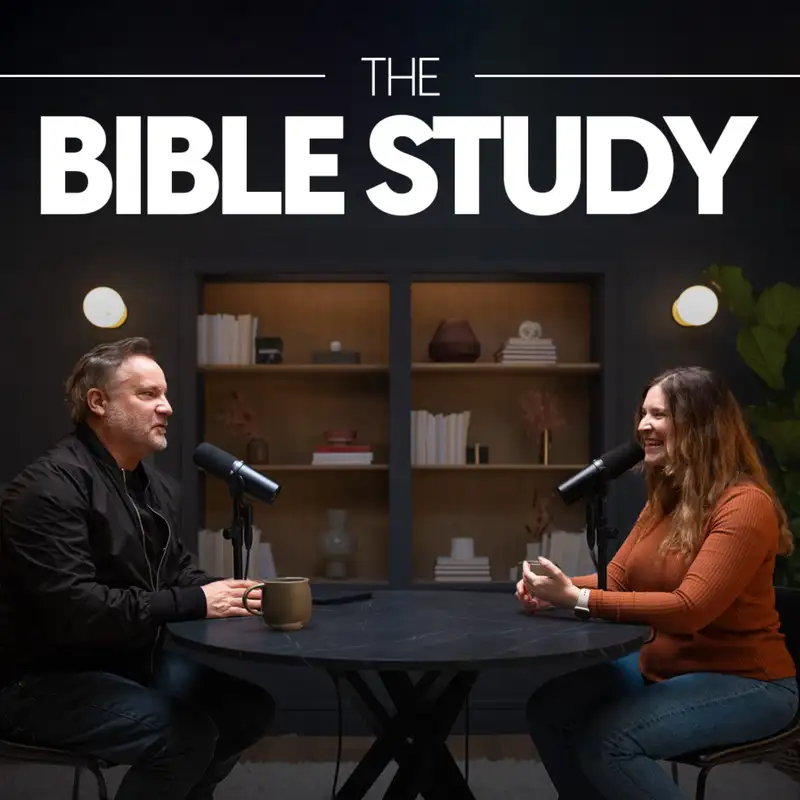
Curt Harlow [00:00:00]:
Hello, my friend. Pastor Curt here, and as always, we're joined by the frontal lobe of Thrive College, Dena Davidson. And we have, for the first time ever on this podcast, 4— 4 people on the Bible study podcast because we're joined by the wonderful and amazing Clarks.
Mark Clark [00:00:16]:
Oh, hey guys, thanks for having us. I'm Mark, this is Erin. That was it, that's all I had.
Curt Harlow [00:00:22]:
Yeah, why are we having 2 guests and why a married couple? It's because we want to take viewers away from Kevin's marriage.
Mark Clark [00:00:30]:
No, that's— yes, yes, no longer changing any odds.
Curt Harlow [00:00:34]:
We're in between series here at Bayside, so you know the podcast is always based on the passage that we are teaching on the weekends here at Bayside on every campus. Well, right now we are not all teaching the same passage just for a little break in between two series. So this is a very special episode. We're going to talk about the Bible, but we're going to talk about how do you talk to your children about the Bible, which, you know, Paul says in 2 Timothy, the things you have heard me say, Timothy, and trust reliable people who will like hand it on to others, who will hand it on to others. For most people, that the main priority, the main job of that handing on the true gospel is about how they talk to their children about learning the Bible, reading the Bible, knowing the gospel from the Bible. So you guys are still in the thick of it. You're still in the thick of it. Am I teaching my kids the Bible part? Long time ago.
Curt Harlow [00:01:32]:
My son sends me a picture every Sunday morning to show me he's in church.
Mark Clark [00:01:35]:
Oh, that's good. There you go. That's good. I got some good fathers right That there. is awesome.
Curt Harlow [00:01:40]:
And I believe you. You don't have to document. But I love you. So first of all, introduce us to your kids and how old they are and where you guys are at life stage, and then we'll get into it.
Mark Clark [00:01:50]:
Take it away.
Erin Clark [00:01:50]:
Yeah, so we have 3 daughters. Sienna, Hayden, and Isabella. Sienna is just about 20, Hayden is 17, and Bella's 15. So we're still in the thick of it. We're out of that young kid stage, but I actually think that they never, you never stop leaning into teaching your kids the Bible and being in relationship in that way.
Curt Harlow [00:02:11]:
Yeah, sure.
Dena Davidson [00:02:12]:
And Erin would never hype herself up, but hopefully we all know who Mark is. He's one of the main pastors here at Bayside, oversees our global teaching team. But Erin, specifically your background is actually in early childhood development and you homeschooled all of your girls. So I'm really excited to dive into this topic as a mom with you, just getting your take on honestly, like the messiness of trying to do anything with your kids, right? That is meaningful and is not causing a fight with them. And yeah, so excited.
Mark Clark [00:02:45]:
And then your kids are at what age?
Dena Davidson [00:02:46]:
Yeah, so my kids, I am, I'm in the lower half, so I've got a 7-year-old, a 4-year-old, 4-year-old and a 1.5-year-old. Oh wow.
Mark Clark [00:02:53]:
Yeah, we got everything represented.
Curt Harlow [00:02:55]:
So we go younger and adolescence, we'll get it, we'll get it on. Okay, I got a, I got a starting off question. Okay. The challenge that we had in our household is every single time I go, all right kids, let's gather around the table and we're gonna do a family devotion, we're gonna talk about the Bible one-on-one, they were all— they one-on-one, they enjoy talking to me about the Bible. But when I try to get them all to talk, they'd be like, oh, it's Pastor Dad, here comes Pastor Dad. And so do you guys— not everyone listening to it is a pastor, but I, you know, sometimes it's like mom and dad are trying to get us to do this. How do you handle the pastor dad factor, or do you guys not get any of that?
Mark Clark [00:03:35]:
Yeah, well, no, exactly that. So when we first— I didn't grow up in the church, so I, in my brain, when we had kids, it was going to be a super intentional, like, this is going to be Bible study. Like, like, this is, this is what's right. Like, when these kids get young and we're going to open this text up every day, we're going to have the breakfast table. It's gonna be like, Isaiah says this, and this is the historical context of the Deuteronomy, New Exodus. And, uh, and then Erin, I think, you know, we had talked a little bit about how we're going to approach this when the kids grow up. But when they started kind of— when Sienna started hitting that age and I started kind of acting like that, Erin's like, who grew up in the church with parents who loved Jesus and read their Bibles, but they weren't like that. And I was like, no, no, it's got to be like that because then they're going to grow up and hate God and the church and they're not going to love the Bible.
Mark Clark [00:04:25]:
And she's like, no, no, let's not be weird. Like, what are we— what are we doing here? Like, the kids are going to see that we love the scriptures and we'll teach them and we'll live by it, but it's going to be much more organic and you got to chill. Because she grew up and had better principles for the approach where I thought it was going to be a pastor dad. We're going to show these kids we love the Bible, right? And she talked me off that pretty, pretty early, which was good, I think, in the long run.
Erin Clark [00:04:48]:
He tried it many times.
Mark Clark [00:04:50]:
I tried it, failed miserably.
Erin Clark [00:04:51]:
And he'd be like, okay, every day. And he'd like try to convict me that like I'm the per— and I'm like, yeah, yeah, I am the person day in and day out. His schedule would come and go.
Curt Harlow [00:05:01]:
Right, right.
Erin Clark [00:05:02]:
Actually, what you're trying to say isn't practical because you're gonna like come in at 6 PM, you're actually here this night. Mornings, you were never there when we were doing our thing, right?
Mark Clark [00:05:14]:
Well, the kids should get up at 6 and get into the word.
Erin Clark [00:05:17]:
Scheduling-wise, it wasn't practical. But then I also see it as it's just so much more than a specific time and a specific moment. I want my kids throughout every moment in their day to be reflecting on the things of God and to be thinking on the things of God. And so, yes, we need to get in our word. Yes, we need to do all this. But for us to just come in and be like, okay, this is the specific time, they all just would be like, oh my gosh, why are you doing this to us?
Curt Harlow [00:05:49]:
How long is this gonna be?
Erin Clark [00:05:52]:
And there is that piece with being in ministry and their dad being like, he was their primary preaching pastor their whole life. So they already heard this coming out and he is their favorite. Favorite preacher to this day. Yeah, mother. But they are, he is their favorite preacher where they will choose him. And to me, that goes a long way where that speaks into who he is at home. He's not just one way from the stage. So they are getting that part where they can see him as their pastor and at home he's their dad.
Erin Clark [00:06:26]:
And so that looks different than just opening just the Bible and being so specific on that. Practically, it didn't work for us. My personality, it didn't work for me where I'm very much all over the place. I'm not like locked into certain schedules and they're more similar to that. So we've always been very conscious and we've also been very conscious on Mark is a pastor and we try to take out the titles even of them being pastor's kids because the world looks at them that way. But really the goal is for them to be disciples of Jesus.
Curt Harlow [00:07:02]:
Jesus, right?
Erin Clark [00:07:03]:
And so there's no other— I always say there's no other profession where you're the farmer's wife, right? You're, you're the doctor's kids. But for some reason we put this in. And at the end of the day, I don't want my kids living up to certain expectations. I'm like, no, no, I want them before God, being in relationship with God, not choosing to act certain ways because they don't want to embarrass dad, or be a certain way because I'm the pastor. No, no. I don't care about— I don't care about— right, I care about what you think, you know, but I don't care about what you think of my kid. I care, okay, how are they being obedient to God in that? And so to me, that comes more organically through the everyday interaction with our kids.
Curt Harlow [00:07:43]:
I think that— go ahead.
Dena Davidson [00:07:45]:
I was just saying, I feel like right away, like off the bat, someone who skeptically pushed play on this podcast is like breathing a deep sigh of relief. Because they're like, oh wait, you're saying I don't have to lock myself into apparently 6:00 to 6:30 AM every morning. thing happening This is not even at that time.
Mark Clark [00:08:04]:
Well, not anymore, but when they were young, they'd wake me up.
Erin Clark [00:08:06]:
Right.
Dena Davidson [00:08:07]:
Because I mean, I think that is kind of, we have to make our kids do what we think that we're guiltily supposed to be doing ourselves. And so everyone can breathe a deep sigh of relief. There's going to be multiple expressions of how to talk about the Bible with your kids.
Erin Clark [00:08:21]:
Absolutely. And I imagine based on your personality and who you are, it will look different than how I interact with my kids in regards to the Bible and Christ. And just like your husband, and that's why I think we're so well matched as parents too, cuz you have different discussions with the girls around the things of God and the Bible than I do. And we balance each other out in that way. And I think there's beauty in that. Yeah, there's not— it would be weird if I was trying to fit a mold and we went through that. Even in like our dating relationship, we went through that early on because the way that I interact with the Bible and with God is so much more simplistic than the way Mark does. Mark can sit for hours and expound scripture and like, like argue with friends and who do you think about this? And, and I would just sit there and be like, I just like, I believe that God is, and, and I would go through this and be like, yeah, I don't, like, I don't doubt that.
Erin Clark [00:09:16]:
I love him and I love serving him and I love, so it looks a different way. And so I had to come to that. With it, where I felt like I had to fit a certain mold.
Mark Clark [00:09:24]:
Like, explain Trinitarian monotheism and how it connects to the eschatological fusion of the soteriology of the Old Testament. She's like, come on, kids, receive it.
Curt Harlow [00:09:37]:
I want to back up. So here's what I think I hear you saying, Erin, and I think this is brilliant. You had a sensitivity to, is this life-giving or not?
Erin Clark [00:09:48]:
Yes.
Curt Harlow [00:09:48]:
Are we going to do this in a non-life-giving way or in a life-giving way? This is exactly Kelly's dynamic. She's like, this is not fun for the kids. And not that the Bible has to be all fun, but if it's not life-giving, we're not going to— it's not going to work. That's good.
Erin Clark [00:10:04]:
Very good. Yeah.
Curt Harlow [00:10:05]:
So, Dana, talk to the question just a little bit about with younger. Is there any pattern? When are you introducing them to Bible? Do you— and here's a great question I'd like all you to answer. Did you use one of those children's Bibles? Yeah, you did?
Dena Davidson [00:10:21]:
Yeah, I brought a couple to share.
Curt Harlow [00:10:22]:
Show them. Show them.
Mark Clark [00:10:23]:
Show them.
Dena Davidson [00:10:24]:
Yeah.
Erin Clark [00:10:24]:
Okay.
Curt Harlow [00:10:24]:
I assume those were your personal Bibles.
Dena Davidson [00:10:26]:
But first, I mean, Erin, you can speak to this early child development-wise. I feel like everything is about routine. I'm actually not great with routines either. And so I am parentally breathing a deep sigh of relief that I'm not messing up my kids by not always keeping to this solid rhythm. I have found that it works best for me, actually getting the Bible into their life, to read it to them at breakfast. Okay, yeah. And 'cause when I had Luke, my most recent kiddo, I could not read my kids the Bible, right? Like it was just enough with a baby to put anything on the table that resembled breakfast for them. So I found this amazing life hack is I downloaded the Jesus Storybook Bible, and I put it on Audible and I would just push play.
Mark Clark [00:11:14]:
That's great.
Dena Davidson [00:11:14]:
That's all I could do. My kids actually love listening to stories. And so that was their moment where they were waiting for me to put the eggs and the stuff on the table where they just listened to one chapter. It was 3 minutes. So that's been the best life hack that I could pass on.
Erin Clark [00:11:27]:
Yeah.
Curt Harlow [00:11:28]:
I love listening to the Bible because most of the Bible is recited and written down. So sometimes the context makes a lot more sense Audibly, like you go, oh, I see why it doesn't feel like Paul's jumping all around when you hear it.
Mark Clark [00:11:43]:
Yes. That's what Erin's rhythm is right now.
Erin Clark [00:11:45]:
Yeah. I listen to the Bible and I mean, I've been in the Bible my whole life in different ways, but my favorite mode of listening, and I remember being at certain ages and being like, oh, I think this is wrong. I'm not allowed to listen to The Message Bible because people would be like, no, it should be. That is my favorite.
Curt Harlow [00:12:03]:
The evil Message Bible. Right?
Erin Clark [00:12:05]:
I listened to, once I started listening, listening to the message on Audible, where I realized I'm actually a very audible learner. So when I sit and read the Bible, the words often just get muddled together, but when I'm listening, oh my gosh, it has come alive in a whole new way. I just, I love it where I'm like, there's no rules on this. And I do think I obviously like read actual scripture, but there's no rules on which one. Maybe you connect most with the King James Version. Maybe you're very formal in the way that you speak. I'm not, I need to know like stories. And all of a sudden I'm like, I didn't, I've literally read this my whole life and I didn't know that that's what was happening in this story.
Erin Clark [00:12:43]:
And yeah, the Jesus Storybook Bible was a big one for our kids as well. And then another one for us was, I have all girls, and it was Princess Stories. It is book form and it goes through all the women in the Bible. And it was my girls' favorite. Favorite book. Every night we would choose a new, a new princess to read, and it was oh man, that was pretty cool. I absolutely— love that.
Dena Davidson [00:13:10]:
That's precious.
Curt Harlow [00:13:12]:
Yeah, right?
Dena Davidson [00:13:12]:
Do it over again. Yeah, I did.
Mark Clark [00:13:15]:
So no, we didn't do— to my point earlier, we didn't do the 6 o'clock stuff, but I do remember when they were super— sorry, 6 o'clock in the morning, we didn't do that. But, but I would say when they were super young, like your kids' age, probably up till I don't know, maybe 9 or 8 or something like that. Maybe a little earlier. I do remember vividly, 'cause we lived in different houses, that we would be super intentional when they went to bed at night. I would, this was probably the one I would do the most, Jesus Storybook Bible. Or I'd, you know, pull it, and I would read them. I was just trying to be super intentional. I'd sit in bed with them, and I'd just classically take them to a chapter of this.
Mark Clark [00:13:49]:
And what I love about this as a resource is it's all gospel-centered. Every story in the Old Testament becomes a story about Jesus, which is the classic, you know, Sally Lloyd-Jones, the granddaughter, I think, of Martyn Lloyd-Jones, and the whole Christocentric reading of the whole Bible. And so every story in that points to Jesus in a kid kind of way. And it's got funny, you know, and she's a great poetic writer. So, but to speak to your rhythm thing, you're doing breakfast. I did really try to do the whole bedtime, get into bed with them, give them 5 minutes, a quick prayer, And then, and then just, just before I forget, I was listening to someone talking about— have you ever heard of stacking in the Atomic Habits world? Right? So you, you do something and you couple it with something that you like, and then your brain starts to equate that thing with something. And so he started reading his Bible when he was eating because he loves to eat. And so then every time he'd be reading his Bible, he'd be like getting hungry.
Mark Clark [00:14:51]:
He'd be like, dang, I want to eat. And so I love the Bible because I'm equating it with food. And so, you know, it's called stacking. And so, you know, to the point about whether, I don't know if it's breakfast or whatever, but you don't wanna make it like the kids aren't enjoying it. So what is it you can couple it with where they actually like it versus, I remember early, like probably 10 years ago, I did, you know, the classic, I joke about this now when I preach Christmas Eve services, but I thought at Christmas Day, before we attack those gifts, I will sit here and read Luke to you.
Erin Clark [00:15:22]:
He tried this more than one year.
Mark Clark [00:15:23]:
I will do this because we owe Jesus this. Quirinius was the governor of Syria. And they're sitting there looking at all these gifts stacked up at the tree. Barney just listening. Right up until 10 AM, we will study the Christmas story, you materialistic, selfish, you know.
Curt Harlow [00:15:40]:
Let's examine which of the Herods this was.
Mark Clark [00:15:43]:
Right. And I think I got halfway into the story one year before Erin's like, Mark, This is not necessary. Our kids aren't going to walk away from Christ because you made them wait for the gifts. And I was like, okay, I guess.
Curt Harlow [00:15:56]:
Okay, here's the sneaky solution that if my children watch this podcast, they will have to forgive me, but this is how I did it. We would read this book, Four Pups and a Worm. My kids are separated by 5 and 4 years. Four Pups and a Worm. And somehow all 3 of those kids got that book and it It plagues me to this day. It's like a Dr. Seuss rhyme. They wanted it every night, routine, right? And then I would go, I got one question for you.
Curt Harlow [00:16:23]:
This morning I was reading my Bible and I came across this thing and I got to preach on it this weekend, or I'm doing this thing on it. I cannot figure out what this means. And I would make them the teacher.
Dena Davidson [00:16:35]:
Oh, that's awesome.
Mark Clark [00:16:36]:
That's cool. That's smart.
Curt Harlow [00:16:37]:
They would go— and sometimes it was really insightful, and sometimes it would be like, oh, there's where the theological hole in our family is right there because they don't have any idea or clue. Which leads me to this question.
Mark Clark [00:16:50]:
That's awesome.
Curt Harlow [00:16:51]:
When your children— now you and I, Dena, we're big apologetics people. When your kids have tough, tough theology questions or tough apologetics questions, how do you handle that? That's good.
Erin Clark [00:17:03]:
Ask your dad.
Mark Clark [00:17:05]:
He spends the time on it. I'm just listening to the message.
Erin Clark [00:17:09]:
I think we So we've made relationships so big in our family. I've always been very big on relationship over rules, not meaning we don't have rules, but that the relationship comes, it always trumps that. So anything, any discipline is out of love, any, all of that. Because, and I use the example of Jesus in that, of the way he interacted with his disciples. He wasn't just giving them, you can't do this, don't do this. He was. In relationship with him. He was doing life with him.
Erin Clark [00:17:39]:
So you build this rapport with your kids. So when we have these conversations, it's not out of left field. Mm-hmm. It's just so naturally, even those tough questions are so just naturally woven into who we are and how we interact as a family. And so it's a humbleness of a parent of going like, you know, wow, that is a great question. I actually haven't thought of that. Well, let's, let's work on that together and we'll, we'll go in together. We'll research together.
Erin Clark [00:18:06]:
We'll start that as a dinner conversation when Mark's home of like, hey, like what do you think of this? And it just starts this great conversation. You don't have to start, was it like rambling, trying to pretend like you know what they're talking about because you're actually losing trust in them.
Dena Davidson [00:18:22]:
Yes.
Erin Clark [00:18:23]:
For the big things.
Mark Clark [00:18:23]:
Yes.
Erin Clark [00:18:24]:
In life. I want my kids from a very young age, they always have known, my kids will never doubt that I will tell them the truth. On the hard things, the easy things. I will tell them age appropriate, of course, right? You just, like that stacking, you always stack your responses age appropriately so they build off of each other. But all of a sudden my kids aren't like, wait a second, you never told me about that, or you told me this. It's like, no, no, they know that my word is true and my word is right. And so I'm— they, they just know, like Yeah, I don't know everything. God's the only one who's all-knowing.
Erin Clark [00:19:01]:
So let's have this conversation together, work this through.
Curt Harlow [00:19:05]:
Who is— his son is actually all over Instagram now, and he does open air on college campuses. My whole open air thing I used to do, I totally built on his dad, Cliff. Cliff's the dad. And the first time I ever heard him, I was like 2,500 students and questions are just popping everywhere. The toughest questions. And someone asked this question. He goes, I'm so glad you asked that question. I've been studying that question for 20 years, and here is my decided and very learned answer.
Curt Harlow [00:19:32]:
I don't know. And I was so good. Like, you felt the audience lose its desire to debate and lean in and go, oh, that's— I trust you a little bit more. Exactly what you said. And the other little principle I always tell— you said this one too, Erin. If you pretend you know, or if you build a straw man out of the other side. So they, what about this? And you go, well, this is why this is wrong. That's horrible.
Curt Harlow [00:20:01]:
Here, here, here, and here. Eventually they're going to run into a smart person who believes that other side position, and they're going to hear the argument in a very credible way, and they're going to feel betrayed.
Erin Clark [00:20:12]:
Yes.
Curt Harlow [00:20:12]:
Why? And so the way I say it is, do not let that very smart friend or professor be the first person that tells them there's another side to this argument. That's good, because it's the dialogue is the more important thing than the pithy answer.
Erin Clark [00:20:29]:
Yes. Because the questions will just keep getting bigger and bigger as they get older too, where I want my kids— I still, as an adult, have to always be working through my faith and, okay, why does God allow this? How does this— if we shut that down, the chances of your kids walking away at some point is like, wait, I don't believe any— where it's like, no, no, let's continue this conversation all throughout time. And it is okay to question and still believe in who God is and that God is good.
Mark Clark [00:21:03]:
I would say too, that of course, of course, of course, there's an individual, it's on you as the parent, blah, blah, blah. But there is something to the beauty of the church here too, where Find a good church as you're listening to this, watching this, whatever, that has good children's pastors, good youth pastors, because I have found that our kids too, they do learn in community. And and you know, they, the most, Malcolm Gladwell talks about like, you are the most influential, a kid is the most influential person is their parents, and then their grandparents is number 2, up to a point, and then their peers become number 1. So if you have them with peers, so then the only power you have at some point is the choosing of peers or the boundaries that make them choose certain peers. And then so all we've got at some point is to celebrate and cultivate a peer group that hopefully they can be inspired by. And while not every question is going to be figured out, they're going to go, you know what, I don't know everything, but I know I love that guy and that girl and love my parents. They're amazing. To your point, they tell me the truth usually, and they believe all this stuff.
Mark Clark [00:22:07]:
So there is a bit of— there's always a bit of vicarious trust that comes through people just going, you know what, This is the most trusted person I know. I love them the most and they believe all this. And that's not going to solve every answer, but it certainly helps.
Erin Clark [00:22:22]:
Yeah.
Curt Harlow [00:22:24]:
When I was much stupider than I am now, I'm pretty stupid now. I used to go to these men's events and I was 30, 33, and I would say, Dad, do not let any youth pastor be more spiritually influential in your son or daughter's life than you are. You take that role. And then I got an adolescent and I experienced that where all of a sudden in the creation of their identity, they were like, I know for sure I love you, but I know for sure I don't want to exactly be you. So that creates a certain amount of this. And then my son got this incredible youth pastor and he came home and told me that that youth pastor taught him everything I knew I had already taught him. Exactly.
Mark Clark [00:23:06]:
And it was all brand new.
Curt Harlow [00:23:07]:
And it was— he was fascinated by how incredible this guy was. And I will tell you, I wept tears of joy for that.
Mark Clark [00:23:17]:
Right?
Curt Harlow [00:23:18]:
Thank you. I said this to my kids too. I said, listen, by the time you get married, if you don't have another pastor in your life that's not me that you would go, I would like that guy to do the ceremony, then we've done this wrong. Like, go out there and get those people in your life. I think it's huge.
Mark Clark [00:23:36]:
I was speaking down at one of our campuses and my daughter lives close to the campus and she was— and she's really got connected in this other church and she really likes the pastor and really likes the people. And I'm like, hey, I'm speaking down to that campus. We'll see you there. It's at 11. She's like, yeah, I'm not going to be there. I'm like, what are you talking about? You're not going to come watch me preach? She's like, no, I got this other pastor. He's great. I'm like, all right, that's great.
Mark Clark [00:23:57]:
Thanks for coming out. But it's actually awesome because you're like, okay, sweet.
Curt Harlow [00:24:01]:
Do you ever use your kids to help you edit sermons while you're sermon prepping?
Mark Clark [00:24:06]:
I don't think I did very much.
Curt Harlow [00:24:07]:
No. Oh, I do. To this day, Maddie is like such a great editor. And she'd be straight with me, too. She'd be like, Dad, we've heard that story.
Mark Clark [00:24:15]:
Right? Oh, yeah, definitely.
Curt Harlow [00:24:16]:
And then she'll go, yeah, it doesn't make sense. That's you. Like, we were talking about this. Should we talk about— we're teaching at Bayside Auburn, Love Your Enemies. And I said, should I go and explain why I don't think this passage is an endorsement of being a pacifist? Yeah, you'll like that, Dad. You'll enjoy that.
Dena Davidson [00:24:37]:
Amazing.
Mark Clark [00:24:37]:
No one else, no one else is giving a rip. They don't even know what a passive is.
Curt Harlow [00:24:40]:
Great question for the 1960s.
Erin Clark [00:24:42]:
Yes, I love it.
Mark Clark [00:24:44]:
Oh, that's good.
Curt Harlow [00:24:45]:
That's good. do you Uh, know apologetics and your age and stage?
Mark Clark [00:24:48]:
Yeah, I bet the kids are just—.
Dena Davidson [00:24:50]:
They are actually nice.
Curt Harlow [00:24:52]:
Tough stuff. They do know who created God.
Dena Davidson [00:24:56]:
Yeah, so I, I, I'm actually like on the other end of— I'm like, I have all the answers, right? Like, this is my background. But I know from working with college students that the most important thing I can do is not answer their questions. So I actually have to hold myself back, and I'm not whipping out "Problem of God" and be like, "Let's read this chapter." I'm validating their question. I'm teaching them to be someone who can deal with tension in their faith, because that's the much more important skill. And people don't walk away from God because of questions. They walk away from God because they can't handle tension and uncertainty. So I wanna model for my kids, how do you deal with this tension? How do you deal with this uncertainty? If you are like, oh my gosh, this kid raised a question and now I don't know where I stand, go to gotquestions.org. They're just great at always keeping up with kind of the current cultural topics that are trending.
Dena Davidson [00:25:48]:
And there'll be a short article that will give you enough as a parent so you feel like you're not gonna wrestle yourself and not know how to, Walk forward. But yeah, that's where I land. I have a question. Can I throw it to the Oh, out group? 100%. Okay. So I think there's probably a temptation that some people are discrediting this conversation. They're like, "Pastor." I mean, you probably wouldn't call yourself a pastor, Erin, but you've done so much ministry. Pastor, pastor, you guys have no idea.
Dena Davidson [00:26:18]:
What do I do if I just feel absolutely unqualified to even— I don't know the Bible enough to bring this up with my kids. I'm afraid that I'm going to mess them up in their view of the Bible. How do you deal with that insecurity?
Erin Clark [00:26:32]:
I love that question, and I actually, I would fit more into that boat. All of you guys are apologetics. You think through things in different ways. I am more of, for me, in the way that I've raised my kids, in the way that I think it's very organic in redeeming the everyday. So redeem the things that you're already doing with your kids. You're already driving them to school, you're already bathing them, you're already having dinner. So how do you redeem that time and make a relationship with Jesus just so natural that it is a piece of who they are? So for example, like me growing up, I remember every day that I'd come down the stairs in the morning to get ready for school or whatnot, my dad would be sitting at the kitchen table reading his Bible. He wasn't telling me, you need to do this, this is how this works, right? He was just leading by example.
Erin Clark [00:27:26]:
My mom, every Tuesday, would go to her Bible study, and I knew that. And she'd come home and she'd tell me about what she's learning about. We just had these natural— carried Bibles to church. They carry their Oh Bibles. yeah, everything's ready.
Mark Clark [00:27:38]:
This, you know, that's cool for sure.
Erin Clark [00:27:40]:
They're learned in that. And so I'm very much of, again, that relationship of It goes so much further when you have a friendship with your children. And even in those stages where friends become big, I do have a friendship with my kids. Obvi— always motherhood goes over friendship, you know what I mean? Where we have a relationship with one another. And so for us, it looks like when we're driving to school, um, uh, ambulance goes by. Mm-hmm. My kids know, and to this day, we just would stop whatever we're talking about, and we would just pray over wherever they're going. Just something simple, something, it was just organic.
Erin Clark [00:28:22]:
And we just want, I wanted to point them to, that's who we go to when there's struggle. Newborn babies, my babies, when you nurse them and you'd sit there, how was I redeeming that? You are redeeming that time by listening to the Bible. I would redeem it by singing worship songs. To this day, it's wild. There's certain worship songs that my kids know, but I know that we haven't been playing it for years, and this is not sung in the church. They're the ones from my childhood. Like, it hides in their heart. Like, that scripture is true.
Erin Clark [00:28:55]:
And then another example is my girls struggled with a lot of bedtime anxiety. We went through really, really hard seasons in that. Okay, so how do we redeem that? It's not just, okay, God's over you, you don't have to fear. I don't memorize scripture the way that other people can. I can't remember anything, guys. Like, it's not just scripture. I could read it over and over. My brain just is not working that way.
Erin Clark [00:29:25]:
Once I had children, it just stopped. So on my phone, I just put these scriptures and I kind of like, I just took the parts from it and I would just rote read these scriptures. Deuteronomy 31:6, I won't read them all, but I am strong, courageous, and firm. I fear not and am not afraid for the Lord my God goes with me. He will not fail me nor forsake me. 1 Peter 5:7, I cast all my cares, all my fears on him for he cares for me. There's like 8 of them. And I would rote read them every night.
Erin Clark [00:29:56]:
And then they, they would kind of know what's coming next. They would be able to read it along. I never could memorize it. My brain just doesn't work like that. But I always have my phone with me. Yeah, you don't have to rely just on— it's like, no, no, I still have God's word. I don't have a physical Bible in my hand, I have my Bible. But they know these truths.
Erin Clark [00:30:15]:
And then we would sit there and then we would pray over, okay, may these wash over them, may they remember. And we'd go through the same system every night.
Mark Clark [00:30:25]:
I remember that season.
Erin Clark [00:30:26]:
Yeah, right. Still to this day, when we drop my I drop my kids off at youth group, at anything, when they're feeling— even when they're feeling fine about it, we always pray before they get out of the car. We just do a, God, just please help them to show kindness, help them to find whatever it might be, show up for them today. And the amount of times that even my grown-ish children will message me and just be like, thank you so much for just— I was so nervous, but that just really helped. Wow, that is really good. That is all we have. It's like, no, no, it's this weaving in, because not always— you're not always just going to have your Bible in hand, but you can have God's truths written on your heart. Just like when I'm driving in a car, subconsciously, anytime I feel afraid, anytime in life, just that um, certain, uh— I can't think of it offhand right now because I'm not scared.
Erin Clark [00:31:20]:
You got to like spook me and it's going to come. When peace like a river It just will start. I'll just start singing it. I'm like, oh, I must be feeling a little afraid right now. And I'll just sing it through and God will just give me this peace that washes over me. And so it's meeting that song.
Curt Harlow [00:31:35]:
A spectacular way to get the Bible into your family is singing and praying. Yes. We always just think of the form of study, but singing and praying, in all of our years of Thrive College, I always said the first class. I say, who can stand up and say the Ten Commandments in a row and I'll give you $100? One girl has done it. I stopped doing it because it got discouraging. And, um, and she did it because she could sing it. Yeah, she could sing it. So, all right, we're, we're close.
Mark Clark [00:32:04]:
Can I give one little verse here, a thought here? So this is what I think. I think to, to your question, Jesus says in John 5, you study the scriptures diligently because you think that in them you have eternal life. These are the very scriptures that testify about me, yet you refuse to come to me to have life. The goal of Bible study and all these pressures that we feel to be like my kid— and the goal is actually, as one theologian talks about, there's the word and then there's the Word behind the word, the big W word, Jesus. The goal is we can be studiers of scripture but never know Jesus. So the goal in all of this with our kids is to actually get them to know Jesus, which is what you're talking about. It's the experiential mode of actually knowing the God behind the scriptures. It's not just stopping at the scriptures, because you can know the Bible and not know God.
Mark Clark [00:32:57]:
So I think this, this is beautiful, because to your point earlier, Kurt, I was telling Erin about this because her new routine in the morning is she has the Message version in her ears and she does her workout. Is it okay that I listen to the Bible in the Message version? It's like literally 99% of people back then couldn't even read. So, right, the Bible wasn't, wasn't a written experience. It was a heard experience, to your point, in a culture of oratory. It was acted out, it was read multiple times, it was, you know, and it was listening to it that it got into your life versus just reading it with your eyeballs. So anyway, all that to say, the point of all of this is to make sure they know and love and follow Jesus, not just, okay, we got a good Bible study and moving on.
Curt Harlow [00:33:41]:
That is actually my answer to that same question. You feel like you don't know the Bible well enough and you're not doing enough, you're not a professional pastor. What's the answer to that? My answer to you that— ready? Go to church, listen to the sermon every weekend, and talk to your kids about the sermon. Go eat a nice meal together afterwards. Say, what part was confusing to you? What part did you really like? What part do you disagree with? No questions off limit. See, I was always taught, have your devotion times, and that's a different thing. And then what book are you reading on top of your devotions? You got to be reading some Christian author as well. And then you're going to church as well.
Curt Harlow [00:34:22]:
And if you're a pastor, you can't be having your study time with your sermons be the same as your devotions. God hates that, right? Yeah. The older I've gotten, I've been like, you know, how about we go to church, listen to the word of God taught, and then that week we think about that and talk about that with our friends and other— it just seems like— Yeah, that's good. Yeah, just go to church, be in the church, lean in during the sermon.
Mark Clark [00:34:48]:
And if you're not a theologian and that's your point, use that as a talking point with your kids. It's already on the platform for you. Just use that.
Erin Clark [00:34:55]:
We use movies in our house. We use the books. There's not a movie that we've watched that we don't connect to a natural conversation about God and who God is and how this calling on their lives. Everything that we interact with day to day can always be pulled back to Jesus. And it's not in a way that is like a lesson. It's just so natural. Make it a part of everything that you do is weaving Jesus all throughout.
Curt Harlow [00:35:22]:
You guys are very good about the movie. You know, what's the theme behind the theme?
Mark Clark [00:35:26]:
Right, right. Jesus is the true and better Gandalf, kids. Now sit and watch this movie.
Curt Harlow [00:35:31]:
Okay, why do we like a We like a comeback story. Why do we like a comeback story? Every movie is a stinking comeback story.
Erin Clark [00:35:36]:
Oh my gosh.
Curt Harlow [00:35:37]:
Because we all know we need to be saved. We want to have the comeback.
Mark Clark [00:35:40]:
So that's good.
Curt Harlow [00:35:41]:
All right, final thoughts. Who wants to say anything about anything before we sign off?
Dena Davidson [00:35:45]:
I want to say that we're doing something really practical in a few weeks to your point about coming to church. So our children's ministry team, we have produced placemats for family. And these are just tools that we're putting in families' hands because we've heard from so many families. They wanna talk about the Bible with their kids, but they don't really know how to start that conversation. So if you show up to church in the next several weeks, as our next campaign launches, you're gonna get a chance to grab a placemat for every single person in your family. On one side will kind of be like the parent guide of what scripture to read, what questions to ask. The back is just fun, right? Because we want them to have fun while we talk about the Bible. Coloring, word searches, mazes, all these ways for your kids to interact in a fun way with the Bible.
Dena Davidson [00:36:33]:
But grab one of those and just, I don't know, put a pizza, frozen pizza in the oven or take it to Chick-fil-A and do this together as a family and keep your expectations, I would say, as low as possible and invite God into that moment and see what God does. Let's just set the table.
Mark Clark [00:36:52]:
Very.
Curt Harlow [00:36:53]:
That.
Mark Clark [00:36:53]:
Cool.
Curt Harlow [00:36:53]:
Love Love this whole conversation.
Dena Davidson [00:36:55]:
Placemats.
Curt Harlow [00:36:55]:
Every Basehead campus. Bri, do we know who's going to be on next week? Kevin is coming back, and I made fun of his podcast at the beginning of this one so he can have his revenge.
Erin Clark [00:37:04]:
He's not watching it anyway, so he doesn't care.
Curt Harlow [00:37:07]:
If you're new out there, you've not seen Kevin's incredible Changing the Odds podcast, all about marriage. You definitely need to see that. And you should tune in and watch Mark's podcast.
Mark Clark [00:37:17]:
Yeah, or listen to it. It's the Mark Clark Podcast. Yeah, it's just a bunch of sermons, a sermon or two dropped every week. Yeah, go look it up on Apple or Spotify.
Curt Harlow [00:37:27]:
Awesome. So join us. It'll be me, Dana, Dena. Dena, you're going to be here, right? And Kevin. And we're going to start Not Without. So probably the most important sermon series we've done at Bayside since I have been here. It's going to definitely set the direction and the values are going to be clarified. What are we really going after? Is it really Bible? Is it just in the center of what God wants for his church?.
Curt Harlow [00:37:54]:
We're starting that next week, so don't miss it. As always, like, subscribe, follow, tattoo, all of that stuff. And thank you so much.
Mark Clark [00:38:01]:
Thanks, guys. Appreciate it.
Erin Clark [00:38:02]:
All right, thank you.
Dena Davidson [00:38:03]:
Bye.