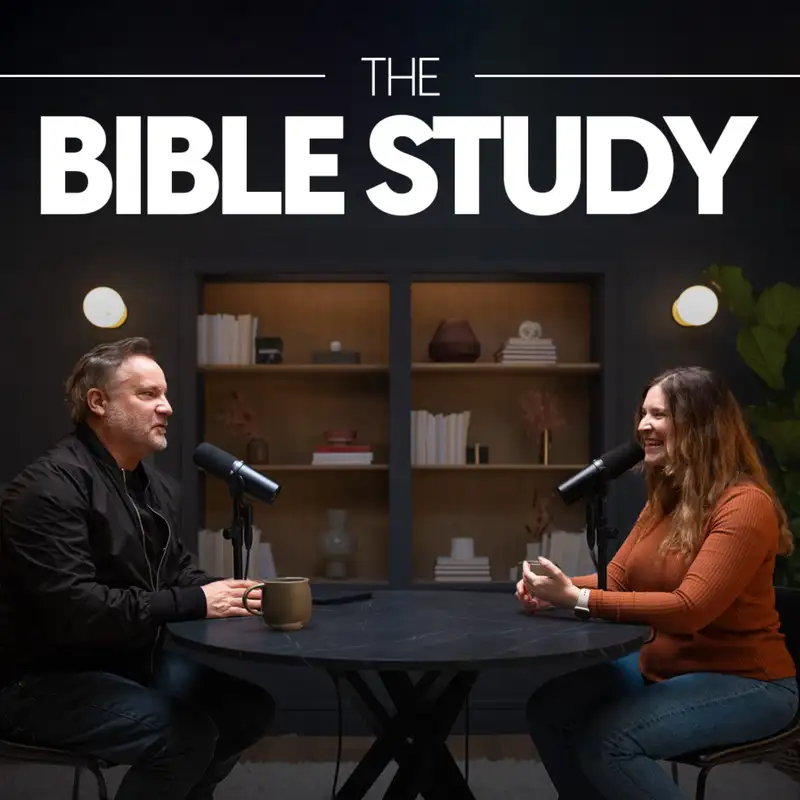
Dena Davidson [00:00:00]:
Welcome to the Bible study podcast. I am Dena, and I'm joined with Cameron Wells today of the adventure type.
Cameron Wells [00:00:06]:
Still?
Dena Davidson [00:00:06]:
Yeah, still. Wow.
Cameron Wells [00:00:08]:
You never know around here.
Dena Davidson [00:00:09]:
So true. I actually.
Cameron Wells [00:00:10]:
Weird way to open the episode.
Dena Davidson [00:00:12]:
Welcome to the Bible study. We're talking about the Bible and sometimes Bayside. Yeah. I love actually getting to check in and be like, hey, what campus are you at? Because that's how friendly our church campuses are. Is we're, like, treating people all the time in the healthiest ways.
Cameron Wells [00:00:25]:
In the healthiest way, if that's possible of ways.
Dena Davidson [00:00:28]:
I think so. So, Mr. Mr. Viking, as Curt lovingly refers to you.
Cameron Wells [00:00:33]:
Curt and my wife, which is weird.
Dena Davidson [00:00:34]:
Oh, really? Charmaine too?
Cameron Wells [00:00:36]:
Yes.
Dena Davidson [00:00:36]:
Okay. And those I'm gonna have to think about that we are in.
Cameron Wells [00:00:39]:
So can I just tell a strange. I was at a Bayside campus, and a lady, a B side campus child, remember, old enough to be my grandmother, said you would look great in a kilt. And I thought if you were not old enough to be my grandmother, this would be very strange. But I will receive that grand.
Dena Davidson [00:00:59]:
So that's where we're at, seeing those things.
Cameron Wells [00:01:00]:
That's where we're at.
Dena Davidson [00:01:02]:
All right, well, so now there we can add three people. Were the Vikings in kilts?
Cameron Wells [00:01:07]:
Some. At some point, I think.
Dena Davidson [00:01:09]:
All right.
Cameron Wells [00:01:09]:
I don't know.
Dena Davidson [00:01:10]:
All men wore skirts at one point. Yeah. So like we were saying the Gospel of John. It's a perfect lead in right there. If you've been following along, man, this is the. This is the Bible study podcast. We cannot mess up, because we are covering probably the most famous Christian verse of all times. Like, if you have memorized a verse, you've probably memorized this one.
Dena Davidson [00:01:31]:
Maybe not even intentionally, but you probably
Cameron Wells [00:01:34]:
know it even if you've never memorized it.
Dena Davidson [00:01:36]:
You've seen it in many places. But I didn't even tell Cameron I'm going to do this, but I'm going to back it up to verse 12, because I think we often miss the very important context this verse. So what is happening is that a ruler of the Pharisees, Nicodemus, is visiting Jesus at night. Okay, so there's some mystery and intrigue to this meeting that's already gone on. And Nicodemus brings his knowledge, and Jesus keeps pointing out to him, you don't know what you claim to know. Right. You claim to be a teacher, you claim to have all this knowledge, but you don't even know the basics of what I'm talking about. Jesus was saying, I know these things.
Dena Davidson [00:02:15]:
So Jesus makes this crazy claim to know. He says, truly, truly, I say to you, we speak of what we know and bear witness to what we have seen, but you do not receive our testimony. If I have told you earthly things and you do not believe, how can you believe if I tell you heavenly things? No one has ascended into heaven except he who descended from heaven, the Son of Man. Right there, Jesus is making this crazy claim, right, that he's already been in heaven and he has come down and. And as Moses lifted up the serpent in the wilderness, so must the Son of Man be lifted up that whoever believes in him may have eternal life. For God so loved the world that he gave his only son that whoever believes in him should not perish but have eternal life. For God did not send his Son into the world to condemn the world, but in order that the world might be saved through Him. Whoever believes in him is not condemned, but whoever does not believe is condemned already because he has not believed in the name of the only Son of God.
Dena Davidson [00:03:20]:
And this is the judgment. The light has come into the world and people loved the darkness rather than the light because their works were evil. For everyone who does wicked things hates the light and does not come to the light, lest his works should be exposed. But whoever does what is true comes to the light. And so that it may be clearly seen that his works have been carried out in God. Okay, incredible passage.
Cameron Wells [00:03:46]:
Dena, I think that you should read the Bible for you version.
Dena Davidson [00:03:51]:
All right, youversion, if you are listening, I am willing and available to be the reader of the Bible. You know why they would never call me Cameron? It's true. I pronounce names with full confidence and they're like 100% always wrong.
Cameron Wells [00:04:05]:
How do we know, though thousands of
Dena Davidson [00:04:07]:
years old, that's so true. How do we know that Dena is not. Not completely messing it up? I just know that the way that I pronounce it, if I go and listen to you version. Completely off, completely wrong. Okay, so this is obviously one of the most famous Bible passages. Cameron, you are coming at this. You're not thinking about needing to preach this on a weekend, but you're just coming at the text. What are some of your first thoughts?
Cameron Wells [00:04:32]:
The very first thought is, is just. I think we've talked about it a bunch, especially going into a weekend where we're about to preach this. But even just, you know, I grew up in the church and so this is just something that I've heard so, so much and something that you have to do with all text when you're really familiar with it is try to defamiliarize yourself with it because it's so profound. But when it has become, you know, what would the term be writ? When it's just very routine and very. Your brain kind of files it away and I think it loses the ability to speak something new to you. Right. Because God's word is alive and active. And this verse is just so profound.
Cameron Wells [00:05:15]:
So I think the first thing is trying as best I can to get rid of, you know, 25 years plus of being in the church, hearing John 3:16, or being at a. But the thing that I love is, you know, you, you back to 12. I don't think I was telling my wife this the other day. I don't think you should be able to memorize 16 without 17, because 17 I think is the key. For God did not send his Son into the world to condemn the world, but to save the world through Him. Everybody knows John 3:16, even if you're not in the church, and yet everybody is still deathly afraid of judgment. We walk around with shame, with anxiety in verse 17, like God. God did not send Jesus to judge or condemn you.
Cameron Wells [00:06:04]:
Right. It wasn't us on trial, it was him on trial.
Dena Davidson [00:06:08]:
Yes.
Cameron Wells [00:06:09]:
And I think that just points to the great love that God has. But I think, I think familiarity.
Dena Davidson [00:06:15]:
Yes.
Cameron Wells [00:06:16]:
Is an enemy of revelation.
Dena Davidson [00:06:18]:
I 100% agree with that. And I can, I can almost bet that if you were to ask people, hey, tell me the verse bef. Tell me John 3:15 and tell me John 3:17. Nary a person like, I don't know why I just said the word.
Cameron Wells [00:06:34]:
That's because I said rip.
Dena Davidson [00:06:35]:
Yeah, I guess so. Hardly anyone would be able to recite those verses.
Cameron Wells [00:06:42]:
Yeah.
Dena Davidson [00:06:43]:
Right. And a key part of defamiliarizing yourself is to go back to the text and make sure you really understand the context of it. So, for example, in my Bible, there's an interruption. So in the middle of this conversation between Jesus and Nicodemus, we see Jesus in quotation marks, beginning to speak, and then we see an interruption. It says, for God so loved the world. Right. So. But that's not holy inspired scripture.
Dena Davidson [00:07:14]:
That is something that the editors of the text, to make it more readable, have added in so that we know where to find this very important Bible verse. But we need to realize that this is still happening in the context of this really important conversation with Nicodemus. Jesus is telling Nicodemus the way to be saved and that God came into the world to save the world.
Cameron Wells [00:07:38]:
Right.
Dena Davidson [00:07:38]:
And the direct context of that story is actually one in the Old Testament that Nicodemus would have had memorized and been familiar with. And. And he would have known that this is one of those situations where the Israelites had grumbled against God, taken for granted their special relationship with him, and started saying, like, accusing things to him. And God sent a serpent, and they had to serpents to bite them, and they literally were. Were dying. And then he told Moses to put this serpent on the staff and that anyone that looked at the serpent. Serpent would be saved. So this is great Israelite story because Jesus is basically saying to Nicodemus, hey, you're counting yourself as a Pharisee, you're counting yourself as an Israelite.
Dena Davidson [00:08:25]:
You think you're saved because of your history, but hey, your history is full of a bunch of people that weren't saved. Yeah, because there were all sorts of people that died in that. In that chapter of the Israelite nation's history because they wouldn't look to the serpent on the staff. So that is the context for God saying salvation. Jesus saying, salvation has come. But you actually have to look at the Savior. The Savior is the one that achieves the salvation.
Cameron Wells [00:08:56]:
Well, and, you know, part of the context, not to get ahead of ourselves, but what's about to happen too, is Jesus is about to have a conversation with a Samaritan woman. Right? And these are famously linked, that you have Nicodemus, who's got all of his ducks in a row, and then you have the Samaritan woman who seemingly her life is kind of a wreck and sandwiched in between, you have John 3:16, which is like, no matter how good your life is or how terrible it is, Jesus came to save you, not to condemn you. Nothing you've done is enough, and nothing that's been done to you is too much.
Dena Davidson [00:09:30]:
Yes, 100%. And it's subverting the expectations, too, of everyone at that time. Because Nicodemus comes at night, Right? And in John's Gospel, the night is this image of darkness. It literally says that later in this passage. So night equals darkness. So Nicodemus, the one who's supposed to be the most righteous, comes at night, whereas the conversation with the Samaritan woman happens in the full light of day, but she's clearly a wicked woman, like, of her own admission. And so John is just. John is saying who Jesus is is someone that subverts our expectations.
Dena Davidson [00:10:06]:
We expect him to relate this way to Nicodemus, and he doesn't. We expect him to shun this woman and he doesn't. So one of the key things of defamiliarizing ourself with this passage is just watching the way that Jesus interacts with people and the tone that he chooses to take.
Cameron Wells [00:10:23]:
Yeah, And I think we've talked about this before. It's something that Paul writes in all of his letters. He starts off most of his letters in the epistles by saying something to the tune of, I, Paul, chief of sinners, I, Paul, you know, the greatest sinner among. And I think there's a really healthy perspective in. In maintaining that. Like, I've been walking with the Lord for most of my adult life, but it really got real, you know, in my early 20s. So we're coming up on, like, 15 years of, like, really walking with God and chasing after him and yet maintaining that in my head and in my heart, like, I still need Jesus as desperately as I did before and as desperately as somebody who's far, far from God. When we start to become, you know, Pastor Ray talked about it today, professional Christians, we lose sight of our need for the gospel.
Dena Davidson [00:11:16]:
Right.
Cameron Wells [00:11:16]:
And when you lose sight of your need for the gospel, it becomes really hard to extend the gospel to other people who really need it.
Dena Davidson [00:11:24]:
Yes.
Cameron Wells [00:11:24]:
Because you become a Pharisee.
Dena Davidson [00:11:26]:
Yes.
Cameron Wells [00:11:26]:
And so I think, you know, staying grounded in the fact that I'm always going to need Jesus, I'm always going to need the truth of John 3, 16 and 17, but also not letting that keep me in a mind frame of, like, I'm the worst. And, you know, that's just a healthy
Dena Davidson [00:11:41]:
place to be, I think, 100%. So diving into this beautiful passage, for God so loved the world that he gave his only son, that whoever believes in him should not perish but have eternal life. I think one. Another way to help yourself see the passage with fresh eyes is to ask the question, what question is this passage answering? You know, so all of Scripture is written to communicate the truths, the ancient, timeless truths of God. And there are certain questions inside the human soul that we've been asking since Genesis. One of them is, why is there something instead of nothing? So the. The first two words of this verse, verse for God that answers that question. God is real.
Dena Davidson [00:12:31]:
God exists. This is not fairy tale stuff. There is a God that exists, and without him, nothing would be possible. So then it goes on to say, for God so loved the world. What is the question there? It's what is the character of this God? What is this God like? What is his fundamental relationship with humanity? And is he against us? Is he, for us here, it's saying, for God so loved the world. Okay, well, is he this, you know, deistic God that stays unattached, you know? No, it says he gave. He interacts. J.B.
Dena Davidson [00:13:09]:
phillips, a Christian philosopher, he said the chief difference between Christianity and other theistic religions lies just here, that God chose to enter into his creation and redeem them from a broken and fallen world. So you've got Judaism, you've got Islam, these other theistic religions, and God still stays somewhat removed from the story. He says blessings and curses, you know, to the Jewish people. And then in Islam at a completely different system. But in the Christian story, there came a moment where God said, I will enter into this suffering myself and I will redeem them from what has happened. That's the he gave his only son. And then obviously the next question is probably like, okay, so what do we do about that? Well, whoever believes in him should not perish, but have eternal life. And that last one is even answering the destiny question.
Dena Davidson [00:14:07]:
So even in just that short passage that we've all memorized, we've got matters of creation, we've got matters of the character of God, we've got matters of God's interaction with humanity and his relationship and ultimately our response and our destiny. Like, this is a. This is a well memorized, well loved verse for a reason. It communicates so much. It's helpful just to slow down and kind of unpack every single phrase.
Cameron Wells [00:14:36]:
Yeah, yeah, well. And it really, it really lays out what real love is. We've drifted very far, I think, in a lot of ways, culturally from love. You know, it's like the classic example of like, we say love about a lot of things, right? Like, I love burritos and I love. But even just, you know, we've had people tell us that they love us and then do things that prove that they probably didn't. But here you see love and it's true essence that he's so loved that how did he want to demonstrate that love that he gave? And I always think about it like this. The true measure of love is not what you're willing to give, but what you're willing to give up. People will give you a lot of things, and people will even give you excess.
Cameron Wells [00:15:20]:
But it says, his one and only son, he didn't have 11 sons in heaven. He wasn't like, all right, number seven, get down there. Jesus is. He's special and he has a special unique relationship with the Father. And it was the only one that he had. And that's what he gave. Like, people will give you things and tell you that they love you, but the true measure of love is what is someone willing to give up for you? And God was willing to give up everything. And then what does it say? That whoever believes in him, all you have to do in return is to just put your faith and your hope in him.
Cameron Wells [00:15:58]:
Right. Which implies that you have to pull it out of somewhere else. That whatever you've hitched your wagon to in life, you have to unhitch and you have to hitch it to him. I can't remember if I told this story, but our kids are taking swim lessons right now. And, Carter, did I tell you this?
Dena Davidson [00:16:15]:
I don't think so.
Cameron Wells [00:16:16]:
Carter. Our. Our two kids are very different. So our younger daughter is fearless, loves swim lessons, and our son does not. And so he'll do it. He'll do the swim lesson. He'll get out of the pool, and then he'll cry, and he's just like. Lets it all out.
Cameron Wells [00:16:29]:
And I told Charmaine, I was like, we're very different in the sense that I don't need to wait until the activity is over. I'll just start crying, and I'll just cry my way through. But I. I was looking at my son because he will do it. He looks like he's terrified. It's like the worst experience of his life. And then he'll get out, and then he'll cry. But he does it.
Cameron Wells [00:16:45]:
It doesn't stop him from doing it. And I realize that he believes that he can do it because he did it the week before, and he did it the week before. He doesn't yet believe in himself. My daughter, I need her to believe in herself a little bit less because she worries me for a lot of other reasons.
Dena Davidson [00:17:01]:
Yeah.
Cameron Wells [00:17:02]:
But it's that he believes that he can do it. He just doesn't believe in himself yet. He hasn't put that faith to work yet. And it's like the same thing is like, man, you can believe that God is real. You can believe that Jesus did these things, but there's a big difference between believing him and believing in him.
Dena Davidson [00:17:23]:
Yes.
Cameron Wells [00:17:23]:
Because it means I need to remove what I've been putting my faith, my hope, my confidence in. I gotta remove that from something else, and it's just gotta go to Jesus.
Dena Davidson [00:17:34]:
Yes.
Cameron Wells [00:17:34]:
Because, you know, as C.S. lewis says, Christianity, if true is of the utmost importance. If false is of no importance, the only thing that it can't be is moderately important.
Dena Davidson [00:17:44]:
Yes.
Cameron Wells [00:17:45]:
So we can't walk around like John 3:16 is meet, you know, moderately important. It's either everything or it's nothing.
Dena Davidson [00:17:51]:
Yeah, that's really good because I feel like everyone wants. Wants like a slice of, of John 3:16, but doesn't want the implications of John 3:16. They want to believe it but not believe in it, as you're saying. That's good. Okay, so verse 17. Let's talk about condemnation. You said we need to memorize verse 17. I think sometimes people read 17 and they think, you see, God is not a condemning God.
Dena Davidson [00:18:21]:
Right. Like he's all love, no condemnation. Is that the right way to read verse 17?
Cameron Wells [00:18:28]:
There's condemnation of sin, not of people. Because verse 18, whoever believes in him is not condemned, but whoever does not believe stands condemned already because they have not believed in the name of God's one and only Son. So, you know, basically God, that's the significance of Jesus being the propitiation of our sins on the cross is that big word alert. He. He is our substitute, but he receives God's wrath towards sin, not towards you and me. You know, I was thinking about it with our kids because it's the season of life that we're in. It's every story that I tell. But, like, when stuff happens, I'm not necessarily mad at my kids, but I'm mad about my kids because I love them and I want better for them.
Cameron Wells [00:19:14]:
And so Jesus on the cross receives God's wrath towards sin and towards everything that he never wanted you and I to walk through. And if we put our belief in Jesus, he gives us a way through that.
Dena Davidson [00:19:28]:
Yeah.
Cameron Wells [00:19:29]:
But if we choose to not put our belief in Jesus, then we do stand on the side, as you're saying earlier. You choose the wrong side and then you do stand in that condemnation because we've been given away.
Dena Davidson [00:19:39]:
Yeah. And I think that's where, again, the bigger story, context like that has to be believed and understood. Because if you, if John, as for many people, it's probably true. John 3:16 might be the first Bible they ever hear. Right. And so you hear it and you're like, amazing. God is this loving person. And then you're like, wait, what? Hell and condemnation and the wrath of God remains on me.
Dena Davidson [00:20:05]:
Like, what is this? Well, what you have to understand is all the way back in the story is that humanity chose a side.
Cameron Wells [00:20:11]:
Yeah.
Dena Davidson [00:20:12]:
And we didn't choose Satan's side. We chose the side of ourself. Right. So like Eve said, I choose to believe that God is withholding something from me, and I choose to want what I want instead of what God says I should want. Right. That's the fundamental choice that Adam and Eve made. And we can't judge them because you and I and every single person since, we've been faced with the same choice. And over and over again, even after loving Jesus, we still make the same choice.
Dena Davidson [00:20:43]:
God, I choose to believe you're holding out on me. There's something good that you won't give me. That's the first mistake we make. Then the second is I'm going to go chase what I think is good outside of what you say is good. So I'm going to do what my perfect will is instead of what your perfect will is. What people don't realize is that it changes the whole structure of the human soul when you make that choice. It's not a little thing. Jesus said or God said that death would enter into the human story when that choice was made.
Dena Davidson [00:21:13]:
So the human heart curved in and up on itself. And we want what we want, not what God wants. The problem for all of human history is that what God wants is actually good for humanity.
Cameron Wells [00:21:26]:
Right.
Dena Davidson [00:21:27]:
What I want is sometimes good for humanity, but sometimes it's only good for me. And actually sometimes it's really toxic for me. I'm a bad wanter. Like I have all sorts of bad desires. I cannot be trusted to form my own desire. So then we get several thousand years of human history where we see this story play out where the human heart curved in and of itself. What it produces is death, Death in the world, death in relationships, death between us and God. It's death, death, death, death.
Dena Davidson [00:21:59]:
Sin leads to death always. And that is why humans have the wrath of God sitting on them. Yeah, Right. So like end of Old Testament, we see that humans have the wrath of God sitting on them.
Cameron Wells [00:22:12]:
Yeah.
Dena Davidson [00:22:12]:
Then Jesus enters into the story and we're caught up to John 3:16. So when God enters the story, he's coming to a people that are in a really bad place. Death is part of their story, but also their hearts crave what leads to death. Like me as Adina, apart from Jesus, I want what is ultimately going to lead to my death and terrible pain in other people's life. And this is what Jesus comes to save us from. But this just like they had to look at the serpent, so too we have to look at the Savior. There is a receiving of the salvation. That means that we don't receive the wrath of God.
Dena Davidson [00:22:56]:
Rather we look to Jesus, who has received the wrath of God in our place. But if we don't understand all of that context. The next few verses of this are very confusing. Whoever does not believe is condemned already. Like, what? I just started believing in this God five seconds ago, and now I find out I'm under his condemnation. I think that can be really challenging. But here's where it's also good news. The light has come into the world.
Cameron Wells [00:23:26]:
Yeah.
Dena Davidson [00:23:27]:
The people love the darkness. So then it's literally this moment where humans are in a place of choice. Once again, we're all the way back to the garden, and we have a choice. Are we going to choose the light or are we going to choose the dark? Are we going to choose the Son and the Savior? Are we going to choose ourself and our sin? Right. Like, that's the fundamental choice that John 3:16 is laying out in front of us.
Cameron Wells [00:23:54]:
Well, and the beauty is, you know, yeah, you go, man. I'm already condemned. But, like, the beauty is. Is it talks about those who do evil stay in the darkness because they don't want their deeds brought into the light. But whoever lives by the truth comes into the light because God already knows. The thoughts that you think late at night, the things that you did last week, last summer that nobody knows about, the things that you fantasize about. Like, God already knows. You can fool everybody else in your life, but when we try to keep that stuff in the dark, we're creating space between us and the only one who can deliver us from those things.
Dena Davidson [00:24:36]:
Yes.
Cameron Wells [00:24:36]:
When Charmaine and I started dating, I had, like, $25,000 of student loan debt that I had not told her about. So we start dating, and I'm like, I. I should probably tell her about this, because it's like a big weight around my neck. And I was like, ah, that's a. That's a conversation for when we get engaged. And then we got engaged. I was like, that's the conversation for when we're married. And then we got married, and I was like, I don't want to do this.
Cameron Wells [00:25:00]:
We're laying in bed one night. It's like, midnight, and I'm just sweating bullets, and. And I. I told her, and she did not respond the way that I thought she would. But, like, man, what a weight off. And then she actually encouraged me, and, like, I didn't have to carry that by myself anymore. And that's, like, the picture of the Gospels. The picture of this light in the dark is like, bring it into the light, because he already knows, and he wants to help you carry it.
Cameron Wells [00:25:27]:
Yeah.
Dena Davidson [00:25:28]:
So in that example, if this was like a true gospel story. Charmaine would have been like, I already know Cameron, and I've already paid for it. But how would you have felt? You'd have been like, best wife ever.
Cameron Wells [00:25:39]:
Bam. Having you had a real opp. You had a real opportunity. Yeah, it's already. Yeah, I already know. And it's already handled.
Dena Davidson [00:25:49]:
I already know.
Cameron Wells [00:25:50]:
It's already. How often in my life have I carried a weight that is crushing me that I no longer need to carry?
Dena Davidson [00:25:58]:
Yes.
Cameron Wells [00:25:58]:
Which is also why I think maintaining our. Our dependence on the gospel. Like me 20, 25 years into walk, faithfully walking this thing out. Like, I still, still need that every day. We went through the. I went through the Bible in January, and one of the things that I picked up this year that I just haven't been able to let go of is the Israelites wandering through the desert, praying for manna. And so just about every day I ask for manna, and I'm like, God, give me what I need. Not for tomorrow, not for next week.
Cameron Wells [00:26:30]:
Give me what I need for today. Because I want to maintain that reliance on God like I never want to get to. I'm actually afraid of entering into, quote, unquote, the promised land. I'm afraid of making it. I'm afraid of making more money. I'm afraid of being more successful because I don't want to lose the dependence that I've built on God through difficult seasons, you know? And so I wrote in my notes, better a wilderness with God than a promised land without Him. Like, I would rather keep walking through struggle and hardship and stay close to him, then make it into a comfortable season and lose that dependence. I think it's Charles Spurgeon who wrote, I've learned to kiss the wave that throws me against the rock of ages.
Dena Davidson [00:27:15]:
Yeah.
Cameron Wells [00:27:15]:
Like, man, may I just. Everything that pushes me back into Christ.
Dena Davidson [00:27:19]:
I'm going to point out how incredibly saved Cameron is. Just that, like, the transformation of the thought, the human thought, that God is holding out on me.
Cameron Wells [00:27:30]:
Yeah.
Dena Davidson [00:27:31]:
To being in the midst of very hard circumstances and saying, I'm convinced that you, yourself, your presence, your comfort, your love is better.
Cameron Wells [00:27:43]:
Yeah.
Dena Davidson [00:27:44]:
Even we can hear our friends in the podcast studio outside of us. They're just really excited about.
Cameron Wells [00:27:49]:
Very fired up about John 3:16.
Dena Davidson [00:27:50]:
Very fired up about John 3:16. Oh, you don't have to tell them to be quiet, Bri. She's like, I'm gonna go check on them, make sure they're okay.
Cameron Wells [00:27:56]:
Tell them there is condemnation.
Dena Davidson [00:27:58]:
There is. Yes. Settle down there. There is Condemnation. Anyways, Cameron's super saved because in the midst. In the midst of. He's not thinking, okay, these are bad circumstances, there's some good outside of God that I should go find. He's saying, no, the greatest good I could possibly have, I already have.
Dena Davidson [00:28:19]:
And to not be under threat of losing it, I'm going to do everything I can to stay close to you. So much so that I fear things getting better because I know there is no good apart from God.
Cameron Wells [00:28:31]:
Yeah.
Dena Davidson [00:28:31]:
Any apart from Godness will take whatever good thing it is and. And transform it into a lesser thing. It is the presence of God that makes good things the best things.
Cameron Wells [00:28:42]:
Yes.
Dena Davidson [00:28:43]:
And the bad things, the bearable things.
Cameron Wells [00:28:45]:
Yes. Yes.
Dena Davidson [00:28:45]:
That's.
Cameron Wells [00:28:46]:
So at the end of Joseph's story in. In Egypt, he has two sons. After he's had the highs and the lows, his brothers tried to kill him. And then they're like, let's be. Let's go easy on him. Let's just sell him into slavery.
Dena Davidson [00:28:58]:
No big.
Cameron Wells [00:28:58]:
He's in prison. Right. He gets promoted. Potiper's wife does her thing. So, like, his life's crazy. Right. And then. But then the very end of kind of his arc, it says that he had two sons.
Cameron Wells [00:29:10]:
Genesis 41, somewhere in that area, he had two sons. And the second son he named Ephraim because he said that God has been. God has made him fruitful in the land of his suffering.
Dena Davidson [00:29:22]:
That's good.
Cameron Wells [00:29:23]:
And that's John 3:16.
Dena Davidson [00:29:24]:
Yeah.
Cameron Wells [00:29:25]:
You know, Romans, while we were yet sinners.
Dena Davidson [00:29:28]:
Yes.
Cameron Wells [00:29:28]:
John 3:16. In the middle of our mess, God so loved us, he gave his one only son. That it's not before the land of your suffering. It's not after the land of your suffering. He's made you fruitful in the land of your suffering. How did he do that? He's Emmanuel God with us. It's his presence.
Dena Davidson [00:29:44]:
I love it. So putting on our practical hat, our pastoral practical. What is one simple application thought for this week, taking this incredible passage, how do we live it out this week?
Cameron Wells [00:29:57]:
Well, you know, one of the things that we talked about in staff meeting today was, you know, we talked about a couple weeks ago. And there really is the theme in John because of how often you see, you're about to see with a Samaritan woman. You saw it with the calling of the disciples. Everybody's saying, come and see, come and see, come and see. It's like, I have received this incredible gift. How could I not spend the rest of my life trying to give it away to other people. And, like, if there's no outward expression of this inward change that I've received, did I really change? Like, was it really profound and, you know, or the other one is just what we're talking about with believing in Him. Like, is there something that has been a crutch in my life? The money that I make, the career that I'm pursuing, the person that makes me feel good about, you know, the relationship that is keeping me from fully putting my trust in him and going, however my life turns out, I'm going to put it in you.
Cameron Wells [00:30:56]:
Those would just be a couple of
Dena Davidson [00:30:57]:
things that I think about so good. I think I'm just always going to be, like, a counter person. So since we hear for God so loved the world and we tend to dwell so much on the he loved the world part, I'm going to call us this week to think a little bit more about the condemnation part, because I know myself, I'm not grateful for what I just have, you know, and so it could be, like me that you've been a Christian for a long time, and salvation is just something that. Yeah. That's been a part of your story since before you knew that you had a story. So you may not be as grateful for it as you should. You really ought to be. So I want to encourage you and myself, everyone listening, take a moment and say, God, I don't want to feel your condemnation, but please help me to mentally understand what exactly Jesus took so that I never had to take it.
Dena Davidson [00:31:59]:
Help me understand the wrath that would have been my due had not Jesus been sent into this world to be the propitiation, as you said, for our sins. Ask God to lovingly help you understand what that condemnation word means. Because there's no doubt in my mind that if you really understand that, if we really understand what Jesus saved us from, that. That will not result in a heart of absolute gratitude and adoration for the one who came and gave his life for us.
Cameron Wells [00:32:29]:
Amen.
Dena Davidson [00:32:29]:
Yeah. All right, well, next week I won't be here, Cameron. I will be on vacation.
Cameron Wells [00:32:34]:
I will. I will also not.
Dena Davidson [00:32:35]:
Yeah, we didn't invite you back because
Cameron Wells [00:32:37]:
it's gonna be two empty chairs.
Dena Davidson [00:32:39]:
Too many good stories that you shared. We can't. We can't have you sharing any more good stories.
Cameron Wells [00:32:43]:
This guy only talks about his kids.
Dena Davidson [00:32:46]:
No, not. You also talked a little bit about Charmaine and the old lady at the beginning of the podcast. That's true.
Cameron Wells [00:32:51]:
That's true. I gotta buy a kilt.
Dena Davidson [00:32:53]:
Gotta buy a kilt. So we have no idea who is going to be here.
Cameron Wells [00:32:57]:
It's a mystery.
Dena Davidson [00:32:58]:
Mystery guest, probably Pastor Curt. But I do know this there will be someone on the next episode of the Bible Study podcast, and the Gospel of John will be here. And we are just going to continue digging into this incredible book as we forecasted we're going to be. You don't want to miss it. Jesus and the Woman, the Samaritan Woman. It's an incredible passage and you need to understand it in order to understand the rest of the Gospel of John. So don't miss next week's episode. And if you enjoyed this one, like it, share it, subscribe, and share it with a friend that needs to hear that God loves them dearly and what he exactly has saved them from.