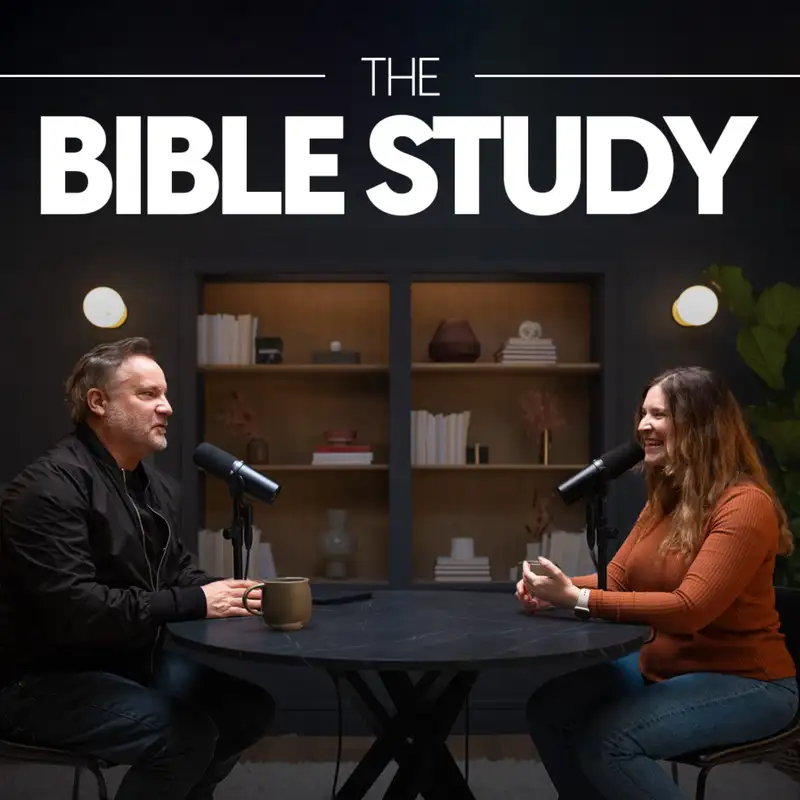
Dena Davidson [00:00:01]:
Hey, I'm Dena Davidson. I'm one of the common guests on the Bible Study Pod. I try to join in with Curt every week just to have great conversations about the Bible and how to help you better study the Bible. So we're interrupting our normal series, and we're just asking the question to a few people, how do you study the Bible? Teach us how we can better study the Bible based on some of the practices that you yourself use. So I'm going to share with you one of my favorite ways to study the Bible. So I encountered. Encountered this when I was in my master's in Christian Apologetics program at Biola University. And essentially to catch you up on my story, I was a pastor's kid that was homeschooled.
Dena Davidson [00:00:42]:
Then I ended up majoring in philosophy at a secular university. Spare you the story, but let's just say I ended up with a lot of questions, a lot of very challenging questions that didn't rip my faith apart, but certainly poked some holes. So I had some big questions when I graduated unr. And so I decided I'm going to go immerse myself in an environment where I can hear the great answers to the tough questions. And while I was there, I was. I was so excited because the, you know, the titles of my classes were like, Scientific Apologetics and the. The Resurrection and How We Knew It Happened and why Does God Allow Evil? All of these really practical apologetics classes. But to my surprise, absolutely my greatest takeaway from my time at Biola was two questions.
Dena Davidson [00:01:34]:
Two. Two courses that I took. Essential Christian Theology one and Essential Christian Theology two. You see, here's the thing. I grew up in a pastor's home. I read the Bible. The Bible was read to me. But I was missing something.
Dena Davidson [00:01:51]:
I was missing something. The great, like, synthesis of what the Bible says about the most important things that God wants us to know. That's what theology is. Theology is the study of God and what God has communicated. And here's the thing. You can go study theology, but as you study theology, what you're going to realize is that God has made certain things main and plain in the Bible over and over again. He speaks to certain themes. And if you're familiar with these themes, it just unlocks Bible study for you.
Dena Davidson [00:02:31]:
When you open up God's word and you hit a challenging passage, you will actually have greater ability to understand that challenging passage, knowing that it likely comes back to one of these essential Christian beliefs, one of these essential core Christian doctrines. So I'm going to give you A little brief overview of what that word essential means and doesn't mean. And then we're going to dive in. As you study these essential Christian beliefs, it's going to unlock for you how to better study your Bible. So that word essential, it means the main and plain things that we must believe as Christians. Now, you can absolutely be saved if you don't believe one of these things. Salvation is in God's hand, and I am not going to say you are saved. How much theology did the thief on the cross have? I don't know, but probably not a lot.
Dena Davidson [00:03:24]:
These are not essential for salvation. But this is what Christians have always believed and always will believe. They are the core of God's revelation in his holy word. So I want you to think about this one more thing before we dive in. Imagine you and I were gonna sit down and we were gonna have a great conversation. And over the course of that conversation, we talked about some of the main things in my life. We talked about ministry. We talked about parenting, marriage.
Dena Davidson [00:03:50]:
We talked about soundtracks and which movies we love to watch. We talked about all of these things. And we had a phenomenal conversation. And after you left that conversation, you replayed that conversation with me over and over and over again. And you really dove in and got to know me through the course of that conversation. That's what it's like to study one book of the Bible, and it's powerful. We can get to know God and what he wants us to know by deep diving into a particular book of the Bible. And that's what we do here on the Bible study Pod.
Dena Davidson [00:04:22]:
But also, what would be helpful if you wanted to know everything that Dena thought and believed about parenting, would be not just to review that one particular conversation, but everything that I have said about parenting. And that's what theology does. It zooms out and asks the question, what does God want us to know about this particular topic, the topic of grace? What does God want us to know about the topic of sin? What does God want us to know about the topic of eternity? And it takes all of what God has revealed throughout his 66 books of the Bible and helps us deep dive into that particular topic. And that is theology. And both are important. Both have its place. And the more that you study one book of the Bible, the better you understand theology. And the more you study theology, the better you will understand each and every book of the Bible.
Dena Davidson [00:05:19]:
So enough about this intro of what essential Christian theology is. Let's dive in and help you understand what are the essential Christian beliefs. So that as you're reading Scripture, you can see these themes for yourself. So the very first one, the very first one is this. The Bible is the word of God. It is our ultimate authority for what we believe and how we behave. I'll say it one more time. The Bible is the word of God.
Dena Davidson [00:05:47]:
It is our ultimate authority for what we believe and how we behave. Second Timothy 3:16 says, All Scripture is God breathed and is useful for teaching, rebuking, correcting and training in righteousness so that the servant of God may be thoroughly equipped for every good work. This is the big idea in Scripture. There is a God and he has spoken. There are certain things that God wants you and I to know. And so it's on us to read and study and understand what he has said. So as we open up God's Word, we are reading what God wants us to know. And this is such a core, essential doctrine.
Dena Davidson [00:06:29]:
So imagine as you're reading through the Scriptures and you're reading these things that God says. Some. Some themes you might be picking up on is what does God's voice sound like? What. What kind of things does God say over and over again? What kinds of things does he want us to hear? So many passages in the Bible are just driving in this point that God's Word is the authority. It is the authority for our beliefs and also for our behaviors. When you are reading Scripture, I encourage you to read with that lens. What is this passage saying as it relates to this core doctrine of Scripture being revelation, the word of God, completely true, completely accurate, and our ultimate authority for what we believe and how we behave. So that's the first core doctrine.
Dena Davidson [00:07:19]:
The second essential doctrine is this. There is one God, and He is the creator and ruler of the universe. Genesis 1:1. We start here in the beginning. God. There is one God, and He is the ruler and creator of the universe. I want you to just sink yourself into that truth. Every page that you read in Scripture tells us something about this God that exists.
Dena Davidson [00:07:49]:
God is real and he is not just. He is just not just, you know, in this table and he's not in that tree. We are not pantheists. We don't believe that God is inside of nature. We believe that God is outside of nature. He's this being that stands outside of it. And he created everything. A time came into being where there was God.
Dena Davidson [00:08:12]:
And then God created. He created all things, and he is the rightful ruler of all of these things. Deuteronomy 6:4 says this. Hear, O Israel, the Lord our God, the Lord Is one. So many gospel stories that can be honestly quite confusing. And you're asking what? What is the point? What is this point of this story? The point of the story is that there is one God and Jesus is God. Jesus is God. And that is the point of the story, because we see Jesus doing things that only God can do.
Dena Davidson [00:08:49]:
There's this great gospel story where they say, good ruler or good teacher. And Jesus says, why are you calling me good? There is no one good but one. It's this rhetorical question. Think about what you're saying. You're calling me good. Are you calling me God? So there is one God, and he is the creator and ruler of the universe. Third doctrine. There is one God that eternally exists as three persons.
Dena Davidson [00:09:18]:
Now, this is the doctrine of the Trinity, and it is main and plain in, in the Bible. You can read about it in the Old Testament and you can read about it in the New Testament. Essentially it is. It is shorthand for. For three beliefs that we see taught over and over and over again in Scripture. And when you take these three separate beliefs and you put them together, you get the doctrine of the Trinity. There is one God who eternally exists as three persons. So first, there is one God.
Dena Davidson [00:09:49]:
Isaiah 45:21 says, There is no other God besides me. And over and over again you'll hear that idea. Next, God is three distinct persons. One of the best examples of where you can see this in Scripture and is Matthew 3, 16, 17. The heavens were opened and he saw the Spirit of God descending as a dove and lighting on him. This is Jesus. And behold, a voice out of the heavens said, this is my beloved Son, in whom I am well pleased. We see these three distinct persons, the Father, the Son, and the Holy Spirit.
Dena Davidson [00:10:22]:
Distinct and yet also somehow unified. Last but not least, the Bible teaches there is one God. The Bible teaches God is three distinct persons. And also the Bible teaches that each person is fully God. John 9:38. We see this passage where a man comes to Jesus and he says, I want you to heal my demon possessed boy. And Jesus. And he looks at Jesus and says, if you can heal him.
Dena Davidson [00:10:51]:
And Jesus looks at the man and says, if you can, everything is possible for him who believes. And the man says, I do believe and help me overcome my unbelief. I think this is a perfect passage when we're talking about the Trinity because there are things that are so complex and understanding the nature of the eternal God is one of those things that is very complex. You may not fully understand it, but you can absolutely, fully believe it. We can cry out to God. I do believe. Help me overcome my unbelief. One of my last, last thing on the Trinity.
Dena Davidson [00:11:25]:
One of my favorite thoughts about this is that you, you essentially it's a good thing that you cannot fully wrap your mind around the Trinity because we don't want to be the types of being that can fully wrap our brain around the God of the universe. St. Augustine used this example when he was trying to understand the Trinity. He's like, trying to understand the Trinity is like trying to take the fullness and the immensity of the ocean and fit it inside a tiny cup. It's impossible. You can have the truth, you can have the ocean inside the cup, but the cup itself is not a vessel that contained the whole, that can contain the wholeness of the ocean. So too you and I, when it comes to believing doctrines such as the Trinity, that there is one God who eternally exists as three persons, this is a moment where we bow our intellect to the God of the universe and we say, I do not understand, but help me to believe you are who you say you are, eternally existing as one being, three distinct persons. Next, the Bible teaches that humans are made in the image of God, but that every person is separated by God from sin.
Dena Davidson [00:12:38]:
Humans are made in the image of God, that's Genesis 1 and 2, but they're separated from God by sin. There is brokenness that exists between God and the Creator. And I'll go you one further. I would say almost every hard to interpret Bible passage can be interpreted correctly by understanding this simple thought. Sin leads to death always. Sin leads to death always. Almost every awkward passage where you're like, what are you doing God? Or what is happening in this passage? Why is God requesting recording this for people to read? Sin leads to death always. This is what God wants us to know.
Dena Davidson [00:13:24]:
Because apparently humanity has a hard time believing that their sin, their will, their departure from what God wants, and they're chasing after what they instead want in the Garden of Eden, reaching for what God says is forbidden. They have a hard time. I have a hard time believing that this will ultimately lead to death. But this is the truth pounded into us over and over again in God's word. Sin leads to death always. That we human beings were created in the image of God and yet were separated from God by this sin. Next, we have salvation. Salvation is by grace, through faith.
Dena Davidson [00:14:10]:
Romans 6:23. For the wages of sin is death, but the gift of God is eternal life in Christ Jesus, our Lord. There are so many stories in the Old Testament where God comes in and he rescues you. Rescues. The Old Testament is hard to read. There's so many chapters where you're like, what are the Israelites doing? Why do they keep abandoning God? And. And depending on how long you've been reading, you've been reading straight through, you tend to end up more on God's side. If you just kind of cherry pick a chapter, you're like, God seems really angry.
Dena Davidson [00:14:40]:
But if you stick with the story and you're reading it straight through, you can see. So many times humanity fails, and yet God does not abandon them. He keeps stepping in, he keeps saving. Why? Because salvation is by grace through faith. That is not something that we deserve or we have achieved through our own merit. No, it is a gracious God who looks at us and loves us and decides to give us what we do not deserve. He gives us grace, what we do not deserve. Further from there, there are so many essential Christian doctrines that we could talk on.
Dena Davidson [00:15:18]:
We could talk about about eternity, we could talk about the church, we could talk about so many different things. But to me, these are the main lenses that have been incredibly helpful to help unpack Scripture. So I encourage you as you are diving in and reading the Bible and you hit a point where you just. You don't know why this passage is included or what God to say. Start filtering it through those lenses and asking the question, God, are you trying to communicate one of these essential core doctrines? Is that what this story is about? Is that what this challenging passage is about? First, you can ask the question, God, do you want me to understand that you are speaking and that you are saying something, that there is something important for humanity to know that I must wrap my mind around? Can I get to know what your voice sounds like and what your words sound like through taking in this passage? That's the first thing next. God, are you communicating something about who you are, your eternal unchanging nature? Are you trying to help me understand that you are the creator and ruler of the universe and that there is one God, that all other gods are false gods and do not deserve? My allegiance, Is that what this passage is, speaking to God? Are you revealing something about the Trinity? Are you revealing something to me about a specific member of the Trinity, whether it be the Father and his heart, Jesus, and what he does, and the Holy Spirit and how he operates? Is this passage helping me to get into a relationship with the God of the universe, Father, Son and Spirit? What do I need to know and understand about God. Or maybe it's about you and I. Maybe it's about the nature of humanity.
Dena Davidson [00:17:10]:
Maybe there are some Old Testament and New Testament passages that we have to read about, let's say Ananias and Sapphira, where all of a sudden, you know, early in the history of the church, they're stealing some money and holding it back. But the greater sin, they're lying about it. They're conspiring to lie to the Holy Spirit. What is this passage about? Well, it's in part about humanity, that even those who have heard the Gospel and known the one true God and received grace, they can still do terribly broken, sinful things. And that. And here it comes. Sin leads to death always, always in the story, every chapter. Or is it possible that this particular passage is about grace? It's about the God that, yes, is just and hands out judgment, but also page after page, offers us grace.
Dena Davidson [00:18:09]:
Where is the grace in this passage? Where do we see God interacting with humanity and always loving, always pursuing, always being the first to say, I'm coming after you. I'm going to treat you, and not as your sins deserve, but I'm going to treat you with grace because I want our relationship restored. I hope as I unpacked these theological doctrines for you, you didn't get overwhelmed. I know sometimes theology can be overwhelming, but I hope more than anything, it's enriching that for you you are inspired to dive in and to say, God, what do you want to teach me through this passage? And that this just gives you one more way to strengthen your personal reading of God's Word. I hope that's helpful to you.