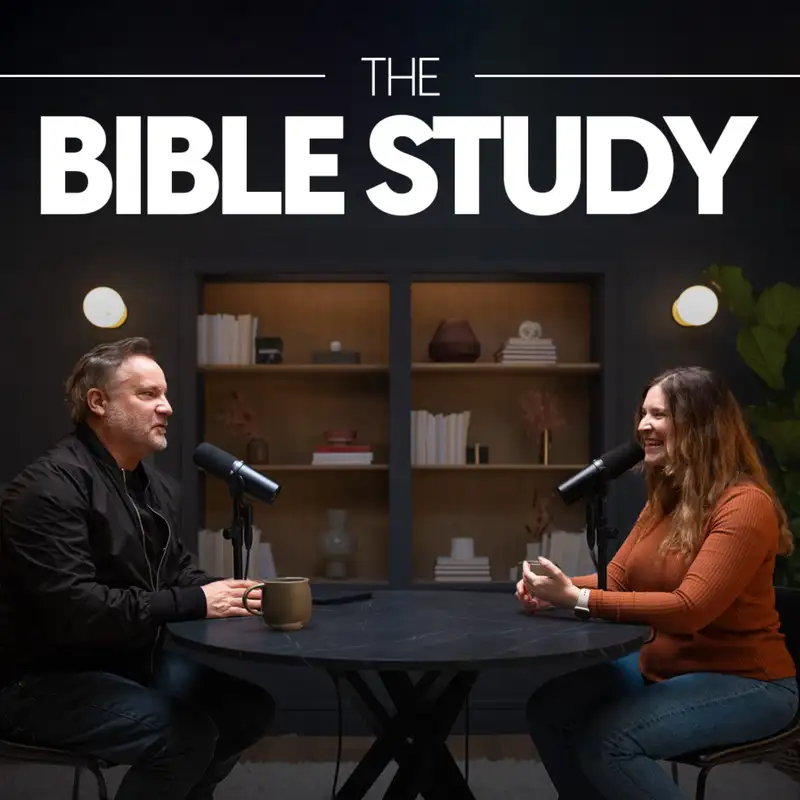
Curt Harlow [00:00:00]:
Hello, my friend, and welcome to a very special Christmas season episode of the Bible Study Podcast. And we have everyone's favorite Bayside author. And I say that fully knowing that Mark works here with Kevin Thompson with us.
Kevin Thompson [00:00:14]:
Here we are.
Curt Harlow [00:00:15]:
Kevin, how you doing?
Kevin Thompson [00:00:16]:
I'm doing well, Curt. What.
Curt Harlow [00:00:17]:
What podcast is this, Kevin?
Kevin Thompson [00:00:18]:
This is the Bible study podcast. This is about God's book, not my book.
Curt Harlow [00:00:23]:
Do you have a podcast?
Kevin Thompson [00:00:24]:
I do. Change the odds.
Curt Harlow [00:00:25]:
Okay.
Kevin Thompson [00:00:26]:
Yes. Part of the Thrive Podcast Network.
Curt Harlow [00:00:28]:
Yes.
Kevin Thompson [00:00:28]:
We are podcast siblings. This is.
Curt Harlow [00:00:30]:
This is how fast and hard we work here. We had to have a two minute conversation. Which podcast are we doing?
Kevin Thompson [00:00:35]:
We didn't know what podcast we got settled. I was about to have marriage questions for the two of you is what I was about to do.
Curt Harlow [00:00:40]:
Okay, so for all of you that have been following, you know that we are on an Advent series and we're going to do love today. Normally we do love is the last word. Hope, peace, joy, love. People have different orders that they do between the Catholic tradition, Protestant tradition, et cetera, et cetera. But they all end with love. Except for us.
Dena Davidson [00:00:59]:
Except for us. Just to be different.
Curt Harlow [00:01:01]:
We're just going to put a special episode with Passer Ray on Christmas morning, so don't miss that. But we are on love, and we're going to go to. This is my favorite thing to do we're going to do today, you guys. We are going to talk about John 3:16. There you go. But not just John 6, 3:16. Whenever you see John 3:16, it's mostly at a football game or a tennis match. And no one ever covers the context before or after.
Curt Harlow [00:01:29]:
And the context of this passage is so rich, it's so beautiful and so wonderful, so redemptive, so corrective, that we're going to jump into the topic of love by looking at John 3:16 and all of the verses surrounding it. Now, before we go to Dena and whatever comment she wants to make about context and reading the passage, this is in the context of the story of Nicodemus. Nicodemus was a prominent Pharisee and a member of the Sanhedrin. Pharisees is a political group. The Sanhedrin is the Jewish ruling council. In other words, he's a powerful guy in the hottest movement in town and he has a secret meeting with Jesus. Races Jesus. I got some questions about how you really make it into heaven.
Curt Harlow [00:02:12]:
Jesus uses probably the most quoted line in Protestant Christianity. You must be born again. You must become an infant that is completely dependent, or you cannot enter into the kingdom of God. And then Nicodemus, being a very literal male, says, how can you get back in your mother's womb? And Jesus was like, oh my goodness, you, a leader of Israel, does not understand what I'm talking about. I'm talking about access to the kingdom comes through humility, dependence, surrender. It comes through faith by God's grace. Then John interrupts the story he's telling about this nighttime meeting and gives us some of the most incredible commentary about what that really means. And that's where we're going to pick it up in verse 13 after Jesus and Nicodemus get done interacting John.
Curt Harlow [00:03:09]:
Here's John's truth bomb about the whole thing, including that very famous verse in 16. Dena, what did I miss or anything?
Dena Davidson [00:03:18]:
I mean, I just think this seems odd. Probably we're about to talk about snakes and death and all sorts of things and condemnation and why is this a Christmas passage? So I just want to say, like the very first verse is why this is a Christmas passage. Not only is it about God's love, but it's also about God coming down.
Curt Harlow [00:03:36]:
So yeah, and John wants us to know this stuff early on in the ministry of Jesus. This is foundational.
Dena Davidson [00:03:42]:
That's so good.
Curt Harlow [00:03:43]:
Very good, dina.
Dena Davidson [00:03:44]:
Okay. Verse 13. No one has ever gone into heaven except the one who came from heaven, the Son of Man. Just as Moses lifted up the snake in the wilderness, so the Son of Man must be lifted up that everyone who believes may have eternal life in him. For God so loved the world that he gave his one and only Son that whoever believes in him shall not perish but have eternal life. For God did not send His Son into the world to condemn the world, but to save the world through Him. Whoever believes in him is not condemned, but whoever does not believe stands condemned already because they have not believed in the name of God's one and only Son. This is the verdict.
Dena Davidson [00:04:27]:
Light has come into the world, but people loved darkness instead of light because their deeds were evil. Everyone who does evil hates the light and will not come into the light for fear that their deeds will be exposed. But whoever lives by the truth comes into the light so that it may be seen plainly that what they have done has been done in the sight of God.
Curt Harlow [00:04:49]:
So very, very appropriate passage for the Bible study because there is a lot here. And it's no wonder people only want to quote verse 16 because we have. No one gets to go into heaven except for me. We got snakes in the Old Testament. Kevin, what I love about you is you are the best cross referencer on the Bible study, Tell me what we should be thinking about this passage. Make some sense of this.
Kevin Thompson [00:05:16]:
Yeah. So, I mean, the first thing that jumps off the page to me is, so I will go to verse 16 first, is this idea of love. And so here you have this concept that universally feels like it's known. So you take the youngest of children, as soon as they can have this read to them, they. They have this concept of what it means to be loved. But at the same time, a misconception that we have is that we think we know what love truly is, when in reality, our understanding of love has been so tainted by our own experience and by sin itself that now we need Jesus to show up to show us what love actually looks like. I would say one of the roles of the church in the midst of worship and prayer and communion and fellowship and mission and all those things, one of the basic roles of the church is that we are learning to be loved and to love. And the moment we begin to experience that, think about these other aspects of Advent, joy, peace, and hope.
Kevin Thompson [00:06:13]:
Those are, I think, byproducts of when our lives are defined by love. And so whenever I look at this, I think about, all right, we finally have love in its fullness among us. Now we can learn what that actually means, right?
Curt Harlow [00:06:27]:
Absolutely. The truth. We get this a lot, Dena. Working with thrive college students is we'll have a student come in and their blind spots will be more obvious to us than they are to people that our eyes are right up to them. Sometimes their parents and adolescents have backed away from calling out what's challenge, what's wrong, what's flawed. Because it's just, that's. That's a hard situation for a parent with an adolescent I developing their identity. And so we'll kind of go, hey, you've been with us a couple months.
Curt Harlow [00:06:59]:
We've noticed this, and that's bad. Don't do that.
Dena Davidson [00:07:03]:
And they say, thank you so much.
Curt Harlow [00:07:07]:
You did when you were an adolescent. But no one is like you, Dena. They go, why do you not love me? Why do you hate me so much? Why are you not supporting me? And it's. It's so interesting of a reaction, and now very expected one. After all these years we're with college students and going, no, it's just actually the opposite. You cannot have the proper definition of love without the idea of, are you in the light or in you the darkness? Are you doing the evil or not doing the evil? Are you seeking forgiveness and redemption? Which is what this passage is asking Us. So I think it's just brilliant. Kevin.
Curt Harlow [00:07:49]:
Our definition of love has to be Jesus definition, because love is not an attribute of Jesus. Jesus is love. Yeah. Jesus is the manifestation of love.
Dena Davidson [00:08:05]:
Yes. And probably if you've just seen this, you know, this verse out of context, your concept of love is this, like, fuzzy God who is just enamored with everything that you do and no matter what is just going to give you a big hug. And there is truth in it, but there's also. It's not a complete picture. And the rest of the context of the passage really shows us what the love of God does look like. Because the context of this passage is the Israelites grumbling and complaining, right? Like God had saved them, brought them out of Egypt, revealed who he was. And then every step of the way, they just complained and complained and complained and complained and grumbled until eventually God sent a plague of fiery snakes.
Curt Harlow [00:08:47]:
Not just snakes.
Dena Davidson [00:08:48]:
Not just snakes. What else?
Curt Harlow [00:08:50]:
Fiery snakes.
Dena Davidson [00:08:51]:
Oh, I was like, wait, I thought it was just snakes. The fiery snake. Yeah. Like, snakes wasn't bad enough. Channel every Indiana Jones movie. Yes, it was fiery snakes. And. And their bite would poison them, obviously.
Dena Davidson [00:09:03]:
Snakes. And people were dying right and left. And so this plague was going through the Israelites, and they were experiencing the consequences of the wrath of God directed against their sin. And into that, God provided, as he does, a way of salvation, a way to be saved from the consequences of their sin. So he had Moses erect a. A pole and put a snake around it. And they had to look to the snake. And anyone that looked to the snake was instantly healed.
Dena Davidson [00:09:37]:
But to think there were some that did not look, and they perished in their lack of belief and their lack of willingness to look to the God who would provide salvation. Salvation Christmas story.
Curt Harlow [00:09:48]:
So the. The. This is so beautiful because again, context, context, context. Who is he talking to? Nicodemus? What language does he use to explain the idea of being born again to Nicodemus the Pharisee and the Sanhedrin? Nicodemus is a big, big deal theologically. To make it to the Sanhedrin and to be leading one of the leaders of this movement of. Of the Pharisees? So he says, what could I do to explain the cross to Nicodemus?
Dena Davidson [00:10:19]:
The cross that hadn't even happened yet.
Curt Harlow [00:10:21]:
The cross that hadn't even happened yet. I think Nicodemus went back to this moment when he saw the cross.
Dena Davidson [00:10:28]:
Absolutely.
Curt Harlow [00:10:29]:
He went, oh.
Dena Davidson [00:10:31]:
Oh.
Curt Harlow [00:10:31]:
Jesus knew what he was doing from day one. Moses lifts up on a pole, so you have to look up to the pole and receive healing. By the way, if you've ever seen the little medical emblem of the doctor's oath, it is a snake on a pole. And what Jesus is saying is, salvation does not come from your heritage. It's not your mom and dad Jewish belief. And it doesn't come from your obedience. You cannot be obedient. That's a Jewish belief.
Curt Harlow [00:11:05]:
I get saved, I go to heaven because I. I have the right parents and I behaved correctly in accordance to law. It comes from looking up to God, who is on a sacrificial pole.
Kevin Thompson [00:11:18]:
And the whole idea of salvation here comes to the unexpected one. So if anybody in the Gospel of John doesn't need salvation, it would be Nicodemus, if he could earn it himself. What I love about this passage is John is famous for these contrasts. Obviously, we have light and darkness. That's here. Later in chapter nine, you have the boy mourned blind and the Pharisees who are spiritually blind. You'll have Judas and Peter later in the text. And what I love about this little section is you have a contrast that's happening with Nicodemus and the Samaritan woman.
Curt Harlow [00:11:51]:
Yes.
Kevin Thompson [00:11:52]:
And what's amazing to me is one of them very clearly comes to Jesus, and the other one we're not sure about, the Samaritan woman very clearly comes to Jesus without question. She goes and tells her community. People's lives are transformed. We never have any evidence of what Nicodemus chooses. Now, you can imply later on at the grave, Nicodemus is supplying some things. Maybe he has believed, maybe he hasn't, we don't know. But the idea, I think John intentionally is showing us now, the one that we would assume would get us the fastest, the most definitive word we have of him is from Jesus. You do not understand these things.
Kevin Thompson [00:12:29]:
The one who we think would understand it the least, she is now praised for what's going on.
Curt Harlow [00:12:34]:
Right, right, right.
Dena Davidson [00:12:35]:
What's crazy about that? You were saying, Curt, at the beginning of the podcast, before we started filming, what crazy imagery is in this? Like, why snakes? Especially since in the Old Testament, I mean, from the garden, the snake was the image of the evil one, the accuser, like evil itself. And so now they're like, looking at the snake. And I think embedded in that imagery is that unless we are willing to look at our sin and to face our accuser and to really see ourselves for the sinful human beings we are, we're never actually going to trust in the salvation. And what's crazy about that story Is that the Samaritan woman, she owned her sin. She didn't deny it. She heard it from Jesus and she admitted it. And Jesus is talking to a religious authority who had every reason to believe that he had nothing to face. There was no sin he had to look at.
Dena Davidson [00:13:23]:
He was one of the holy righteous ones who expected salvation. There was nothing to really acknowledge or look at here.
Kevin Thompson [00:13:30]:
Nicodemus comes in the COVID of darkness, doesn't want to be associated with Jesus, right? Samaritan woman in the broad day.
Dena Davidson [00:13:36]:
In the broad day.
Curt Harlow [00:13:39]:
So a couple things here. First of all, if you're wondering, if you're watching this, you're wondering, where is this Old Testament story? Let's just be super clear. It's numbers, 21 verses, roughly four through nine. Right?
Dena Davidson [00:13:50]:
In that section is wild. There's a story that's worth reading in.
Curt Harlow [00:13:54]:
Numbers in between, the counting of sheep and tents. This incredible story that makes it to the New Testament. And then just to bring it back to the thought of Advent. Advent means bringing. So Jesus is bringing hope. That's the prophecies. Isaiah's Jesus is bringing peace. That's solving enmity.
Curt Harlow [00:14:15]:
It's not necessarily just personal peace that could happen, but it's solving enmity between different parties, especially us and God. He's bringing joy. He is faithful with the hopeful promise he makes. He fulfills it. That's joyful. And now he's bringing love. What is the bringing of love? I would tell you this. The bringing of love.
Curt Harlow [00:14:34]:
And the most loving thing that you can do, that you and I can do that Jesus brought, is the gospel. He's bringing the gospel to Nicodemus. What I love about the contrast between the Samaritan woman and Nicodemus. I love the variety of people that Jesus is unafraid about bringing the gospel to and speaking the gospel clearly. So you could easily write a fable. And it would be all of us rural people that are poor up here in Galilee against the powerful in Jerusalem, or all of us pure worshipers against the false worshipers of Samaria. But Jesus refuses. He refuses to be this way.
Curt Harlow [00:15:20]:
He's. He's demonstrates the gospel to centurions, to Romans. He goes to parties of tax collectors who are ripping people off. And here he says, the very council that will crucify me, I would like to bring the gospel to them. And if you aren't, you want to talk with me. You know, my suspect here, Kevin, is that Nicodemus did call for a private meeting, that he sent his, you know, entourage to knock on Jesus door and says, you know, the. The wise and powerful Nicodemus would like a meeting with you in the middle of the night. And Jesus could have said, I'm the Son of man, I'm the Son of God, I am the Messiah.
Curt Harlow [00:16:01]:
And we see him use this sort of authority in other situations. But he goes, yeah, I'll meet with Nicodemus, and I'll meet with him on his terms. Because I really believe that if he hears this, he might just actually understand. And it's just. To me, it's just beautiful. Like, who is outside of receiving the love that Jesus is bringing?
Kevin Thompson [00:16:23]:
And notice Jesus, driven by love, now, doesn't have to use any of the worldly power plays, right? So Nicodemus, let's use that metaphor. That idea of Nicodemus is using his power now, exerting his power to do what he can do and really calling. I mean, this is what leaders would do, right? I want to call Jesus in on a turf of my own terms. That way I'm safe and protected. When you're driven by love, you don't have to use those techniques. As a matter of fact, you can allow other people to use those techniques. Doesn't bother you one bit because you're not defined by what's going on outside of you. There's a love inside of you that now gives you such identity and purpose and meaning and value.
Kevin Thompson [00:17:00]:
It's the same gospel with whoever you're with. You might shade it in a different way to help them understand it better, but Jesus has no hesitation here. It's not a power struggle with Jesus because he already has the power and he doesn't even need to use it.
Curt Harlow [00:17:14]:
Right, Exactly. Okay, let's do it is the Bible study podcast. So let's do deal with some technical stuff. First of all, the. The Snake on a stick we've done with that. That is the gospel as it's stated in Numbers. Yes, but then he says, no one has ever gone into heaven except the one who came from heaven. And I've heard people that have different theories about what happens in the afterlife, they pull this verse out.
Curt Harlow [00:17:40]:
Should we be using verse 13, you guys, to prove our theory of soul sleep or how the judgment happens and what the timing of it and who gets in. Is my aunt in heaven and conscious of me right now? Should we go to this verse to try to form an opinion on those topics?
Dena Davidson [00:17:59]:
I would say no, because there's an equal balance in other scriptures that talk about, like seeing Abraham in heaven and seeing the saints in heaven. So to Me, I think the best reading of this passage, regardless of what you believe about soul sleep or not, I think the passage is not speaking to that. I think it's making a theological point, is that no one has ever earned their way into heaven. Right. Except the one who came from heaven. So Jesus is asserting himself as the only one who's been able to live a perfect life and has earned his way to heaven because of the way he righteously lived as a man on earth. So Jesus is basically saying everyone has failed the standard. For example, the Israelites, when they were all grumbling and complaining in the wilderness.
Dena Davidson [00:18:43]:
Remember that Nicodemus? Yes. That's who you come from. You are so proud of your, you know, ancestors. But they were disasters, so you gotta face that. What about you?
Curt Harlow [00:18:54]:
Oh, I. I totally, completely agree. Here's. Here's the thing.
Kevin Thompson [00:18:58]:
I'm really not in the business of refuting Dena.
Curt Harlow [00:19:00]:
No, either. So we got her on the show today. We have a meeting called the campus lead pastors meeting. And all the different campus leaders are there. And we got looking at a booklet we're going to use in next semester. And we were like, look at the font size and move it a millimeter this way. And does it put that on page seven, not page eight. Oh, my goodness.
Dena Davidson [00:19:23]:
And sounds like you were loving that meeting.
Kevin Thompson [00:19:25]:
Yes.
Curt Harlow [00:19:25]:
At one point someone said, we might be overthinking this. This is a common problem in Bible study, especially among people that really are trying to learn and become serious Bible people. This is the problem of verse by verse versus being added by other people is do not get too myopic. I think you're exactly right, Dena. There is two points that Jesus is trying to make a Nicodemus in context. Number one, I'd like you to think about me a little bit different. I think you're thinking way too low. I think you might be able to get the idea that you live at the time the Messiah has come.
Curt Harlow [00:20:02]:
And so by mentioning the fact that he was in heaven. That's the point. And that only that status of being in heaven comes from looking up and having grace and forgiveness. So no one's ever been there because they haven't looked up yet. And if you wanted to say Jesus, were you talking about soul sleep? He'd go, are you listening to the story? I'm talking to a Jewish theological leader, and I'm trying to point out the fact that he has believed in the Messiah who happens to be sitting, standing right before him.
Dena Davidson [00:20:35]:
And we didn't define soul sleep. Soul sleep is just the theory that when you die, basically, like you're not conscious until you awake after the new heaven and the new earth has come down and to be absent from the body, present with the lor Lord. But you don't experience time in heaven.
Curt Harlow [00:20:51]:
Yes, it's something definitely worth splitting churches over.
Dena Davidson [00:20:55]:
Yes.
Curt Harlow [00:20:55]:
Okay, so we've got the numbers thing. We've got the only Jesus in heaven. Let's go down to verse 18. Whoever believes in him is not condemned. And then he goes on to use condemned again. And then he uses this word verdict in. In verse 19, which is another form of the same word. Condemned, Condemned.
Curt Harlow [00:21:17]:
This one is a slightly different version, but it means a decisive moment, a judgment, or sometimes it's translated a separation moment. So at the separation moment, the fork in the road. Fork in the road, exactly. Light has come into the world. It's clearly Jesus is here. But people love darkness instead of light because their deeds were evil. Everyone who does evil hates the light and will not come into the light for fear that their deeds will be exposed. Why is Jesus talking about condemnation? Condemnation, verdicts that are decisive and pointing out if you are not? I mean, actually John is making the comments here.
Curt Harlow [00:22:00]:
If you are not doing the light stuff and you're doing the dark stuff, you don't have it. What? What's the point? And why does this come after the most ooey gooey verse in all of Christianity? God so loved the world. We're full Precious moments collection in verse 16. God's just loving and loving, and then we're down here going, you might think you got it, but if you're doing this, you don't got it. What is going on with that?
Kevin Thompson [00:22:24]:
I think there's just a reminder here. And this is the part of the Advent story we don't like, and probably the part of the Advent story that we rarely preach, which is this idea of Jesus now coming and being the king of the world. The Messiah now demands something of me. It demands repentance, and I don't want that. So I like the ooey gooey part. I don't want the crocheted pillow on grandma's couch saying repent or burn. Right?
Curt Harlow [00:22:49]:
Or my devotional coffee cup or my bookmarker, my bumper sticker.
Kevin Thompson [00:22:55]:
But Jesus is demanding. Years ago, back in my former life in Arkansas, we did a whole series of why Jesus irritates the world. And the reality is, if we deal with who Jesus actually is, light irritates. If you're not adjusted to the light, think about when your Eyes are dilated. You go to the eye doctor or you go into a movie and you walk out, you're disoriented, you can't see anything like that. Your eyes become so accustomed to seeing in the dark that you can't see in the light. And I think many of us, that's where I tend to live, where I live in this comfort reality of the darkness that I don't want the light that's going to expose my sinfulness. And just as John is saying here, people love the darkness instead of the light.
Kevin Thompson [00:23:41]:
And it's challenging me now to give up that which I find comfortable, to open my hands to Jesus and to accept him. That's very good.
Dena Davidson [00:23:49]:
I also, funny enough, I see. And we didn't talk about this, but I see a tie in to your book that you recently wrote, which is going to be one of my application points. But I got to hear you preach on love styles at Granite Bay. Oh, very nice.
Kevin Thompson [00:24:03]:
YouTube.
Dena Davidson [00:24:04]:
Just got.
Kevin Thompson [00:24:07]:
To.
Dena Davidson [00:24:07]:
Oh, thanks, Bri.
Curt Harlow [00:24:08]:
Mine's signed by Dena. Okay.
Dena Davidson [00:24:10]:
Anyway, congratulations. That's very valuable. I see a tie in to it because one of the things you talked about was anxious attachment or even disorganized attachment that comes from trauma. And it really got me thinking about how basically, like, who has a secure attachment, right? Like living in a broken and fallen world. And you talked about how attachment is formed when you're in your early years and I've got all these littles at home, and I'm just like, I am definitely messing you all up. And. And so it's. I think the hope of this passage is really seeing the world as it is, right? Like, if you do not look to Jesus in the way that he has provided a way to have a new way of loving God and loving others.
Dena Davidson [00:24:55]:
If you don't trust in that, like, you are condemned your way, you are going to damage people because you've been damaged by the world. So I don't know if you want to share what love styles is, but I've just been thinking about, like, how. How much I am messing up my people and how it's only through the grace of God, like restoring right attachment in me, to him and to myself and to others, that I can be hopeful to pass something better on to my kids.
Kevin Thompson [00:25:24]:
Yeah, love style is really. It takes the psychological idea of attachment theory, which says how our needs were met in the first couple of years of life defines how we view ourselves, others and God, which is devastating to.
Dena Davidson [00:25:36]:
Me as a parent.
Kevin Thompson [00:25:37]:
But here's the good news of It Dena, is this all right? Think about God's original plan. Perfect parents, perfect children. That sounds great, doesn't it sound? But the reality is now sin filled people are raising sin filled people, so clearly things aren't going to go right. There's a ramification of that. And I think the modern idea of attachment theory is a great kind of secular understanding that why is life not right? And we theologically can come in and say, well, it's Genesis 3, this is exactly what's happened. But here's the good news is what a psychologist will say is whenever you have a non secure attachment, like many of us do, the good news is you can learn. It's called learn security, Earn security. And so I always say this.
Kevin Thompson [00:26:20]:
Our greatest wounds in life are caused by people who are supposed to love us and didn't our family. Not because of lack of intention, but lack of skill, ability. Life gets in the way. But here's what God does is he heals those wounds by pouring his love through somebody who didn't have to love us and chose to do so. That's Jesus, right? And then it's the church. So I dedicate the book to Jenny. And I say in the foreword of the book of God keeps on pouring his love through you and that love is healing me. And that's how God works here.
Kevin Thompson [00:26:49]:
And that's the good news here, that Jesus is inviting us into what love truly looks like. But until we recognize that love doesn't come naturally to us, that we have to learn to be loved and to love, then we're going to forever live in the darkness and not even understand that it's darkness.
Dena Davidson [00:27:06]:
I guess that is the redemptive aspect I had not fully grasped yet is that I totally latched onto the wounds come from the people, but I don't think I fully received that. As you receive God's love that heals your wounds, then you, as God always does, you become the conduit for that love. That's just the way God chooses to work. He puts his treasure in jars of clay. And so that my kids are gonna get some wounds from me, but they're also gonna get some of God's love through me. That's more encouraging.
Curt Harlow [00:27:37]:
Okay, you want, you guys want, you want to see me tie this passage back or this book back to the passage?
Kevin Thompson [00:27:42]:
Here we go.
Curt Harlow [00:27:43]:
Okay.
Dena Davidson [00:27:44]:
So I mean, the word love is in the title.
Curt Harlow [00:27:46]:
So when you first started teaching about this around Bayside and bringing it up in meetings, it made me very anxious because I immediately was like, of Course I'm anxious attachment. Of course I am. I'm a family of seven siblings. My mom has struggled to get my name correct every time she talked to me, you know, and so I'm going, oh, no, just exactly what you're saying. Then as I interact with my adult kids and with my team at the church I lead and I start going, oh, being aware of this helps. That's what I'm doing. I'm talking too much right now because I hope everyone likes me and I'm making them like me less. I'm watching that person and I'm going, God, would you let me help them? Instead of saying to them, hey, would you let me help them? I'm doing all sorts of other things.
Curt Harlow [00:28:38]:
The awareness helps. Here we are. And this is why this light and darkness is brought in. The passage go back to context. This is John telling us his thoughts on the meeting of the Jewish leader Nicodemus and Jesus. And he's saying, I think this is a condemnation of religion without Christ. He's saying, I don't care how religious you are, I don't care what movement you're in charge of. I don't care what seat you sit on the Sanhedrin.
Curt Harlow [00:29:10]:
If you are not doing things of light, it doesn't count. So this is what he's saying about his interaction. Why did Jesus love Nicodemus? He wanted to tell him, your position will not save you. So he's saying, can you become aware that this isn't what pleases God? Another way that I say this, and this has become so much more relevant in the last few years, you can claim that you know grace, you can claim that you know love, you can claim that you bring love. But the only way I will be confident you've received grace or receive love is if you are actively giving love. He's saying, if the fruit doesn't match the root, there's a problem here. And, and so what the goal of John here is, would you be awareness? It's insight. It's going.
Curt Harlow [00:30:06]:
The title won't get you there. And I, I for that reason, it makes all the better sense. This is John saying, nicodemus, wake up. And the good news is Nicodemus does wake up, as we could see. Well, I'm hope filled, my friend.
Kevin Thompson [00:30:23]:
I mean, my friends in seminary used to say, the first person I'm going to see in heaven is not Jesus, it's going to be Nicod. And he's gonna like, I was here all along.
Curt Harlow [00:30:30]:
Sure, sure. Having helped at a few funerals I gotta think that that's a little. There's a little light behavior there. If you don't know, skip ahead. The story Nicodemus helps with Jesus burial site. Okay, let's apply this. So we are on the Advent, the bringing of love to the world. Dena, how in the world would you apply this?
Dena Davidson [00:30:54]:
Well, Kevin is not paying me to plug his book. Let me be clear. But I do think.
Curt Harlow [00:31:00]:
But he should.
Dena Davidson [00:31:01]:
He should.
Dena Davidson [00:31:01]:
I will accept commission. I just. I was after that sermon you preached. I was talking about it with one of my mom friends, and it was so powerful because we started unpacking marriage stuff, parenting stuff. And so I will say a very practical way to take Advent and move it into the new year, right? Because we're all like, Christmas, yay, receive, receive. Right on to do. And it's this weird whiplash. I think that we can bridge this.
Dena Davidson [00:31:31]:
Like, having so received God's love, we can dedicate our new year to learning how to better love God ourself and others. And I think this is the resource for that. So my application is to. To order love styles and to go through it. Pick a friend, pick a spouse.
Dena Davidson [00:31:50]:
Think.
Dena Davidson [00:31:51]:
Read it with your kids in mind and your future in mind. Because I think when we get better at loving God, ourselves and others, we. Now I know from the podcast, we become better conduits of the love of God, and that's why he's put us here on Earth.
Curt Harlow [00:32:05]:
All good things come with being a student of love.
Dena Davidson [00:32:08]:
Yes.
Curt Harlow [00:32:09]:
Very good. Very good, Kevin.
Kevin Thompson [00:32:10]:
Yeah, My. My takeaway from this. You said the phrase earlier. I mean, going back to the snake is look up. So as we're filming this right in the greater Sacramento region out here in California, we're on, like, day 28 of being stuck in this fog. It's been wonderful. That is just literally, we haven't seen the sun in a month, and it's just as cloudy as can be. But this weekend, I preached down our OC campus.
Kevin Thompson [00:32:32]:
It was foggy as well. But you fly out of John wayne Airport and 10 seconds into the flight, you break through the clouds. It's beautiful. As sunny as can be. You fly up an hour, you think, this is going to be spectacular. And right as you land, you're back below the fog, and it's just this reminder of, yeah, it is foggy right here, but right above me, there is this light and there is this beauty that's there. And I think so many of our lives, especially during this Christmas season, we're living in the midst of the Fog. And we shouldn't live in denial of that.
Kevin Thompson [00:33:04]:
Life is difficult. There's pain, there's hardship, there's sorrow, all those things. But where's the answer? The answer is to look up.
Curt Harlow [00:33:12]:
I always say the five most depressing days of the year are December 27th to, like, January 2nd. So true, you know, because you just regret a lot of the decisions you made. It's a great word. I have this experience every time I go up 80 to go to Auburn, to go to church or to lead the church is. There's a certain point on 80, no matter how foggy it is down here in the cereal bowl that is Sacramento, you burst through and you're like, there is, son. There is goodness in the world. Yeah, look up, look up, look up. Okay, here's mine.
Curt Harlow [00:33:44]:
Jesus takes the opportunity, inconvenient to him, to speak the gospel to someone who should be his enemy. And I would say that there's two application thoughts in that if you are a person that wants to spread the love of Christ, if you like quoting John 3:16, Take the opportunity, evaluate. If you're taking the opportunity to speak the gospel to the hardest people to speak the gospel to in your life. We battle not against flesh and blood. That person that knows how to push your button is at work or votes different than you or that you got tired of around the Christmas reunion. What if you spoke the gospel to them? And then secondly, there are people listening to this that enjoy studying the Bible. They enjoy these ideas of how do you correctly divide the passage? But every once in a while, we have to ask ourselves, are we a person of the light? Is this a cultural exercise? Is empty religion in any way, shape or form touch my life? Could I perhaps be Nicodemus where I'm leaning on my works and I'm not become the dependent infant dependent on the work of Christ? And so whether it's speaking the gospel or receiving the gospel, I would say out of this, you got to put yourself in Nicodemus seat and say, have I received this? And then you could put yourself in Jesus seat and say, am I doing what Jesus did? Am I presenting this gospel? You do those things, powerful, powerful light will come into your life.
Kevin Thompson [00:35:27]:
Good stuff.
Curt Harlow [00:35:28]:
All right. Hey, so we got a special treat for you next week. Like I mentioned earlier, our founding pastor, Pastor Ray will be with us. And Dena Bree. It's late in the afternoon when we record this. Bri, what is our topic for next week? Bri is laughing at me. We have to get a camera just on Brie. Cut away to breathe.
Curt Harlow [00:35:49]:
We're going to talk about peace. I tell you, if there's ever a moment you want to hear about how peace has come to this world, this very unpeaceful world, it's right there on Christmas. So take a minute the day after or the day of Christmas and watch the podcast. By the way, send this to someone. There's someone out there that has never looked at all of chapter three together and would enjoy this. So we'd appreciate it if you spread the world the word. And don't forget to join Kevin on his podcast, which is, again, change the odds. Change the odds.
Curt Harlow [00:36:21]:
Change the odds in marriage. Make your marriage stronger. All right. Thanks for watching and Merry Christmas.