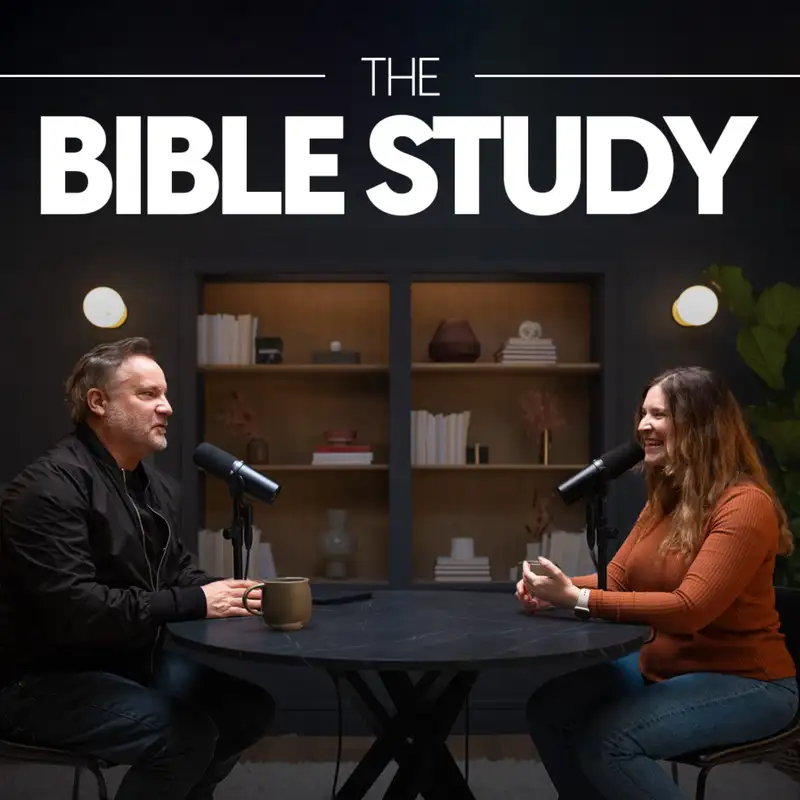
Dena Davidson [00:00:00]:
Welcome to the Bible Study Podcast. I am Dena Davidson, and I'm joined by Cameron Wells from our Adventure Campus.
Cameron Wells [00:00:06]:
Hello. Good to be back.
Dena Davidson [00:00:08]:
I love your short intros. That's one of my favorite things. You're like, hello, I'm Cameron. I'm here to talk about the Bible study.
Cameron Wells [00:00:12]:
I'm just always surprised to be back, so it's just always a good thing. I just say hi.
Dena Davidson [00:00:16]:
Too humble.
Cameron Wells [00:00:17]:
Too humble.
Dena Davidson [00:00:18]:
We are in our series on the Book of John, and this. This book is so rich. If you haven't listened to the introduction that Curt and Wesley did, this incredible book, you have to go back and give it a listen. I think they covered basically, like, three verses, but that's. I mean, that's a summary for the Book of John. It is going. It is going to be hard to get through this book because every verse is so packed with relationship, so rich theological depth. It's basically like John was, hey, Matthew, Mark and Luke, they nailed the narrative.
Dena Davidson [00:00:50]:
Now let's talk about what the narrative means. It's really exciting.
Cameron Wells [00:00:54]:
When we walked through Acts. Yeah, Acts is very narrative driven. And at the end of Acts, it gets very repetitive.
Dena Davidson [00:01:00]:
You're like another stoning, another back to
Cameron Wells [00:01:04]:
the city we were just at. John is like the opposite of that. There is narrative, but everything is just so deep and there's so many layers. So, yes, looking forward to getting through half a verse today.
Dena Davidson [00:01:15]:
So perfect. I. So in preparation for this, I haven't read much commentary yet, haven't listened to any Bible courses. Usually I do that to prep for the Bible study, but I have just been listening to the Book of John. So I've listened to it. I'm on my third time now, all the way through, which it doesn't take you as long as you might.
Cameron Wells [00:01:34]:
Do you listen on one X or.
Dena Davidson [00:01:36]:
Oh, I think it's like 1.5. Yeah. I might be at two point during the third time through. I'm like, it's exactly how it sounds, but you got to get the right narrator so you can understand them. But I think what I've been impressed with about the Book of John is how much of it is spent in, like, the Passion Week. So it's gonna be. We're gonna. Basically.
Dena Davidson [00:01:56]:
It's gonna take forever to get there. Us as Bayside. But it's where John's heart sits in ultimately revealing the answer to the question that he poses. You know, who is Jesus? And what does he come to reveal to us about God? But before we get to Jesus, John, actually, he starts With Jesus. And then he takes us in this passage. Um, we're going to skip most of the way through it, but I just want to highlight a few things here because he talks about John the Baptist. So this is not. John the Baptist did not write the Gospel of John.
Dena Davidson [00:02:28]:
Sometimes very confusing because it's like, it starts with all this beautiful theological language and then it hops into the character of John and you're like, got it. Nailed it. This is the guy who wrote this book. Nope, he's going to get beheaded later.
Cameron Wells [00:02:40]:
Autobiography of John the Baptist.
Dena Davidson [00:02:42]:
Autobiography. But he's actually such a small character. And so we were chatting right before we pushed play about how basically John is the cousin of Jesus. And one of the things that we're going to see is that even the cousin of Jesus, who in the womb, the other gospels say, record for us. He is said in Elizabeth's womb, John leapt, right? He. He had this knowing that his cousin in Mary's womb was the Messiah. And yet we see a very human John here questioning it over and over again. And, and so I think one of the things that gospel writers are taking pains to make clear is that the identity of Jesus wasn't an obvious thing, right? Even for someone that had a knowing in the womb.
Dena Davidson [00:03:27]:
Even for someone in this first, first chapter where it says that he like got to see Jesus be baptized and saw the dove come down on him, he even still is going to question it later. So I did myself didn't know he questions Jesus. Are you the one? And so this book was written to answer the question of who Jesus is. And in that time it wasn't obvious. So if you're listening and you're thinking, it's still not obvious to me, sometimes I still question, are, are we getting it wrong? Are we wrong to worship Jesus as God? This book was written to answer. Answer those very questions.
Cameron Wells [00:04:03]:
Yeah, yeah.
Dena Davidson [00:04:03]:
Anything you want to say about John?
Cameron Wells [00:04:05]:
No, just that. Just that, you know, there's a lot of redundancy with the, the gospel narratives, the synoptics, you know, who copied from who, who wrote first, who wrote after. And what I love about John is that clearly he had access to what Matthew, Mark and Luke were formulating. And so it's. It is a different vantage point and a different lens. And I forgot that you said that about the, the passion we. Because the bulk of John's writing is about that moment in Jesus's life. But yeah, one of the things that we talked about last weekend was, you know, most people ask the question, who am I? Why Am I here? You know, why do I matter? And what am I here for? And the interesting thing is, is that if you can answer the question, who is Jesus? And I think this is why this is the emphasis in John's Gospel.
Cameron Wells [00:05:02]:
If you can answer the question, who is Jesus? You answer all of those questions. If I know who Jesus is, I know who I am. If I know who Jesus is, I know what I'm here for. If I know who Jesus is, I know why I matter.
Dena Davidson [00:05:13]:
Yes.
Cameron Wells [00:05:14]:
So, like, the biggest questions that we have in life come down to that.
Dena Davidson [00:05:17]:
Yes.
Cameron Wells [00:05:18]:
Question, which is why it's so important.
Dena Davidson [00:05:20]:
So true. Absolutely. Amen. I think if we can learn to answer our questions by, by first asking the question, who is Jesus? Like, it just solves so much. It answers so much. And a lot of that angst that is in life. This book will solve for you.
Cameron Wells [00:05:36]:
Yeah.
Dena Davidson [00:05:36]:
If you sink yourself into it.
Cameron Wells [00:05:37]:
I. In preparation to preaching this passage, I asked a bunch of AIs. So, like, Perplexity Chat, GPT Club. I said, hey, you're.
Dena Davidson [00:05:46]:
You're full in. You're like, I'm not using one full.
Cameron Wells [00:05:49]:
I wanted all of the vantage points because whoever ends up owning us, I want to, I want to get in
Dena Davidson [00:05:54]:
appease all of them.
Cameron Wells [00:05:55]:
AI Overlords. I said, before you enslave humanity. I. I asked who. Who are the most influential human beings who have ever walked the Earth? Okay, so if you ask AI, if you go to Google, if you look up any list, you're going to get four to six people. And these four will be on every list.
Dena Davidson [00:06:16]:
Okay.
Cameron Wells [00:06:17]:
Near the top. So it's Muhammad, founder of Islam. It's Sir Isaac Newton, who revolutionized physics and science. It's the Buddha, who obviously founded Buddhism. And then it's Jesus.
Dena Davidson [00:06:29]:
Yeah.
Cameron Wells [00:06:29]:
The central figure of Christianity. And what was just interesting to me was like, why is the question who is Jesus? So important? The foremost influential human beings that have ever walked the earth. If you look at that list, Jesus is the only one who ever claimed to be God. So maybe we should, we should lean into that.
Dena Davidson [00:06:52]:
Yes.
Cameron Wells [00:06:52]:
Like if one of the most influential human beings, according to every list.
Dena Davidson [00:06:56]:
Yes.
Cameron Wells [00:06:57]:
And one of them claimed to be God.
Dena Davidson [00:06:59]:
Yes.
Cameron Wells [00:06:59]:
Maybe that's something worth investigating.
Dena Davidson [00:07:01]:
Absolutely. Especially if the story that Christianity says is true. This guy claimed to be God. He said he would die and that he would rise again. And he in fact did that. That's pretty good proof in the pudding that he is who he says he is.
Cameron Wells [00:07:15]:
Yes.
Dena Davidson [00:07:16]:
So good. Okay, so we are going to pick up in John 1 verse 35. Poor Kurt, he's listening and he's like, get to the Bible, you guys. Get to the Bible. Here we are, Pastor Kurt. We're reading the Bible. We're gonna go 35 through 42. If you have your Bible, read along with us, unless you're driving, as Pastor Kurt would always say.
Dena Davidson [00:07:35]:
The next day, again, John was standing with two of his disciples, and he looked at Jesus as he walked by and said, behold the Lamb of God. The two disciples heard him say this, and they followed Jesus. Jesus turned and saw them following and said to them, what are you seeking? And they said to him, rabbi, which means, teacher, where are you staying? He said to them, come and you will see. So they came and saw where he was staying, and they stayed with him that day, for it was about the 10th hour. One of the two who heard John speak and followed Jesus was Andrew, Simon, Peter's brother. He first found his own brother Simon, and said to him, we have found the Messiah, which means Christ. He brought him to Jesus. Jesus looked at him and said, you are Simon, the son of John.
Dena Davidson [00:08:24]:
You shall be called Cephas, which means Peter. Okay, so imagine this. We've got John, the author of this gospel. He is one of Jesus's disciples, and he. At this point in his life, he has watched a lot of his fellow disciples, the 12, be killed. He's seen them martyred for their faith, and he's exiled in Patmos, and he sets out to write down the story. So he starts with the theology, the coming into the world of the Logos, the. The word of God.
Dena Davidson [00:08:59]:
Then he moves into the story of John the Baptist. And then the very next story he tells is the gathering of the disciples. How would you begin as a Bible scholar, which I know you'll shy away from that term, but as a. As someone that reads the Bible and wants to rightly understand it, help us to unpack this package, this. This Bible passage.
Cameron Wells [00:09:19]:
Where do you start with the calling of the disciples? Well, I. I think the first thing that stood out to me when I got into this text was verse 37. So John says, Look, the Lamb of God, verse 37, says, when the two disciples heard him say this, they followed Jesus. Like, immediately. They followed Jesus?
Dena Davidson [00:09:44]:
Yeah.
Cameron Wells [00:09:46]:
I would think if I'm John, my feelings are a little bit hurt because these guys have been following me. They've been serving me. We've been doing the ministry together.
Dena Davidson [00:09:55]:
Yep.
Cameron Wells [00:09:55]:
And he's like, oh, the Lamb of God. And then they're gone.
Dena Davidson [00:09:58]:
And.
Cameron Wells [00:09:59]:
But what's so beautiful about that especially today's day and age, because there's so many influencers, there's so much content, there's so much, you know, everybody is doing stuff for eyeballs and attention. It's just a beautiful picture right off the bat, that the disciples were not trying to be like John. They were following him because they wanted to get to the Messiah. And when they find the Messiah, they immediately go to the Messiah. Right? Yeah. You should not want to be like your pastor. You should want to be like Jesus.
Dena Davidson [00:10:30]:
Amen.
Cameron Wells [00:10:31]:
Your pastor can help you get to Jesus or help break down scripture so you could see Jesus. But, like, at the end of the day, all of us should be trying to get to Jesus.
Dena Davidson [00:10:40]:
Yes.
Cameron Wells [00:10:40]:
And we put so many things in front of Jesus. So much content, so many personalities, so much. I just love that. That's like, right off the bat, look, the Lamb of God. And then the next verse, they follow Jesus at the end of the day, just like the rest of the book, it's all about Jesus.
Dena Davidson [00:10:58]:
Yes.
Cameron Wells [00:10:58]:
I don't know if that answers your question.
Dena Davidson [00:10:59]:
100%. Yeah. I also think about how many times I've had this broken down for me. And the first time I heard, I was like, this is beautiful. I wish I knew this when I was reading this. These discipleship passages, that it was common in those days for people to become disciples. Right. Like, we don't have any Cameron disciples.
Dena Davidson [00:11:20]:
Right.
Cameron Wells [00:11:21]:
Thank God.
Dena Davidson [00:11:22]:
Or we don't call it that at least. Right. So there's not a group of people standing while you teach them. Right. So common in that time, actually, the teacher would sit and then the. The group would huddle around them. Right. Because the teacher should be at rest.
Dena Davidson [00:11:37]:
They're doing the hard work and everyone else is standing up. And so there was this. There was this practice of becoming someone's disciple. It was basically putting yourself in a position of learning and saying, I want to learn from you. I want to pattern myself after you so that I can know how to live life. And that was just a common. A common practice for the Israelites. So these people, they're not doing anything foreign by being John's disciples.
Dena Davidson [00:12:06]:
Right. They're just. They're taking this practice and they're making John their teacher. And then like you're saying, they found a better teacher. They found someone that was more the embodiment of what they were looking for. They were looking for the Messiah, Jesus. John himself had the wits about him to point him out and say, this is his identity. Of course you should be going and following after him.
Dena Davidson [00:12:29]:
But in our modern day Christianity, oftentimes we focus on salvation, and it's going to be many chapters before we get salvation. There's a salvation image in this passage, but the primary thrust in this passage is that of the discipleship, meaning we are placing ourselves under the tutelage of someone else saying, teach me. Form my character, form my mind, so that I can pattern myself after you and become a different person. Like, that was the big idea here. It would have been very common in that day and age. But today it's a little bit of a foreign concept, especially in Western culture, because it's like, I'm my own me.
Cameron Wells [00:13:12]:
Right.
Dena Davidson [00:13:12]:
I'm not going to follow someone else. Right. Like, I follow 20 influencers.
Cameron Wells [00:13:18]:
Right.
Dena Davidson [00:13:18]:
And I take a little bit of what they say and a little bit of what they say, and ultimately I do it so one day I can launch my own page. Right. And people can follow me. But in this culture, the discipleship precedent was huge.
Cameron Wells [00:13:31]:
Yeah. Well, I think it also means that John taught them well, like his theology and what he was passing down was good because as soon as they saw the real thing, they were like, that's the, the thing that we want.
Dena Davidson [00:13:44]:
Yes.
Cameron Wells [00:13:44]:
I'm. I'm not worse than just not doing my job. I'm doing a disservice to everybody as anybody's pastor. To build reliance on me.
Dena Davidson [00:13:53]:
Yes.
Cameron Wells [00:13:54]:
Like, that's not healthy. And it's not the discipleship that we see in the New Testament. I should be building reliance on Jesus.
Dena Davidson [00:14:03]:
Yes.
Cameron Wells [00:14:03]:
And the way that I teach and break down Scripture should. And I, I love Kurt, because this is what he. He did for me, is that as I teach and break down Scripture, that should give you tools and help you be able to do that without me.
Dena Davidson [00:14:15]:
Yes.
Cameron Wells [00:14:16]:
So that it's not like if I don't have Cameron or if I don't go to church on Sunday, like, I can't do this. And it's like, that's completely wrong.
Dena Davidson [00:14:23]:
Yes. If you're sitting under a pastor and you, you're thinking, or even listening to the Bible study and you're thinking, man, I could never pull those insights out like Cameron does. I could never pull those insights out like Kurt does, then we're. We're doing this whole discipleship thing wrong. Like, the goal of discipleship is to bring you to the feet of Jesus so that you can follow him and not any person who's some teacher in between you and him. So that's the concept of discipline.
Cameron Wells [00:14:51]:
Another interesting thing is because you mentioned, you know, we follow like 20 influencers, and I'm just kind of like picking and choosing. But the word follow, the root word, when it said they follow Jesus, the root word implies that you're also leaving something behind and there's an action. I think a lot of times we listen to content because that satisfies some part of us that knows that we want to be better, we want to do better, but we don't necessarily want to put that into action. So I'm just going to listen to it, I'm going to think about it, and then that will be enough. Yes, but like, you have to physically go do something with that and you have to leave something behind.
Dena Davidson [00:15:28]:
Absolutely.
Cameron Wells [00:15:29]:
And I think that's discipleship that we see in the New Testament, certainly with Jesus, that you cannot follow something without leaving something else behind.
Dena Davidson [00:15:37]:
Absolutely. And it's going to be the chief problem that the Israelites have is that, I mean, they had it all in the Old Testament. Couldn't. Couldn't leave behind Egypt. Right. Couldn't leave behind the Canaanites. Couldn't, like all these things that God said, you gotta put those out of your story. They kept being like, but how could we still have a little bit of it? Right.
Dena Davidson [00:15:59]:
They kept turning their hearts back to Egypt and they kept not killing the Canaanites. And here again, we're going to see, literally, so here we're going to see that unlike John's disciples who left John and started following Jesus, the Israelite nation, they're going to keep pointing back to, but what about Moses? But what about the prophets? But what about this old revelation? And the chief problem is going to be that they're unwilling to see that the old pointed to the new. And so what we can say about these disciples is they, they heard their teacher John saying, let me point to the new. Let me point to the more full revelation of God's plan. Behold the Lamb of God. And they actually left behind their old teacher and followed this new teacher. So let's, let's. I said there was salvation language in this, and there is.
Dena Davidson [00:16:59]:
It's the. Behold the Lamb of God. So I think if, if you're not steeped in the Old Testament, and this is why we need the Old Testament, is because we won't properly understand the New Testament without it. Then you're like, oh, behold the guy that follows God. Like Mary had a little lamb. Like, this is like God's pet favorite. Like, what are we talking about here? Right? So that phrase, the Lamb of God, this is John saying, hey, you, you Know those lambs that you sacrifice every Passover so that God passes over you and doesn't bring his wrath down on your head? This is the lamb sent by God to atone for your sins. This.
Dena Davidson [00:17:41]:
This is again, this is a clear pointer to his identity. And it speaks salvation, which I just love that so much. So why do you think their first question is, where are you staying?
Cameron Wells [00:17:53]:
Yeah. Well, even before that, the first question that. That Jesus asks them, when he says, what do you want?
Dena Davidson [00:17:59]:
What are you seeking?
Cameron Wells [00:17:59]:
John, very clearly from the text, it's not a literal answer. He's not saying, what do you want? Yeah. When your kids are following you around the house, what do you want? I know what they want. When he says, what do you want? He's really asking, what are you after? What do you want from your life? What do you want for your life? What are you seeking? He's asking them a way deeper question.
Dena Davidson [00:18:21]:
Yeah.
Cameron Wells [00:18:21]:
And then they say, where are you staying? What they're literally saying is they're not. They're not changing the subject. They're not dodging the question. They're saying, we want to be where you are. Where are you staying? And can we come? We want to be with you.
Dena Davidson [00:18:34]:
Yes.
Cameron Wells [00:18:36]:
So there's a lot of subtext there, but there's a lot of depth.
Dena Davidson [00:18:39]:
Yeah. And I think it's also a saying. This is our plan. It's like, we've left John.
Cameron Wells [00:18:46]:
Right. So we're homeless.
Dena Davidson [00:18:48]:
Our current plan is to be where you are. And what a great plan. Not to hop too much into application, but it's like their only plan was to follow Jesus. It wasn't like, we're gonna follow you to help you overtake Rome. Right. Like, we're gonna follow you because xyz. No, it's just my only plan is to follow you. And I think when we get to application, there's a lot to preach there, But.
Cameron Wells [00:19:13]:
I may have told this story before, but there was a season where Carter, our six year old, was getting up every night and he was getting into our bed and we just. We weren't sleeping. And so we were. We were just done after like two weeks.
Dena Davidson [00:19:23]:
Stick to that. Yeah.
Cameron Wells [00:19:24]:
And so every night I would pick him up and I'll just take him straight back to his bed. And one night I get up and I real. I had to go to the bathroom and I realized that Carter hadn't come into our bed that night. And I was like, hallelujah. Also, is he alive? And so we. Our room. Our room. We have a jack And Jill bathroom in between the two bedrooms.
Cameron Wells [00:19:43]:
And so I walk into the bathroom and I step on something soft. And I look down and it's Carter. And he's asleep on the tile floor of our bathroom. And, like, his face isn't on the bath mat. He has grout marks in his cheeks because he's laying on the tile. And so I'm like, what? I'm so confused. I pick him up, I'm taking him back to bed. I'm like, what would possess a human being to sleep on tile? And as I'm putting him back into bed, it clicked that he was trying.
Cameron Wells [00:20:10]:
He was scared. He was waking up with nightmares. He knew that if he woke us up, we were going to take him back to his bed. So he was trying to be as close to us as possible without having to get sent back. And, like, he would. He was willing to do anything, including sleep on dial, to be as close as possible to mom and dad. And that picture, that imagery has never left my head. And I see it here in John chapter one.
Cameron Wells [00:20:31]:
They're like, where are you staying? We want to be as close to you as possible because nothing else matters. That's the only thing that's going to work. It's the only thing that's going to make a way. And so I always think about that, though, and like, man, how close can I get to Jesus? Because we always ask the questions like, can I smoke weed and get into heaven? Right? Can I sleep around before I get married? And the question is almost. You're asking is like, how far away from Jesus can I get and him still love me? But it's like, what if the question was, how close to him can I get?
Dena Davidson [00:21:04]:
Yes, that's powerful. I like my mama heart's, like, tearing up. I'm like, oh, little babies. Did you. Did you like, oh, scoop him into your bed?
Cameron Wells [00:21:15]:
Are you like, nope, no. He went back to his bed. But I did have a spiritual revelation.
Dena Davidson [00:21:20]:
God spoke to me. This. This was for me. And he's like, dang it, I love that. Okay, so come and you will see. I love that. That's Jesus's response. I think many times we have this view of God as, hey, go get your life together, and then you can call yourself my disciple.
Dena Davidson [00:21:41]:
Then you can only call yourself a Christian if you're living like a Christian. And Jesus's response is, there's no exam. There's no test about their qualifications. There's no, hey, only if you're willing to do this. There's no even here's what's in store for you. He just invites them. And that is the essence, I think, of Jesus revealing God's identity is that God is a God of invitation. Come and you will see.
Cameron Wells [00:22:09]:
That might be my favorite verse in the whole passage, because you're so right. Like, the message of verse 39, the message of the Gospel, the message of Jesus, it's not try harder. It's not do better. It's not know more, be more. It's come.
Dena Davidson [00:22:21]:
Yeah.
Cameron Wells [00:22:22]:
And see. And I. I just always encourage people to. This is why Christians should be honest and open. I think, about the rough, ugly, hard parts of their lives. Right. So, you know, I. I'm.
Cameron Wells [00:22:38]:
I'm coming from a broken home. I have a really hard, bad relationship with my dad, and I carry a lot of baggage through that. And I've dealt with a lot of insecurity, and I still. There's still stuff that surfaces, but, like, the beauty of Christianity is that I can share that and go, but. But God has healed me and he's changed me, and I'm not whole and I'm not perfect, but I'm. I'm healthy and I'm moving forward.
Dena Davidson [00:23:02]:
Yeah.
Cameron Wells [00:23:03]:
Come and see.
Dena Davidson [00:23:03]:
Amen.
Cameron Wells [00:23:04]:
What he did for me, maybe he can do for you.
Dena Davidson [00:23:07]:
Yes.
Cameron Wells [00:23:07]:
But in Christianity, we just like to pretend like, because we have Jesus, our lives should be perfect and should be all together, and so we don't share any of that stuff. But if you're perfect, there's nothing to come and see, because other people know they're not perfect. But instead you go, I'm broken and I'm a mess, but I love Jesus and He loves me. Come and see. Like, there is something irresistible about that message, which I think why we're gonna see a little bit later when Nathaniel is like, there's nothing good comes from Nazareth. Yeah, they're. They're surprised by the lowly start, but then it's this thing that impacts billions and billions of people.
Dena Davidson [00:23:46]:
Yes. I love that so much. All right, we got a couple more verses as we're getting to the end of this passage. It says, one of the two who heard John speak and followed Jesus was Andrew Simon, Peter's brother. And so I just imagine this being read in the church, and everyone's like, oh, plot development. Like, we know who Peter is.
Cameron Wells [00:24:05]:
We know him.
Dena Davidson [00:24:06]:
We know him. He first found his own brother Simon, and said to him, we have found the Messiah, which means Christ. First of all, I think the whole point is it is not about Peter. This story is not about Peter. Because if you're Andrew, right, and you found Jesus first, there is like 0% in the story of any of the disciples being like, you know what I deserve? Like, there's this. Actually, I was here first. Right. Dibs.
Dena Davidson [00:24:37]:
Because they're, man. It's just they're so obsessed with Jesus. There's this one awkward passage where John's like, John's mom is like, hey, can you make them, you know, right hand and left hand, and they're like, mom, mom. Right. But other than that, it's basically this story is about Jesus and even this plot development of who these disciples are and Jesus looking at him and saying, you are Simon, the son of John. You should be called Cephas. The main thing is not that people would know who Peter was. The main thing is that people would know that Jesus has the authority to rename Peter.
Dena Davidson [00:25:14]:
Can you imagine, like, if it's the first time that we're meeting, we met when we were K. But if it was the first time we were meeting, you walked into the Bible study podcast and said, hey, what's your name? And you're like, it's Cameron. I say, no, you shall be called, you know, whatever, whatever.
Cameron Wells [00:25:30]:
I gotta go.
Dena Davidson [00:25:31]:
I've got some very weird vibes. Right. So this is Jesus's. Why? Why is John telling this story? He wants them to know that from the very first meeting, like, Jesus had this authority. And to name someone is to declare authority over them. And not just authority, but also that he had this knowledge about the condition of man and their future. Like, he, he had a seeing into people. And I think that's what John wants us to know.
Dena Davidson [00:26:02]:
I think sometimes we get caught up in, like, okay, what does it mean? That he's Cephas, right?
Cameron Wells [00:26:06]:
Yeah, right, the rock.
Dena Davidson [00:26:07]:
And there's a later passage, but I don't think that's the point. I think the point is, again, yeah, who is Jesus? Jesus is the one with authority and revelation such that he can rename people.
Cameron Wells [00:26:19]:
Well, and I, I, I to support that. I don't think that it's any accident that John opens his book with this prologue. And one of the first things that he says, Verse 3, through him, all things were made. Without him, nothing was made that has been made. At the very beginning, he's saying, Jesus is creator, and if he had the power and authority to create you, he has the power and authority to recreate you.
Dena Davidson [00:26:41]:
Amen.
Cameron Wells [00:26:42]:
If he can make you, he can remake you.
Dena Davidson [00:26:43]:
Yes.
Cameron Wells [00:26:44]:
Which is why that prologue, even though it seems very artistic and it's very beautiful. It actually is woven all throughout his book 100 and I love. This is one of the big themes with Jesus. And you see this with the Pharisees, the Sadducees and a lot of the. The Jews is. It says the first thing Andrew did was to find his brother Simon and tell him we have found the Messiah. That there is a big difference. You can meet someone but not find them.
Cameron Wells [00:27:12]:
Like I think about the very first night I met Charmaine. I didn't. You were there. I didn't know she was gonna be my wife. I wasn't even thinking about that.
Dena Davidson [00:27:21]:
Everyone else did. We felt it.
Cameron Wells [00:27:23]:
Right. Yes. I got a lot of text messages that night. But it was six to seven months later. We were on a walk late at night and we had been talking and the. Our relationship, our friendship had deepened. That was the night I looked at her and I thought, this is somebody I could give my heart to. And that was the night I knew I had found my wife.
Cameron Wells [00:27:40]:
The day I met her, I had met her, but I hadn't found her. And a lot of people meet Jesus in the gospels, but they never find Jesus. And Andrew finds Jesus. An interesting aside.
Dena Davidson [00:27:53]:
Yeah.
Cameron Wells [00:27:54]:
Andrew is mentioned three times in the book of John, John chapter 1, John chapter 6, John chapter 12. All three times we see Andrew, he's bringing somebody to Jesus.
Dena Davidson [00:28:03]:
Are you serious?
Cameron Wells [00:28:04]:
What a great Andrew legacy.
Dena Davidson [00:28:06]:
Amen.
Cameron Wells [00:28:06]:
But he finds the Messiah and the first thing he does is he goes and finds his brother. I talked about this, this Sunday that found people, find people. That I have been found by Jesus and I have found Jesus. So now I need to spend. Right. The Great Commission the rest of my life finding other people because they need to be found, to found people find people.
Dena Davidson [00:28:29]:
I feel like that's a beautiful bridge into application. So first. First job that we have here at the Bible study, what would it have meant for all time, but now what does it mean for us today? Is that how you would land this in application is go find someone and bring them to Jesus?
Cameron Wells [00:28:46]:
I think so. And I think. I think just with where content, religious content, Christian content is. I think with the Great Commission, we kind of read it or receive it as go and logic people into the kingdom of heaven. Go and debate people into the kingdom of heaven. But it just says go and make disciples. And how are disciples made? In John chapter one, Jesus says, come and see, come and see. And so I think that's the thing, is that I have been found.
Cameron Wells [00:29:17]:
I have found Jesus. Now I need to go find other lost People.
Dena Davidson [00:29:21]:
Yes.
Cameron Wells [00:29:22]:
And all I'm going to say is come and see. Like, look at what he's done with me. Look what he can do with you. I don't think that you need to have scripture memorized. I don't think that you need to have rebuttals to every argument. Yeah, I think that's what your life is for. I'm a deeply flawed, broken person, but I have hope, I'm encouraged. I have something that I'm living for.
Cameron Wells [00:29:44]:
Yeah, you can have that too. Come and see.
Dena Davidson [00:29:46]:
That's so good. I love that. And I just want to double down in a practical way that one of the best ways that we can bring people to Jesus, like how do you even start that conversation? Is to weekly talk about. And daily when people ask you, like, how was your day? And if you were to be answering to a believer and say, oh, I was thinking about this sermon that my pastor preached on the weekend. Or. And you say, oh, I, I'm having a really tough day, but I've been praying about it. Like, talk in the way to a non believer that you would to a believer. Like sometimes we have this tendency to like de.
Dena Davidson [00:30:23]:
Whitewash our lives. Whitewash. Be like, I'm going to take out every Christian reference. Don't be a weirdo. Right. Don't like import a bunch of language, but try.
Cameron Wells [00:30:33]:
I was just meditating in the spirit.
Dena Davidson [00:30:35]:
Exactly. I was just feasting on the blood of the lamb.
Cameron Wells [00:30:39]:
I'm going to rename you.
Dena Davidson [00:30:42]:
I hope that's okay. Yes. Just feel the Lord's telling me, don't do any of that weirdos. Yeah, but don't change your language. Just who you are with a Christian. See how it goes.
Cameron Wells [00:30:55]:
Yeah.
Dena Davidson [00:30:55]:
Be that person with a non believer. As a, as a philosophy student at a secular university, I made that my mission. And so people always say, like, how was your weekend? And I'd say, oh, it was great, great. I did this volunteering at my church this weekend and their eyeballs would kind of bulge out and they'd have sometimes follow up questions and sometimes not follow up questions. But yeah, it just, it, it invited people to come and see. Right?
Cameron Wells [00:31:22]:
Yeah.
Dena Davidson [00:31:23]:
Because we don't have to, we don't have to tee it up so much. Sometimes it can just be like, hey, I went to church this weekend if you ever want to come with me. Yeah, I'd love to bring you with me.
Cameron Wells [00:31:35]:
Just real quick to drive that home. I met a lady at church this Sunday.
Dena Davidson [00:31:40]:
Yeah.
Cameron Wells [00:31:40]:
And she said it was her first weekend at, at church and I said, how did you get here?
Dena Davidson [00:31:45]:
Yeah.
Cameron Wells [00:31:45]:
And she said, I was at the Galleria Mall and I overheard two women talking about their faith. Yes, I've been looking for a church.
Dena Davidson [00:31:53]:
Yes.
Cameron Wells [00:31:53]:
And so she was like, I just walked up and I said, you sound like my people. Where do you go to church?
Dena Davidson [00:31:59]:
Oh.
Cameron Wells [00:32:00]:
And they told her and she came on Sunday and is starting to serve now and. But because two people in a public space were just talking about their faith.
Dena Davidson [00:32:10]:
Okay, that is so positive. I have the flip side of that story. I do. So a former Thrive college student recounted this that she was in Bloom coffee and she was overhearing two people she happened to know were Baysiders and they were just ragging on Bayside like they were talking about all the conflict that they were experiencing. And just because churches are full of broken, sinful people and we're not here to say that Bayside's a perfect church. So anyways. But they were kind of like chit chatting about all of the church hurt and drama and I don't know if I can keep going to this church. What a whata.
Dena Davidson [00:32:46]:
And so this former Thrive college student who doesn't even go to baset anymore, she walked up and said, hey, I just want to let you know I used to be part of that church. I've been listening in on your conversation and if I was a not a believer, I would think so poorly of Christianity and I would certainly never go to your church. I just want to let you know that people are listening to what you're saying. So maybe a sub application point that deeply convicts me all the time. Cameron, because thinking about how, man, what do you want your word? Like if your words are overheard by a non believer speaking about the church, speaking about Jesus, speaking about other believers, let's be the people who lean in and say, come and see. Because what we're part of, with all of its brokenness, all of its non perfection, it is so worth it because Jesus is worth it.
Cameron Wells [00:33:43]:
Amen.
Dena Davidson [00:33:44]:
Yeah, Amen. All right. John, the book of John. We love it. We're going to be in it for basically forever. So hopefully you're enjoying it. I our next episode we're going to have Greg on. He's part of our newest Bayside campus.
Dena Davidson [00:33:56]:
BG I love that from Bayside. We're actually going to have to rename it. I don't really know what they're going to do with that, but it's hard
Cameron Wells [00:34:03]:
to rename things now.
Dena Davidson [00:34:04]:
I do. Jesus does. We'll let him do that.
Cameron Wells [00:34:07]:
Bayside Cephaside Cephas.
Dena Davidson [00:34:10]:
I'm actually going to ask him what the name of his campus is. I'm not quite clear on that, but Greg is awesome and I hope that you tune in because you're going to get an incredible word from Greg and from the Book of John and make sure that you like share subscribe to this podcast and share it with a friend, especially one that needs to hear this message of come and see.