Curt Harlow [00:00:00]:
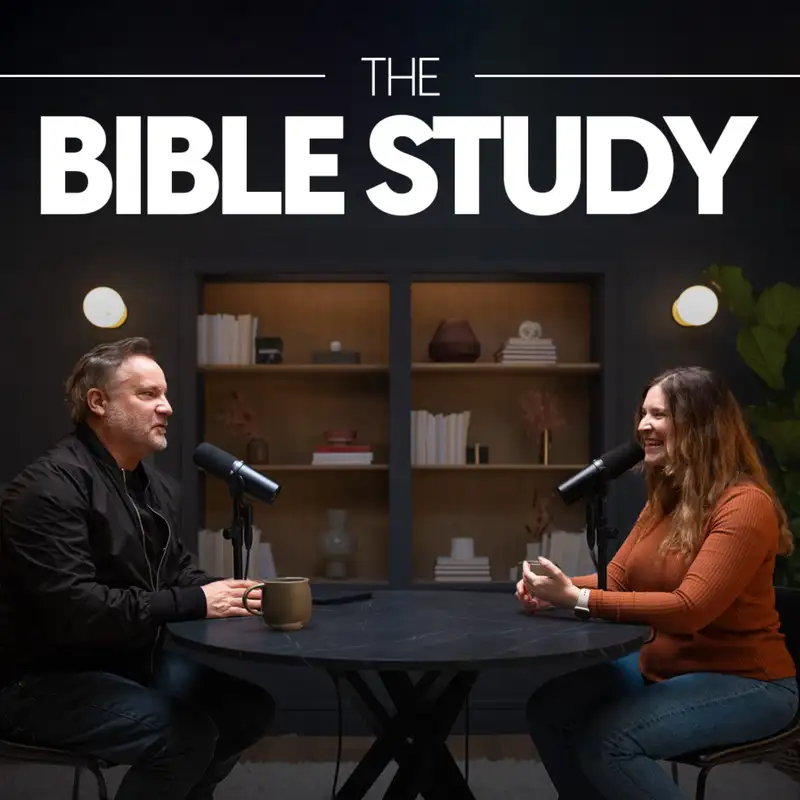
Hello my friend and welcome to the Bible Study podcast. This is our special Advent series. We're taking four weeks to go through the Christmas Advent because it's the Christmas season. And look at this, we got tons of notes Bible open and about.
Ray Johnston [00:00:14]:
You can you all can tell who's the old guy at the table? The guy that uses actual notes. Everybody else has got computers and iPads, so.
Curt Harlow [00:00:24]:
Yeah. Okay. You like?
Ray Johnston [00:00:25]:
Well, I'm not young like young Curt Harlow here, so.
Curt Harlow [00:00:27]:
Yeah, that's exactly right. That's young. Guys, welcome. Ray Johnson, founding pastor, Bayside Church.
Ray Johnston [00:00:31]:
Nice to be back here.
Curt Harlow [00:00:32]:
It is great to have you back. Merry Christmas.
Ray Johnston [00:00:34]:
Thank you.
Curt Harlow [00:00:35]:
And of course we have Dena Davidson. As always, what I call the frontal lobe of Thrive College. And we are going through.
Ray Johnston [00:00:42]:
Have you all got your Christmas shopping done?
Dena Davidson [00:00:45]:
Yes, completely done. I'm going to have it all wrapped by next week.
Ray Johnston [00:00:50]:
Irritating.
Curt Harlow [00:00:51]:
I have mine.
Ray Johnston [00:00:51]:
Overachiever.
Curt Harlow [00:00:52]:
I have mine all done. But here's our family arrangement. I buy for my dad and my wife.
Dena Davidson [00:00:58]:
Oh, that was easy.
Curt Harlow [00:01:00]:
Okay, So I was 30 minutes on Amazon.
Dena Davidson [00:01:04]:
How about you, Pastor Ray?
Ray Johnston [00:01:05]:
I wouldn't even start.
Dena Davidson [00:01:06]:
It's all right.
Ray Johnston [00:01:07]:
However Carol started. So I'm 90% done. There you go.
Curt Harlow [00:01:10]:
So now you, you do a big scavenger hunt. You've talked about this many times for your kids. Is the scavenger hunt planned?
Ray Johnston [00:01:18]:
No, that gets planned on Christmas. Well, Chris, to Christmas Eve. We have a million Christmas Eve services. So I strategize it then and plan it out. But sometimes it's elaborate. Like I will be phoning people like, you know, like one year they had to call John. Like I scrambled up numbers, they had to call whoever answered it was John Volinsky. And they said, John said your presents that you're getting are amazing.
Ray Johnston [00:01:43]:
But I have your next clue and if you stop at Starbucks and bring me whatever drink you wanted, I will give your next clue. So Christmas morning, all hop in a car, they all go to Starbucks, they all go to Valinsky's house, give them a coffee back to our house, find the thing. So the payoff has to be worth it.
Curt Harlow [00:01:59]:
So whenever you talked about this backstage at Christmas in the past, I would make my children leave cuz then they would want. No kidding, this sort of thing. By the way, if you've never been to a Christmas service at Bayside Bayside Online.com, you definitely need to get your tickets right now cuz they're running out and it is a, it's a great Christmas tradition memory. You'll really love it.
Ray Johnston [00:02:18]:
Yeah, a Lot, by the way, a lot of you are going to different Bayside campuses, which is a really cool thing. The tradition for most people has been come to one of the 13, or we'll probably go 14 this year of the shows at Granite Bay before Christmas Eve, and then go to your own campus on Christmas Eve. And the only rule is this, man. Don't go alone.
Curt Harlow [00:02:36]:
Bring as many people as you go alone.
Dena Davidson [00:02:38]:
So, so fun.
Curt Harlow [00:02:39]:
All right, so last week, and I hope you watched it, we talked about the first word in the Advent. By the way, I did a little research because, you know, I'm. I'm. I grew up in a completely unchurch background. I didn't know what Advent was till I came to Bayside. But Advent is a Christian season of preparation that originated in the 4th and 5th centuries in Spain and Gaul. Originally, the purpose was, was like catechism. You went through catechism, you fasted, you prayed, and then afterwards you get baptized.
Dena Davidson [00:03:08]:
And catechism is teaching the essentials of.
Curt Harlow [00:03:10]:
Foundations of faith, which is the thing we need to bring back Then in the sixth century, it got associated with Christmas. It was eight weeks, got pared down to seven weeks some places. Then it got pared down to four weeks, and. And it got associated with these four words in the four weeks. Hope. That's based on the Old Testament prophecies giving us hope. And then Jesus brings us peace. That's based on the angel song that we're going to hear in a minute in the passage.
Curt Harlow [00:03:38]:
And joy. That's what the shepherds heard. That was the message. Their song is peace. The message is joy from the angels. And then, of course, the love of Christ is given. So hope, peace, joy, and love. And, Dena, who came up with those four words historically? Do you know?
Dena Davidson [00:03:52]:
No, I have no idea.
Curt Harlow [00:03:53]:
No one does. No one does. Some people say maybe Pope Gregory, but it evolved, and it's like the first viral thing, this thing called adventure. It started as one thing, and then it evolved into a Christmas thing. They threw in a wreath, there's some candles. That's why we like candles at Christmas, by the way, because of Advent. And it was so, so popular and so effective that it's like a great sermon series that one church does and all the other churches, like, we got to do this. That when the Reformation happened, Advent went.
Curt Harlow [00:04:25]:
Survived in the Catholic Church, went to the Church of England and then went to the Reformation churches, and they all still did. It was like the one thing that all the churches did.
Dena Davidson [00:04:34]:
It's interesting.
Curt Harlow [00:04:35]:
And to this day, we a lot of churches will do these four words and themes, and we're going to do it today on the Bible study. Love it. So we're going to go to Luke. We're going to read the Christmas story, or we. Dean is going to read the Christmas story. We're going to talk about this week. We're going to talk about joy, because that comes first in the passage. And then we'll do an episode on peace the following week.
Curt Harlow [00:04:55]:
Dena, why don't you read us the Christmas story from Luke 2?
Dena Davidson [00:04:59]:
I'm no Linus. I'll give it my best, though.
Curt Harlow [00:05:01]:
All right.
Dena Davidson [00:05:02]:
In those days, Caesar Augustus issued a decree that a census should be taken of the entire Roman world. This was the first census that took place while Quirinius was governor of Syria, and everyone went to their own town to register. So Joseph also went up from the town of Nazareth in Galilee to Judea, to Bethlehem, the town of David, because he belonged to the house and line of David. He went there to register with Mary, who was pledged to be married to him and was expecting a child. While they were there, the time came for the baby to be born and she gave birth to her firstborn, a son. She wrapped him in cloths and placed him in a manger because there was no guest room available for them. And there were shepherds living out in the fields nearby, keeping watch over their flocks. At night, an angel of the Lord appeared to them, and the glory of the Lord shone around them, and they were terrified and.
Dena Davidson [00:05:54]:
But the angel said to them, do not be afraid. I bring you good news that will cause great joy for all the people. Today in the town of David, a savior has been born to you. He is the Messiah, the Lord. This will be a sign to you. You will find a baby wrapped in cloths and lying in a manger. Suddenly, a great company of the heavenly host appeared with the angel, praising God and saying, glory to God in the highest heaven and on earth, and peace to those on whom his favor rests. When the angels had left them and gone into heaven, the shepherds said to one another, let's go to Bethlehem and see this thing that has happened, which the Lord has told us about.
Curt Harlow [00:06:35]:
So there we have it, the great proclamation of good news and joy to all people. And then, of course, right after that, we've got the live concert of angels where they announce peace to those whom God's favor rests. Pastor Ray, we got a lot of notes here.
Dena Davidson [00:06:52]:
Lots of notes.
Curt Harlow [00:06:53]:
A lot of notes. Is this the first time you've ever studied the Luke 2 is this your first time in this passage?
Ray Johnston [00:06:58]:
Yeah, I made it through Matthew and Mark. But this is a brand new book.
Curt Harlow [00:07:01]:
Give us your thoughts. What do you like about this passage? What brings us joy at Christmas?
Ray Johnston [00:07:07]:
Here's three words. And because it starts with this, don't be afraid, which everyone is these days. And then he says, I bring you good news. So it's good news. It's three things. Good news. It says of a great joy, and then it says this. Why is it a great joy? Cause it's for all the people.
Ray Johnston [00:07:32]:
Basically, it's going. And by the way, churches do the opposite of this. Churches are horrible. Trying to live like Jesus. Number one is most churches. Whatever happens there on Sunday, nobody expects it to be good news. It's usually bad news.
Curt Harlow [00:07:47]:
And it's usually bad, sometimes boring news.
Ray Johnston [00:07:50]:
Yeah, just take the original prescription. Okay. It's good news. Most people are going, it's going to be bad news or it's going to be bad, boring news. And I love this because the angels shock them. Like, it'd be like if this happened in our service. People would be frightened instead of going, oh, this is a calm, boring religious thing. So it's good news.
Ray Johnston [00:08:11]:
But. But it doesn't stop there. He goes. Of a great joy. Most people do not expect to get joy coming into a church environment. And then it adds this. And it's for all the people.
Curt Harlow [00:08:22]:
Love it.
Ray Johnston [00:08:23]:
And then the next word is, by the way, you want me to stop? I can go all the way.
Curt Harlow [00:08:27]:
No, keep going.
Ray Johnston [00:08:28]:
The next word is today. That's a huge word. In other words, like, you can have all these promises of good news. Complete forgiveness. Right. Relation. You can have it all. Like today, while you're listening to this, everything can change, you know? And then he goes on and on.
Ray Johnston [00:08:45]:
I made this. Every word in here has got weight to it. Yes. All these individual phrases. The problem is they're exemplified in the scripture, but then experienced by very many people.
Curt Harlow [00:08:58]:
So, Dena, just from an apologetics point of view, did this happen? This is just a nice story that we hear on the peanut special. Or did these angels show up?
Dena Davidson [00:09:07]:
I don't know why we would think that they didn't show up. I mean, if your problem is with angels appearing in the sky, then you have a problem with the whole Bible. Right? Like, the idea is that there is a God, so there is a realm beyond what we can sense with our senses. Right. There's a realm beyond what we can see. And there are things that we do not understand. And so I would say to Anyone who doubts the angels, I think you're just missing the bigger story. If you believe the bigger story, then the presence of angels actually isn't a problem at all.
Curt Harlow [00:09:38]:
A lot of people that have a problem with the supernatural, I, I ask them, do you believe in the multiverse? Oh yeah. Spider Man. In the multiverse. Multiverse. Multiverse. And the multiverse is a helpful theory in that if you believe in materialism, the universe just popped into being and the only thing that is real is material. It explains why there's the fine tuning of the universe. Because if there's billions of universes, one of them must be fine tuned enough that we would actually have life.
Curt Harlow [00:10:09]:
And not just life, but intelligent life. And not just intelligent life. Intelligent life where we can talk to each other and think and. But here's the problem with the multiverse theory. Zero evidence, there's no math evidence, there's no physical evidence. It's very unscientific. It's fun thing, it's great for Spider man cartoons, but it's no evidence. So it's interesting.
Curt Harlow [00:10:30]:
People are willing to take the leap and go, I can imagine there's something outside of this universe. But then when God who created us wants to speak to us, like to me the worst philosophy is not atheism, it's deism. There is a God, he doesn't want to talk to us. So what? God wants to speak to us and sends angels, we somehow have a problem with that. And I think we have a problem with that. And this is where I'm going to tie it back into what you said, Pastor Ray. Because we don't really believe that God wants to give us this joy. It's hard for us to believe.
Curt Harlow [00:11:09]:
God wants me to have this joy. To me what happens here is we Talked about Isaiah 9 last week. Actually Isaiah 7, 8, 9. Go read those. That's the first Christmas story. And you have this hope that it will happen. This hope. God says, I'm speaking Isaiah.
Curt Harlow [00:11:26]:
So you'll have a hope that sometime in the future a King David will come. He'll be a wonderful counselor, he'll be a mighty God, he'll be a prince of peace. And then you have that word, Ray. And I'm so glad you brought this up. This is the today of that promise.
Dena Davidson [00:11:42]:
Yeah.
Curt Harlow [00:11:42]:
So we have hope because God promised it. We have joy because the promise. God was faithful for the promise. This is the day we get to go. Yes. God is a good God and what he promises, he fulfills.
Ray Johnston [00:11:56]:
Amen. Yep. It's funny, like As a former atheist, when you get into apologetics on this kind of stuff, and if you're a skeptic, read Luke, okay? Read Luke over and then read the Book of Acts. Those two books Luke wrote. Luke and Acts read both because each of the four gospels, Matthew was written to people with a Jewish background. And it pretty heavily emphasizes, like Jesus credentials out of the Old Testament. Like, this guy's the legit messiah. Okay? Mark was written to Romans, and Mark is pretty much about actions.
Ray Johnston [00:12:31]:
There's 108 scenes in Mark, and things are happening in every scene. It's an action book. Luke, though Luke was written to Greeks, by the way. John's written to everybody. Luke's written to Greeks. And they were thinkers. I mean, it was Socrates. It was.
Ray Johnston [00:12:46]:
And so Luke is writing very specific things and very specific details. Like, you read the Book of Acts, like, non believing historians go, everything in Acts, all the shipping lanes are accurate. One guy said, Luke is a historian of the highest rank in history. And so, like, as a former atheist, I get all these atheists coming up to me and going, all right, what if this? And when it comes to that kind of thing, I'm going, like, can you believe these angels showed up? Okay, Imagine, like, it's just you and I doing this and Curt's not here. Cause he's never been born, he doesn't exist. And all of a sudden, God goes. Dena and Ray don't really know what they're talking about. We need a Curt Harlow in here.
Ray Johnston [00:13:30]:
And like two minutes ago, zap. Big thundercloud, Wham. Curt is sitting right in that chair wearing the same stuff, looking really brand new. Looks just like he looks now. And two minutes after you were created, just like this, which God can do, somebody walks in and they go, what's that guy doing here? And we go, hey, we want you to meet Curt. And I guess, how long has he been here? And we look at him and we go, it's three minutes now. He's only been alive for three minutes. He's three minutes old.
Ray Johnston [00:14:03]:
They look at you and go, no, he's got to be 45.
Curt Harlow [00:14:08]:
Thank you. Thank you.
Ray Johnston [00:14:09]:
He's got to be 45. We're like, no, he's not 45. He's three minutes old. Well, if creation is a possibility, and if miraculous stuff happening is a possibility, then he looks like he's more correct. However, who's really right? We are accurate. He is not. Because when you shut off all supernatural stuff happening, which pretty much leads you to a dead end, then you doubt Everything. But if God created the entire world, et cetera, et cetera, et cetera, then all this stuff's possible, which means it's all presuppositions.
Ray Johnston [00:14:51]:
Like, it's all. Like, if you assume miraculous things can't happen, then you're gonna throw out everything miraculous. You're gonna be kind of miserable and probably bitter, and you probably had a bad relationship with your dad. I got to stop this rant. This whole thing here, this book is written to people that are skeptics. And Luke is writing very accurate, convincing history on this stuff.
Curt Harlow [00:15:12]:
A lot of times we have presuppositions and we don't even know they exist. And so part of the. You know, I like to tell people, whenever you get into passage, ask the hard questions, because you're going to find what your presuppositions are. And sometimes your presuppositions are affirmed by the passage. And you're like, I didn't know I believed the right thing for the right reason. And sometimes your presuppositions, to your point, are biases, and they're about what you were first taught as opposed to what is actually true. And so a great Bible study skill is to ask that question. What bothers me about this? What if those angels aren't true? It's okay to ask that question.
Curt Harlow [00:15:51]:
You're going to come to a better conclusion.
Dena Davidson [00:15:53]:
There's one more thought, Curt.
Curt Harlow [00:15:54]:
Yeah, go ahead.
Dena Davidson [00:15:55]:
I think for those that are listening, that they kind of fall into that naturalistic category where they think that the right way to approach the world is to rule out the miraculous. I think one of the best questions you can ask yourself is, if my theory was false, is there any evidence that could show me that it was false? The answer is no. There is no presentation of the miraculous that could overturn your assumption that there is no miraculous. Then. Then that means that your worldview is not based on evidence. It is based on a presupposition. So even like David Hume, great philosopher, but he created this crazy argument against miracles. And the classic critique of his argument against miracles is that it proves too much.
Dena Davidson [00:16:42]:
Like his argument against miracles basically says, even if the miraculous happen, we should not believe it. And so it's self defeating because it shows that really what you're doing is you're begging the question, which, as a philosopher or a great thinker, you don't want to do. You want to actually hold a view that could be overturned and nothing could be more in line with the scientific method than saying, I'm willing to revise what I believe on the basis of further evidence.
Curt Harlow [00:17:09]:
Or I say it this way, the funniest book you'll ever Read is a 50 year old science book. Okay, let's go. Let's go back to joy. I love the apologetics. Sorry for the d, but let's go back to Joy. So that 2,000 years ago some angels show up to some night shift shepherds and they announce, I bring good news that will cause great joy for all people. So I could see why they would feel joy that something amazing just happened to them. Then later they leave and find the baby.
Curt Harlow [00:17:38]:
That's a lot of joy. They probably were very familiar with the Old Testament. So this fulfillment of the hope that will be. But why should I, in Christmas 2025, why should this give me any joy? How do I get this? Why is this in this Bible? And does God want me to experience this same joy that's so good.
Ray Johnston [00:18:00]:
And. Or why don't we?
Curt Harlow [00:18:01]:
Or why don't we. And you guys go ahead and answer it and then I'll tell you the right answer.
Ray Johnston [00:18:07]:
Oh, good, because this is going to need to be corrected. I want to give you all a great quote from a guy named Dallas Willard. He was a professor of philosophy at usc and he was talking about this passage and like an actual virgin birth, which goes back to a little bit of what you just talked about. Can miracles happen? And he said this. People who believe in the virgin birth don't get brownie points for believing in the virgin birthday. Here's what they do get. They get to live in a different world. A world where virgin births occur is a different world from the one in which they don't.
Ray Johnston [00:18:44]:
A world where Jesus Christ rises from the dead. A world where we have a reliable word from God in the scriptures. This is different from a world where these things aren't true. And when we believe in the true world, we gain the riches and realities that God has provided. And when we don't believe, we live in that world. Here's the next thing.
Curt Harlow [00:19:03]:
We.
Ray Johnston [00:19:03]:
We are simply restricted to what we can work out all on our own. We just. This passage, folks, we get to live in a different world. And that in and of itself has things in that world that are cause for joy, even when things are not in good shape.
Curt Harlow [00:19:22]:
That's awesome. The way I would put this is the reason this can give me joy 2000 years apart from the event is for the same reason that recovering my lost laptop gave me joy. So a few years ago, Andrew invited me to speak at some churches In Ireland. We flow over there and we did incredible. Glenn was there, you know, Glenn Pastor from Manchester. Just. We had a blast. But I didn't sleep.
Curt Harlow [00:19:52]:
I was jet lagged the whole time. We ran everywhere. We get on the plane to come home and I zonk out on that plane. Finally, you know, we land and Andrew's literally waking me up, like in Atlanta.
Ray Johnston [00:20:03]:
Or wherever our thing was.
Curt Harlow [00:20:04]:
He's like, come on, Curt, wake up, wake up. I get up, we go off the plane, we walk to a restaurant, we order a coffee. We're sitting there drinking the coffee. I'm like, I'm gonna take out my laptop and check something. And I realized I left my laptop in the sleeve of the seat in front of me, which, by the way, that's a rule for life. Never put anything in that stuff. And so I run back to the terminal and the plane is still there, praise God. And I say that my laptop's on, that it's in such.
Curt Harlow [00:20:32]:
And they said, you know, the door's shut, sorry, there's no getting your laptop. And I get out my phone and I turn on the. Find my thing and the plane takes off. And that whole day I watch my laptop fly back to Europe.
Dena Davidson [00:20:49]:
Oh, no.
Curt Harlow [00:20:51]:
I just. And it's. You know that sometimes that find me thing doesn't work. It works perfectly. So then I get home and I call the airport in London's lost and found. I call London's lost and found. No laptop, no laptop on that plane. There is no laptop now.
Curt Harlow [00:21:07]:
This is back when I was backing up my laptop on a hard drive and not doing it regularly enough. So all my kids photos that hadn't been backed up, all of my sermons that hadn't been backed up, all of my financial information by tax records for like the last 10 years on that stupid laptop. And they were. I. I was dead. It's gone. I had to go, that's it. That I lost, that.
Curt Harlow [00:21:34]:
There was a fire. It's gone. Two weeks later, get home package on my front porch, open it up, there is my laptop. Oh my God, there is my laptop. What I thought was lost was never lost. What I thought couldn't happen happened. So to me, what this says, and it's exactly, it says, we are not alone. God cares.
Curt Harlow [00:22:03]:
God is Emmanuel, that God is with us. I love the fact that Christianity is not based just on a worldview, but on an event. God interrupted history. So the lostness of this world, we can look at this passage and go, no, God interrupted history. What we thought was lost. What we Thought was hopeless. All of our instinct for grieving, all of our instinct for cynicism, no, there's joy because there is really a God who interrupts this world.
Dena Davidson [00:22:35]:
I also think we read this from the standpoint of people who've heard the Christmas message so many times, like, yeah, yeah, yeah, Jesus came to Earth. That was great singing angels for these shepherds. They were coming off hundreds of years of silence where the God they believed in had not been speaking to his people and had not been intervening miraculously. And so they were coming off of hundreds of years of silence. So when the angel comes up and says, I have good news. God is speaking again for the first time in hundreds of years. And. And that news yielded the joy.
Dena Davidson [00:23:11]:
But I think their first reaction would have been the news, God is speaking again to us. He hasn't abandoned his people. We're not left to our own devices in this broken world. And ultimately, the fact that God is still speaking from heaven is what gives us great joy. God is still on the march, loving humanity, chasing after us. He's still after a dying, hurting, broken world that he wants to save.
Ray Johnston [00:23:36]:
Yep. So I knew our theme was joy. And so if I could pastor you off for a couple minutes here. Christmas for me is usually a rushed time. I could still have joy, but it's definitely. I mean, we're all crazy. And somebody heard Curt's story. I heard that.
Ray Johnston [00:23:57]:
And I'm still 32 years later, waiting for my Mac laptop that was left in the airport in Chicago. And so I'm expecting a call by the time I get home. But. But I think Christians, we have everything we need, and we know this stuff already.
Curt Harlow [00:24:17]:
Okay?
Ray Johnston [00:24:18]:
So why is it that so many our people are at the manger, but they're still miserable? And I. It's funny, I wrote a book on this few years ago, by the way.
Curt Harlow [00:24:27]:
That's my new sermon title for Christmas service.
Ray Johnston [00:24:30]:
Yeah, no kidding. And. And the. And we did a long study, surveyed everybody on that kind of stuff, and we discovered that the key to having joy and hope, or not having joy and hope, is playing great defense or not playing great defense. You can have the best quarterback in the world, and if your defense is lousy, you will lose. And so all I want to do is I want to give you five joy killers. And, you know, the minute these. Enter exit number one.
Ray Johnston [00:25:03]:
If you're not driving, write these down. Number one is unhealthy people in your life. All of us have some people, and they're just unhealthy and unhealthy people make circumstances are unhealthy and all that kind of stuff. There are just some people that if I'm with them, I'm going to be miserable afterwards. And they're specialists at that exact. You got any?
Dena Davidson [00:25:26]:
I will.
Ray Johnston [00:25:27]:
Never mind you.
Dena Davidson [00:25:27]:
I will neither confirm nor deny.
Ray Johnston [00:25:28]:
Name them, would you? And so, number one is I've had to pay a lot of attention over the years to making sure the people that I'm around stoke hope and joy in my life. Because God, my family, my kids, my grandkids, the churches that we do, they can't afford me to be less than my best. Okay, Second, Joy Killer is us unkind critics. And they are. It's almost like we need all agree it's an epidemic right now. I mean, this morning we posted some really good news, and somebody called me and said, you know, that's gonna set all these haters on fire. Take it down. So we took it down.
Ray Johnston [00:26:11]:
We're like, used to be able you could post good news. You post anything these days, you get slaughtered by the far right or the far left, and they're just crazy. Third, is this an unbalanced schedule? Like, no matter how spiritual I am, if I'm too freaking busy 24 7, I'm gonna be miserable, and it's gonna be out of control. And the next Joy Killer is this unnecessary guilt. Like, this passage is like good news of a great joy for all. All the people. I mean, complete forgiveness is available. But a lot of us carry around guilt after the fact, and we beat ourselves up.
Ray Johnston [00:26:59]:
And the fifth Joy destroyer is underestimating. This is a new one. Underestating the impact of exposure. Like this. Mm.
Curt Harlow [00:27:13]:
Okay, that's real smart.
Ray Johnston [00:27:14]:
People scroll. People scroll on their phones the length of the Empire State Building seven times every day.
Dena Davidson [00:27:22]:
Stop it. Is that true?
Ray Johnston [00:27:24]:
That's crazy. It's almost like an epidemic of how to wreck your inner life. And both extremes, right and left, they are. They are determined to turn you into a single issue. No compromise haters. And all of these things just rob joy. And you look at the mood of our country or the mood of political party or mood of anybody. It's really hard to find simple joy these days.
Ray Johnston [00:27:54]:
And even you can teach this stuff. But if people are allowing these things into their life, this stuff's a little bit more like window dressing than deep surgery.
Curt Harlow [00:28:01]:
Pastor Ray, just list those five really quick again, just for review, okay?
Ray Johnston [00:28:05]:
Unhealthy people in your life. Okay. A matter of fact, some of you gonna have some. They're called in laws or outlaws, in some cases, unkind critics. We all have them. If you do what we do, you just have hundreds of them. Okay. An unbalanced schedule, unnecessary guilt, and underestimated the impact of exposure to things that aren't healthy.
Curt Harlow [00:28:26]:
Amazing. Pastor Ray, will you come back and help us talk about peace?
Ray Johnston [00:28:31]:
Absolutely. I'll even wear the same clothes.
Curt Harlow [00:28:33]:
And we're actually gonna film it right after this.
Ray Johnston [00:28:35]:
That's right.
Curt Harlow [00:28:36]:
By the way, thanks for joining. Go back and look at the Hope episode. I hope you watch all four of these in consecutive order and take some of this application advice. I hope you have the most joyous Christmas you've ever had. I really mean it. Thanks for watching. As always, subscribe all that stuff. Make sure you're spreading the word because we all want to get better at studying the Bible.
Ray Johnston [00:28:57]:
All right.
Curt Harlow [00:28:58]:
Thanks for watching.