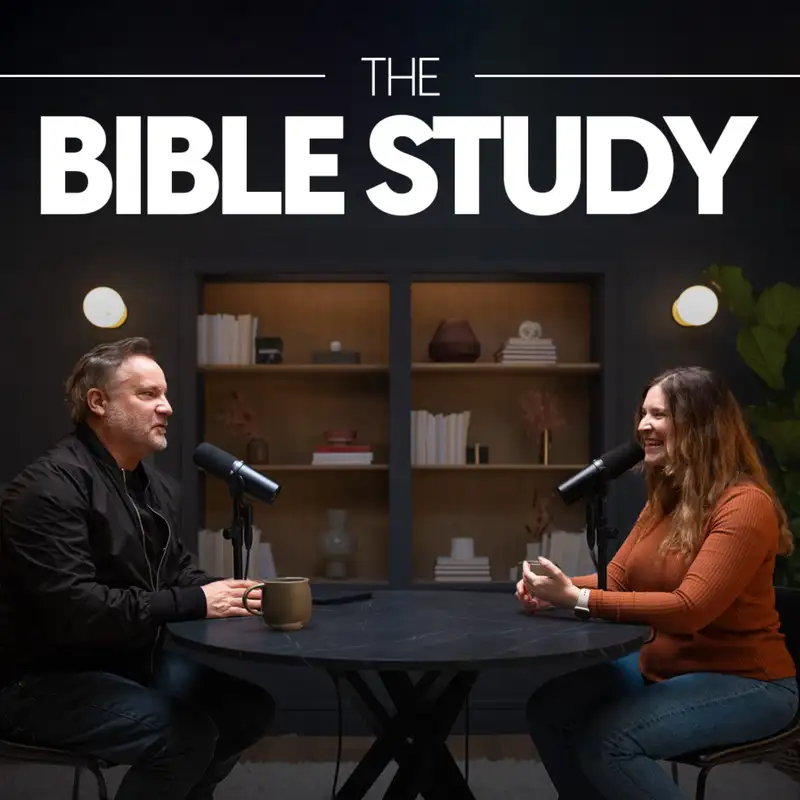
Dena Davidson [00:00:01]:
Welcome to the Bible Study Podcast. Excited to be with you in this new year. We are going to kick off the year doing a couple one offs on the topic of why the Bible can be trusted. And that is, I think the perfect way to start out 2026 on the Bible Study podcast is like a. Why should you listen to this podcast? Like why, why do we care to study the Bible in depth and get more of it into our life? And so I, I hope that you enjoy this little miniseries on why we are studying the Bible and why we can trust it. We have Cameron Wells from our Adventure Campus. You've been on a couple times.
Cameron Wells [00:00:34]:
Been on a couple of times. Good to be back. The calendar invite said, would you like to attend a one on one breakout led by Dena Davidson?
Dena Davidson [00:00:42]:
Yes. Who knows what we've done with Curt.
Cameron Wells [00:00:44]:
I'm just here to.
Dena Davidson [00:00:47]:
Curt, as far as I know, will be back next week for round two of this and we'll be joined by Jason Caine. So, yeah, if you fully trust the Bible after this podcast episode, you don't have to listen to the next one. If you still have questions, maybe tune in to next week's episode.
Cameron Wells [00:01:00]:
You're probably going to want to do that.
Dena Davidson [00:01:01]:
You're probably going to want to do that. Yeah. We always need better and better reasons to trust the Bible. So the big idea that we're going to talk about today, Cameron, is that the reason we should trust the Bible is that it corresponds to reality. Now that word corresponds also the word reality that comes from my philosophy days. Right. So there's like these different theories you have philosophy. Oh, yeah, I try to work that in.
Cameron Wells [00:01:26]:
Are you not still in philosophy days?
Dena Davidson [00:01:28]:
I think I'm in like my Bible philosophy days, which I call, I think.
Cameron Wells [00:01:32]:
It just oozes out of you.
Dena Davidson [00:01:33]:
Ah, that is fair. I am just a philosopher by nature and I think in philosophy and I speak in philosophy as a philosopher, we'll just go there. That's. That feels pretentious. But as someone who loves philosophy, one of my favorite courses was epistemology and that's all about how we know what is true. And so you study these different theories of truth, right? And you're like, is this the philosophy podcast? No, we're going to get to the Bible, don't worry. So essentially you ask the question, like, what makes something true? Well, one of the theories of truth is that it corresponds to reality. So like, truth is what you bump into right when you're going out into the world and you're like, are things real? And you're like, no, I think everything is just an experience experiment in my brain.
Dena Davidson [00:02:16]:
And then you bump into a table, you're like, actually this feels real. There is something out there. And you can go down a bajillion rabbit holes a la Alice in Wonderland, like chasing. What is the correct theory of truth? Well, I think the correspondence theory is a pretty good one, right? And so when we study the Bible and really any other holy text, one of the first questions that we should ask is, does it actually correspond to reality? So I'm going to give us a few different ways that the Bible does in fact correspond to reality. And feel free, Cam, to just pipe in at any point and be like, hey, that reminds me of this. Or that's a really good thought. Let me add on to it.
Cameron Wells [00:02:59]:
I do think right off the top it's a great question to ask because I remember talking to my grandparents when I was very young and, and I was like, hey, you know, some people are saying that the first couple chapters of Genesis are allegory. And you would have thought that I had slapped my grandmother in the face. I can see she was like, what are you talking about? So I, I think there's an interesting difference in how generations think and, and see scripture because I feel like starting with the generation maybe after us, they started to ask, well, like, but why should we believe it? Because I grew up in a generation where that was just kind of understood and it was like, well, it's in the Bible, so we should believe it. And then it's like, young, these younger kids are like, but why should we believe the Bible? And so I all that to say, I think an encouragement for anybody that's maybe a little bit older. Like, this is a very valid question. And it's a question that a lot of people are asking today. So don't dismiss it.
Dena Davidson [00:04:03]:
That's good. I will say, like, a lot of the times when we bump up into this correspondence question, we're like, did the flood really happen? Like, were Adam and Eve actually, you know, the, the first humans? All of these questions that come to us, we, we have to put on one side of the equation and say, okay, first of all, there's the question, does the Bible correspond to reality? That is a truth question. And then also there's the interpretive question, the hermeneutical question. Are we rightly understanding what God wanted us to understand when he wrote the first, when he wrote Genesis, when he inspired the author of Genesis too many times in the church, that nuance is missed, right? Like we Think if there was not a flood, if there was not a historical Adam and Eve, thereby like therefore the Bible does not correspond to reality. And what we're essentially jumping over is this giant hermeneutical interpretive conversation that's been having in the history of that's being had in the halls of academia and in the history of the church. And so I would just caution anyone, don't think for a second that if you read something in the Bible and then you go out and someone is like disproving that did not happen, that you should throw out the entire Bible and throw out your entire faith. Like your first question should be, have I rightly understood what God's word is saying?
Cameron Wells [00:05:31]:
Right.
Dena Davidson [00:05:32]:
And once you've come to that conclusion, maybe the conclusion you come to is, yes, the Bible is claiming, for example, that the earth was created, the heavens and the earth were created in seven 24 day, 24 hour days. Then you can go out and ask the question, all right, date. Does the science back that up? Does the Bible correspond to reality? But really only after you've done that hermeneutical interpretive approach first is it the.
Cameron Wells [00:05:57]:
Dunning Kruger effect, where your skill or excellence in one area you transfer to other areas.
Dena Davidson [00:06:03]:
Explain those words you just said.
Cameron Wells [00:06:05]:
So the Dunning Kruger effect, I believe, I believe their names, all the people who came up with this theory that like, let's say you're a brilliant mathematician, you assume your brilliance in geopolitics, even though those two have nothing to do with each other.
Dena Davidson [00:06:19]:
So good.
Cameron Wells [00:06:19]:
So it's a box bias where we overestimate our abilities because we're really skilled in one area and so we assume we're really skilled in the other area. I feel like the older I get, the less I understand about life.
Dena Davidson [00:06:32]:
That's good.
Cameron Wells [00:06:33]:
My son asked me the other day, he said, dad, why is there gravity on Earth but not in space? I was like, of course I understand gravity. And so I immediately go to chat GPT and I'm like, why is there gravity on Earth and not in space? And so I'm explaining it to him and then he responds the way kids do. And everything that I say, he goes, why? And I'm like, well, because that's the way it is. Why? Well, I don't know. And then I'm like, I don't know anything about gravity. So I feel like we have these preconceived, I know, preconceived notions or things that we think we understand. But if you really dive in, there's so much Nuance that's missing. I love Dr.
Cameron Wells [00:07:11]:
John Lennox. He talks about the Bible, mathematician, theologian, and he says, you know, so for instance, there's a verse in, in the Psalms, I believe, that talks about the Earth being supported on pillars and it kind of flies in the face of. He talks about how, you know, hundreds of years ago people would have have read that and said, well, the Earth is flat because it's resting on pillars. And really we know the Earth to be round. And so it flew in the face of what we believed about the Earth. And he said, can you read it as the Earth is flat? Yes, but you don't have to. Can you read Genesis being a literal successive seven days of creation? Yes, but you don't have to. There's a lot of nuance into that.
Cameron Wells [00:07:57]:
Anyway, that made me think of that. Yeah, you can read it that way, but you don't have to.
Dena Davidson [00:08:01]:
What's fascinating, I'm not going to try to repeat those names you said. But what's fascinating, Krueger, that one bias. What's fascinating about that is that I feel like a lot of times I've talked to people who are brilliant scientists, but being a brilliant scientist doesn't mean you're a brilliant interpreter of an ancient Near Eastern text. And so you may not be understanding the genre, you may not be understanding why there's debate over certain passages and why it may not say what you just, on the face of it, are reading it to say. Likewise, I can be honest, we have a lot of brilliant theologians, brilliant Bible scholars that also assume they're brilliant scientists, Right, because of their expertise here. They're like, clearly, I understand the natural world in the same way. And I think it's just like God to humble us all, just like you're saying, Cameron, is to say, you know what, I am a great communicator. You guys are not great at receiving my communication, but I'm really good at clearly communicating what I want to communicate.
Dena Davidson [00:09:07]:
So if you, you take the Bible and reach yours, because I just have my laptop. But if you take the Bible and you come to it and you say, I want to believe this book, because of what you say about this book. And this is where we're actually getting to the Bible. Second Timothy 3 says, all scripture is God breathed. And if fundamentally we're saying, I'm going to put aside my expertise and I'm going to put aside my bias, and I'm just going to come at this and say, God, you have breathed these words. I want to understand them rightly. I want to trust them fully, help me with that process. I think we're in a much better place than trying to come at it and, and say, okay, I know exactly how to read this book.
Cameron Wells [00:09:53]:
Right? Yeah. And actually I think the actual smartest people in any given field, if you've ever noticed, if you've watched interviews or podcasts and you have these brilliant people, the truly brilliant ones that don't fall into the Dunning Kruger effect, rarely speak in absolutes. And when you press them on things, they'll go, well, we think so, but we don't really know. I find that really fascinating. And I've actually heard several of them say I immediately kind of distance myself. Or there's a disclaimer when I hear somebody speaking in too many absolutes.
Dena Davidson [00:10:30]:
Absolutely.
Cameron Wells [00:10:31]:
And I think that.
Dena Davidson [00:10:32]:
Absolutely amazing. 100. Stop listening to me.
Cameron Wells [00:10:38]:
All right. For my solo pod from here on out. I think that we do that with scripture though. We take these absolutes into scripture and I think there's far more gray area and nuance in scripture than there are absolutes. And then when our absolute is disproven, our entire faith falls apart.
Dena Davidson [00:10:55]:
Yes. But here's the great news. While there is some gray areas in biblical interpretation which by that I mean where reasonable Jesus loving, Bible honoring people disagree, like reasonable areas, there is also great clarity. Like I just want you to think about the fact that for thousands of years people have read this text and they have come to the same conclusions about the existence of God, the character of God, his plan for humanity and salvation. Like all of these things that we agree on the fact that we imperfect human beings who love our own voices more than God's own voices and have actually reached the same conclusions, that's pretty powerful and is itself, I think, evidence that God is a great communicator. Even though we sometimes struggle to receive that.
Cameron Wells [00:11:52]:
Yeah, for sure.
Dena Davidson [00:11:53]:
Back to the idea, the idea that the Bible corresponds to reality. So I want to, I want to first hit this thought the Bible is reliable. So sometimes people compare the Bible to a game of telephone. Right. This is like age old objection about the Bible. Like this book has obviously been changed so many times. Why would you trust your entire life to this book that has clearly just, you know, been changed over and over to fit what people wanted it to say. Well, if that's the charge, the answer to that charge, the defense is there is no scholar that would actually agree with those words.
Dena Davidson [00:12:36]:
Like if you compare just the New Testament documents and you compare those to other historical New Testament or New Testament era documents, you will find that the New Testament is incredibly corroborated. So first it was written within 25 to 50 years of the events that it records. That is incredibly short, which maybe you.
Cameron Wells [00:13:01]:
Could bet you maybe were going to. I feel like I've heard people go, that's a lot of time. Can you remember something 25 years ago? But if you, if you compare it to any other ancient work, it's an incredibly small amount of time.
Dena Davidson [00:13:16]:
Absolutely. So other historical documents of that time, we're talking like 400 to 1500 years. Like what we know about history. A lot of what we know from history is written 400 to 1500 years after the events that it records. Compare that to the New Testament, we're talking 25 to 50 years. And now with, with that. That's a good objection, Cameron. Like, oh, can I remember what I had for dinner 25 years ago? No.
Dena Davidson [00:13:46]:
Right. Because dinner wasn't important to me. But are there significant momentous moments that I can remember 25 years ago? Absolutely. There are moments that are burned into my brain. And by the way, my brain is a 21st century brain that's been trained to forget. I don't have to remember because I have something that captures memories for me so that I can delete them, store more information, and actually find those memories later. Think about the people in the New Testament times. They were largely an oral culture.
Dena Davidson [00:14:22]:
Most people did not know how to read. And. And so they were literally trained to remember things. So when you think about that type of brain, and not just 25 years, no one ever talked about it. And then 25 to 50 years later, they wrote down the stories of what Jesus said and did. That's not what was going on at all. Every single day, every single week, they were reminding each other, remember what Jesus said. Remember what Jesus said.
Dena Davidson [00:14:49]:
We're going to go out, we're going to die for what Jesus said and what Jesus did. And then 25 to 50 years, they actually wrote down what they had been saying to one another.
Cameron Wells [00:14:58]:
Right.
Dena Davidson [00:14:59]:
I think that's crazy. We can actually look at the New Testament and there's like an early creed written, I think it's in First Corinthians, and it's dated like from a time that's like 15 years after Jesus resurrected. That's crazy. 15 years and Christianity has already been made into a creed. Like Jesus died, was buried, and was resurrected and then appeared to his believers. This was the shortened version of Christianity that people were saying to each other over and over again, which if you think of it, Cam, like, what is the central claim of Christianity? That was a test.
Cameron Wells [00:15:37]:
Rhetorical question.
Dena Davidson [00:15:38]:
No, no, this is actual test. Like, do you deserve to be on the Bible study pod? What is Christianity's central claim regarding Jesus?
Cameron Wells [00:15:45]:
Jesus is God.
Dena Davidson [00:15:46]:
Yes, Jesus is God. And how did he prove that? He died, he was buried, he resurrected, and he appeared to his disciples. So literally the one thing that we know most hasn't been changed is Christianity's central claim. So this whole idea that the biblical text has just been changed over time and it's impossible for us to know what God originally inspired people to write down or, or what originally happened in Jesus's life, it's just not a historically credible claim, despite what TikTok has led you to believe. Second point that is that not only is the Bible reliable, but it reads like history. So I don't know if you have like stories of reading the Bible when you were a kid, but I don't know, I never once like heard the Bible stories and thought like, this goes in the same category as Spock goes to school. Right. Like, they just, they.
Dena Davidson [00:16:45]:
I knew as a kid, like, this is a different kind of story. Like when I read my kids the Jesus storybook Bible, even though that's been turned into a storybook Bible, they're asking me follow up questions in ways that they're not asking about Narnia.
Cameron Wells [00:16:59]:
Right, right.
Dena Davidson [00:17:00]:
It reads a little different. It reads like history. Luke says this, Luke 1:1:3. Many have undertaken to draw up an account of the things that have been fulfilled among us, just as they were handed down to us by those who from the first were eyewitnesses and servants of the word. Therefore, since I myself have carefully investigated everything from the beginning, it seemed good also to me to write an orderly account for you. That's basically Luke saying, I have done my homework and, and now what I have carefully studied, I'm passing on to you. That is not world building. That is not how a creation, you know, a story that's been created by an author tends to go, yeah, I.
Cameron Wells [00:17:43]:
Can'T remember who said it, but there's, there's a quote that was, you know, if, if the disciples were trying to write a compelling story, they failed miserably because so much, so much of it you, you wouldn't include. Right, yeah. And I think you're talking about the Bible corresponding with reality. I think that has always been one of the big hooks for me is that, you know, everybody kind of has a different lens. The experiences that you go through, the life that you live, the childhood that you endured. Authenticity is maybe the most important thing to me. And if I feel like somebody's not being authentic, I just have a hard time getting on board with whatever they're about. And the crazy thing about authenticity is that most people, even if they don't know, you know, if you're being authentic, there's just something to it.
Cameron Wells [00:18:33]:
But the Bible is just really authentic about its characters, and it's really honest about how it portrays its heroes. Right. So in most other religions, you don't get this level of honesty. Right. Moses, who's like one of the greatest Old Testament heroes, disobeys and then gets excommunicated from the promise. David, who's a man after God's own heart, who is like, the guy, at least in the Old Testament, murders somebody and takes his wife, you know, and then Peter denies Jesus. The. The greatest apostle who walked with Jesus was like, yeah, I don't know the guy.
Cameron Wells [00:19:14]:
And then even Jesus died. Yes. And it's like, that's kind of a big deal. And so the Bible's just really honest about, like, hey, all of our pillars of the faith are really messed up or weren't who you would expect them to be. And yet the beautiful message of the gospel is woven through all of it, that Jesus is God, that he came, that he died, that he rose again. And so I love that there's no. The Bible is not trying to convince me by going, look how amazing all of this is. And look how, by the way, look how amazing this worked out for everybody, because a lot of the people that.
Cameron Wells [00:19:53]:
That followed him died horrible deaths. But there's something to that rawness and that authenticity where the Bible's not afraid to stand on its own two legs and go, this is what it is. And it's not going to be dressed up or dressed down. I don't know if you remember interviewing for your very first, like, adult job is kind of a rough process, you know, because they're like, you know, name a time you went above and beyond. You're like, well, I shared my snack with my sister because you have no work experience. Right. Or it's like, I worked dollar scoop night by myself, and I think I was trying to. I was interviewing for a job at Wells Fargo, which is ironic because of my last name, and I didn't get the job, but I had nothing, like, nothing impressive to give them.
Cameron Wells [00:20:38]:
And there's so many spaces and places in Scripture where it's like, this person is so unimpressive or this person is so disqualified. And the Bible is like, yeah, all of that's true. And yet Jesus is still enough and the Bible is still true. And I just, I don't know. I love that about the Bible.
Dena Davidson [00:20:54]:
I love that too. I feel like the one that gets me is along this theme of what you're talking about is that basically all of Matthew is leading up to Jesus dying and being resurrected. He does. And then he's got all his, you know, 120 disciples and he's telling them like, all authority in heaven and on earth has been given to me. They literally watch him ascend into heaven. One of the last, I think it might be the actual last line of Matthew is. And some doubt it. Like, how anticlimactic Matthew.
Dena Davidson [00:21:29]:
It's like Jesus ascending. Like, that is the religion you think that people, right, are going to be building. You're like, oh. And then, and some doubted, like, pull the curtains, right? That, but that's, but that is it the exact corresponds to reality that the Bible gives. It's like, that is life. Like, you can go through these experiences, gather your friends and be like, okay, we all agree with that experience meant, right? And then there's someone who's like, no, I can't agree to that. You're like, whoa, didn't we all just learn the same lesson about how we, you know, must reorient our lives? And like, no, I'm going to still keep doing the same bad thing that I've been doing my whole life. And you're like, are we in the same story at all? Like, there's a, there's a.
Dena Davidson [00:22:13]:
That feels real when you read that. It's like, of course some people still doubted because there's no amount of proof that God gives us that can compel a free human will to, to believe.
Cameron Wells [00:22:24]:
Right? Yeah. John 6, Jesus is, is teaching and, and you know, he says if you, if you eat of this flesh or eat of this bread, and he's referring to his body, if you eat of this bread, you will live eternally. And it says that people walked away and disciples walked away.
Dena Davidson [00:22:42]:
Yes.
Cameron Wells [00:22:43]:
And so even Jesus's teaching, it's like people are like, I'm good. This is weird. It's like.
Dena Davidson [00:22:49]:
And you read it and you're like, that was weird.
Cameron Wells [00:22:51]:
That was weird. It was weird. And that's the other thing with, that's the other thing with scripture is, is like just owning that because the Bible owns it. And so for, you know, you're, you're talking to your non believing friend you're like, John, chapter six, he says, eat of this flesh and you will live eternally. Like, that's not weird, man. Like, it's really. That's kind of weird. And like, the Bible owns that.
Cameron Wells [00:23:13]:
And Jesus even owns it. He's like, yeah. He even says, this is hard for some.
Dena Davidson [00:23:16]:
Yeah.
Cameron Wells [00:23:17]:
As the Bible doesn't shy away from the weird parts.
Dena Davidson [00:23:20]:
So, so incredibly true. I feel like our conversations with non believers would get a lot better if we just stopped being so defensive about the Bible and started being curious. Like, what is making you ask that question?
Cameron Wells [00:23:34]:
Yeah.
Dena Davidson [00:23:35]:
All right. Like, let's. We started talking about the scientific. The different ways we can scientifically read the beginning of the Bible. What. Like, let's get curious. What is it about the Bible and, and science that really makes you think I'm going to throw out the whole Christian faith? Like, why, if the sci. If it scientifically doesn't seem to correspond to reality in your interpretation, why throw out the Bible philosophically? Why throw it out morally? Why throw it out historically? Like, why are you rejecting all those dreams? Tell me, what is it really about Christianity that makes it easy for you to dismiss it? Like, what a better conversation than, I'm going to show you the seven slides that prove the flood happened.
Dena Davidson [00:24:16]:
Right. And I'm not saying, by the way, that the flood didn't actually happen. Yeah. I'm saying with non believers, we might be talking about the flood when what we should really be talking about is, is there a God and has he shown up in history as the person of Jesus?
Cameron Wells [00:24:32]:
Right. Yeah. There's an emotional response, I think, to things that. Yeah. I heard somebody say one time. They're like, I've never gotten upset about the presence of leprechauns because I don't believe in leprechaun.
Dena Davidson [00:24:44]:
Unless you're Irish, you probably can't believe.
Cameron Wells [00:24:46]:
But there's, there's an emotional stirring with scripture, with the gospel, with Jesus, that even if you're like, I don't believe in any of that, it's like, well, then why are you angry?
Dena Davidson [00:24:57]:
Yes. And I. We're off topic now. But it's such a great. Off topic. We're going there. Romans 1 says that everyone knows that God exists. Right.
Dena Davidson [00:25:05]:
It's like, read Romans 1 and it says so clearly every single person you've ever met knows that there is a God. So we need to start conducting our conversations under that impression. Like, they may have plastered over a bunch of reasons they don't believe in God, but you've never met a Human being that at their core didn't actually believe that God exists. If you're watching on YouTube and you're like, I know that God doesn't exist, put it in the comments and no one respond to them. I, I want to know you because I feel like that's the conversation I want to have with people. Tell me if there's any part of you that just knows there might be something beyond this experience of life that we're having right now, because I think that that's the divine speaking to them. So there's two things I want to touch on before I ask this question of, you know, just a.
Cameron Wells [00:26:00]:
Tell me Jesus is God.
Dena Davidson [00:26:01]:
Jesus is God. There you go. Excellent. You got that one. Phew. You're welcome back on the podcast anytime. The question I'm going to ask in a minute is, is there, is there a personal reason why you trust the Bible? But before we go there, I think two big categories, why people say, no, the Bible doesn't correspond to reality is that they don't understand how it can correspond to reality scientifically and morally. And that goes way beyond the scope of what we can cover in 30 minutes.
Dena Davidson [00:26:34]:
God is perfect. I'm just toss it to you. I'm just going to give you some thoughts and places to go next. So first, scientifically, when interpreted well, it doesn't need to contradict. So here's the questions to harmonize Scripture and science. First, what would the original audience have understood? Is this making a scientific point? Is there any other way to read the text? Is it possible that science might actually discover more? Next is the question, what definition of science are we operating from? A scientific effect is just the best explanation we have for the currently available data. That means we might get a better explanation and we always, we might get better data. That is part of the scientific process and it makes no claims to anything otherwise.
Dena Davidson [00:27:23]:
We are constantly going out into the world and collecting more data and coming to better and better understanding of the universe. But often times what is imported into that definition of science is a naturalistic assumption. So it goes like this. Are we searching for the best naturalistic explanation of the empirical data? Meaning like, are we automatically counting God out from the equation? Because if we're starting from that assumption that there is no God and we, we have to force science into saying just that, well, then we're begging the question philosophically. And that's the very thing that science really isn't built to do, right? So make sure you're not smuggling in a naturalistic definition of science. So a better definition is just, we're looking simply for the best explanation of the data moving from scientifically onto morally. Like here's just some of the questions. Like in today's culture, doesn't the Bible support slavery? Isn't it anti women? Isn't it anti gay? Like, how can I be on board with a book that clearly has outdated and harmful moral codes in it? I think it's a great question.
Dena Davidson [00:28:37]:
So again, best question, what does the Bible actually say? That's the first and most important question. Does it say that we should hate gay people? Does it say that gay people are less than other people? Does it say, you know, X, Y, Z, what are we actually believing that people say the Bible says? Because a lot of times I think our problems with the Bible morally are actually problems with Christians who are saying something that the Bible doesn't actually say.
Cameron Wells [00:29:09]:
Right.
Dena Davidson [00:29:09]:
So read the Bible for yourself and come to that core question next. Beware of chronological snobbery. Right? So it's like, obviously everyone knows that this is right. You can go 50 years ago and say, well, that's not so obvious. Don't assume that just because something is a given in today's culture that automatically makes it right. What makes you believe that your moral stance today, it will better stand the test of time and is more accurate and right than what societies have believed in the past. This is not to say you're wrong, it's just to say, beware that you're not assuming that you're right simply because it's a belief that everyone around you shares.
Cameron Wells [00:29:53]:
Right? Yeah. When I was growing up, Pluto was a planet and then one day they were like, no more Pluto. That is, I thought we were all, I thought we all had good consensus. And that changed.
Dena Davidson [00:30:03]:
Yes, that was literally using my philosophy, logic, textbooks. And I'm like, that's crazy. That's wild. So Hebrews 4:12 says, for the word of God is alive and active, sharper than any double edged sword. It penetrates even to dividing soul and spirit, joints and marrow. It judges the thoughts and attitudes of the heart. When you reject the Bible because you disagree with it, you have given up on the Bible's ability to correct you and to confront you. You have basically said, I am making myself the authority for.
Dena Davidson [00:30:36]:
And if you're looking for a God that agrees with you on everything, you're not looking for God, you're looking for yourself. And the problem with being the authority is that not only are you the authority for what is right and wrong, but when you're the authority, you also have to be the savior. And humanity does a pretty bad job of saving themselves. So I think the Bible has incredible ability to correct me as Adina in the ways that I'm wrongly parenting and the wrongly relating to other human beings. If I say, well, the Bible's wrong here, then I need to be careful because I'm making myself a higher authority. So those are just, just some things to think through as you're sorting through. Can I really trust what the Bible says? Does it correspond to reality scientifically and morally? All right, Mr. Cameron, I'd love to hear from you as we're closing out this first of a two part series on why we should trust the Bible.
Dena Davidson [00:31:33]:
Why do you personally trust the Bible?
Cameron Wells [00:31:37]:
I, I grew up in the church, which is a lot of people's stories and then not like a lot of people's stories. So I'm very familiar with scripture and in so many different seasons, it was so real to me in, in different ways. There's, you know, I think we've talked about this on a previous episode. There's meta narratives throughout scripture. Right. And there's, you see the same person in the Old Testament, in the New Testament, these similar arcs. Yeah, right. And I think there are seasons where we've all been Jonah.
Cameron Wells [00:32:13]:
Right. Where we've all been Peter, where we've all been Moses. And that's part of the reason I think scripture is so engaging is because there's elements of us in them and there's elements of them in us. Right. Because we're all part of this same collective group of humanity. And so I think, you know, there's just been so many seasons of my life, some highs, but mostly lows where I have found me in scripture. And I know that, you know, you're not supposed to read yourself into the text, but sometimes the text comes out to you. And I, I, you know, I saw my own brokenness and I saw my own humanity.
Cameron Wells [00:32:54]:
And then I saw the way that God worked through that in that. In many different seasons. And, and it just has always really spoken to me and ministered to me in those seasons, if that makes any sense.
Dena Davidson [00:33:10]:
Absolutely.
Cameron Wells [00:33:12]:
Know Jacob wrestling with God. Like, man, I have been on my knees weeping and it, it almost felt like Genesis 38, I believe, was like written to me, you know, and, and that has just happened so many times in my life where it's like, I see my, my role in all of this, in humanity. I see my place in this.
Dena Davidson [00:33:36]:
Yeah. So I love that. It's really good. I'D say a similar upbringing. Pastor's family grew up reading the Bible. And I think that there are many moments in my life where I needed to hear from God. And just out of a regular habit of reading a chapter of the Bible every day, not going and looking for the answer to my question, but literally just, all right, I'm going to open my Bible today. And what I read that day, simply because it was the next chapter in the Bible, spoke directly to what I needed to hear from God.
Dena Davidson [00:34:19]:
Like, the comfort that I needed to receive from God on some days, the wise advice I needed to receive on other days, the correction for my sin on yet other days. It's all been there. And so I think that I. It's kind of like when you know someone for a really long time and you just grow to trust them. Yeah, that's one of the reasons I trust the Bible is I. I've had the Bible speaking into my life for a long time, and it keeps yielding really good return.
Cameron Wells [00:34:52]:
Yeah.
Dena Davidson [00:34:52]:
Like, I keep. I keep benefiting from reading the Bible, and it's one of the things that drives me to keep doing it.
Cameron Wells [00:34:59]:
Yeah.
Dena Davidson [00:35:00]:
Love it. Yeah, I'm the same. All right, well, Cam, thank you for joining us for part one. I'm sure you have absolutely no more questions about why you should trust the Bible.
Cameron Wells [00:35:10]:
I'm sold.
Dena Davidson [00:35:11]:
But in case you do, we're going to have. Jason Cain and Curt will be back next week for the second kind of round of why we should trust the Bible. So if you enjoyed this conversation, please share it. You can find it on YouTube and all of the channels that you find podcasts, and we'd love for you to share it, like, and subscribe. And we'll see you in the next episode.